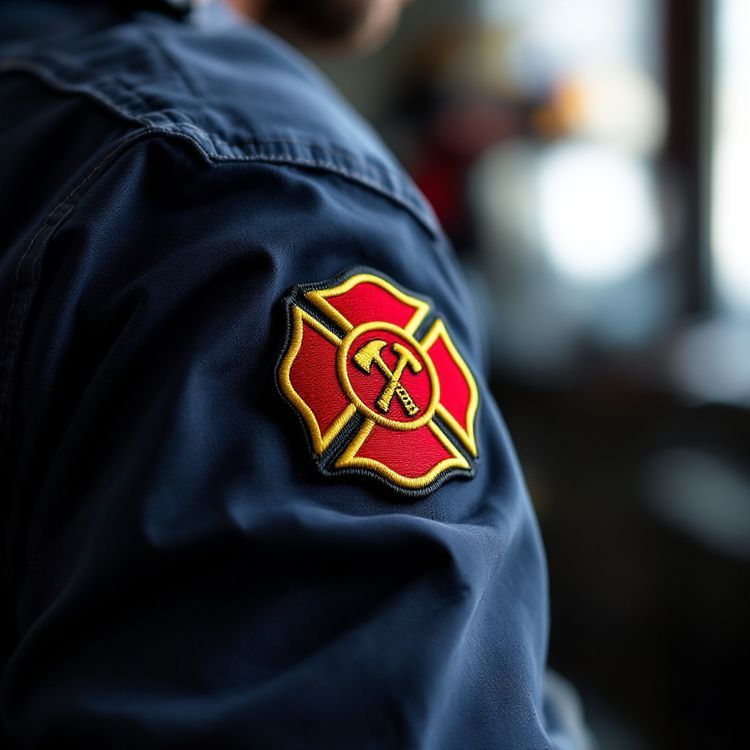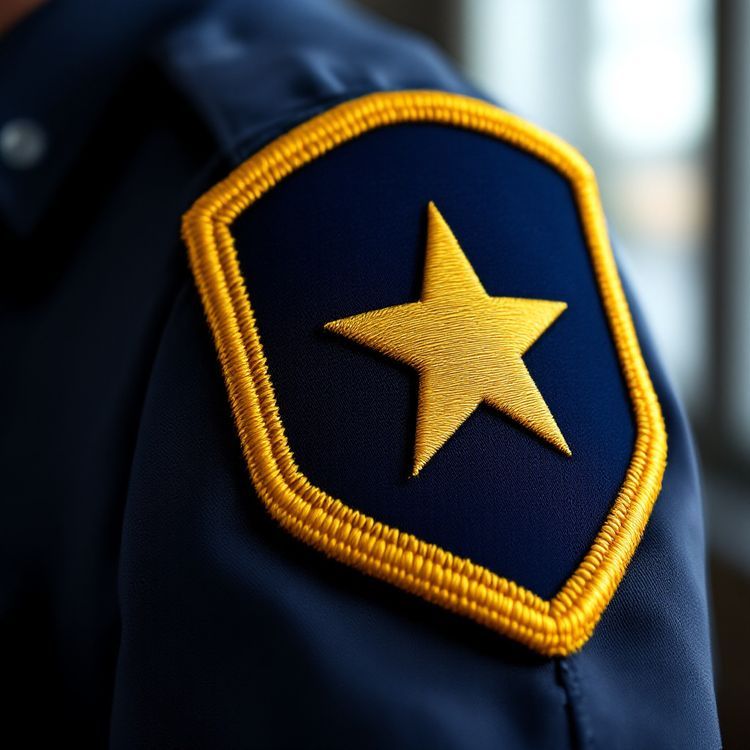
Custom EMS patches work best when they are built around a few clear decisions: a readable agency name, an emblem such as the Star of Life used in line with your agency's policy, a shoulder size that matches the uniform, and a backing chosen for how the garment is worn and washed. Get those right and the patch reads cleanly across a scene and holds up through years of laundering.
This guide covers the common design elements, sizes, construction, backings, level rockers and ordering enough for every crew member, whether you run an ambulance service, a rescue squad or a combined fire and EMS department.
Common elements on EMS patches
Most EMS shoulder patches draw on a short list of parts. Fewer elements usually read better at sleeve size.
- Star of Life. The blue six-barred cross with the staff of Asclepius, a single serpent around a rod, at the centre. The six bars are commonly described as the six functions of EMS: detection, reporting, response, on-scene care, care in transit and transfer to definitive care.
- Agency name. Usually around the top or in a banner. This is what people need to read first, so give it the most room.
- City, county or state. Around the lower edge, or as a state outline behind the emblem.
- Unit or station number. Numbers stitch cleanly, even at fairly small sizes.
- Founding year. Often shown as "Est." and the year in a small banner.
- Level of care. EMT, AEMT or Paramedic, often on a separate rocker rather than on the main patch.
The Star of Life is meant to identify EMS providers, vehicles and services, so check your agency's policy and any state guidance before you add it. Departments that provide both fire and EMS often combine it with a Maltese cross, which our guide to custom fire department patches covers in detail.
EMS patch sizes and placement
A shoulder patch typically runs 3 to 4.5 in across. In the trade, patch size is usually quoted as width plus height divided by two, so a 4 in by 3.5 in patch is quoted as 3.75 in. The easiest way to choose is to measure a patch on a current uniform, or lay a paper cut-out on the sleeve and check it in a mirror.
| Placement | Common starting size | Typical use |
|---|---|---|
| Shoulder or upper sleeve | 3 to 4.5 in | Agency shoulder patch |
| Left chest | 3 to 3.5 in | Star of Life or agency logo on shirts and polos |
| Name tape or rocker | 4 to 5 in wide | Names and level of care |
| Hook-and-loop panel | 2 x 3 or 3 x 5 in | Vests, packs and bags |
| Cap front | 2 to 2.5 in tall | Duty and station caps |
| Jacket back | 8 to 12 in | Large identification on outerwear |
Size also decides how much text fits. Embroidered lettering generally needs a cap height of about 1/4 in to stay legible, so a long agency name with a county and state may need a larger patch or a shorter line.
Construction and border choices
Embroidered or woven
Embroidered patches are the traditional choice for EMS uniforms. The raised thread has depth, and the solid blue and white of a Star of Life stitch cleanly. If your patch carries a detailed county seal with small text around the ring, a woven patch holds finer lines and smaller lettering than embroidery can.
Merrowed or heat cut edge
A merrowed border is the raised, wrapped stitch around the edge, classic on round, oval and shield shapes. A Star of Life cut to its own outline has six arms with deep inside corners, which a merrow machine cannot follow cleanly, so a star-shaped patch is usually finished with a heat cut edge. If you want a merrowed edge, set the star inside a round or shield shape.
Backings for uniforms, jackets and gear
For uniform shirts that are worn and washed often, sew-on is the dependable choice. It is the most permanent way to attach a patch, and a local uniform shop or tailor can attach it.
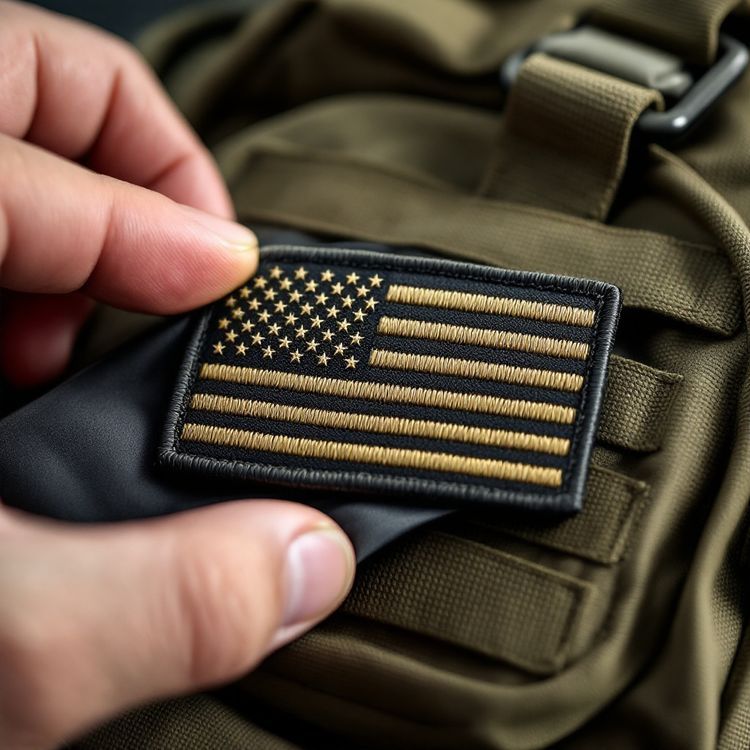
Hook-and-loop backing suits jackets, vests and bags, where a patch needs to move between garments or come off for washing. The loop panel has to be sewn to the garment first. Iron-on adhesive is less reliable on the polyester blends common in uniform shirts and on garments washed hot, so if you choose it, sew around the edge as well.
For protective outerwear, check with the garment maker and your agency before sewing anything on. Our guide to patch backing types explains each option in more depth.
Level rockers, name tapes and epaulet covers
Many agencies keep one shoulder patch for every crew member and show the level of care on a separate rocker above or below it. When someone moves from EMT to Paramedic, only the rocker changes, and the shoulder patch stock stays the same.
- Level rockers. Each wording is its own design, so plan quantities for each level separately.
- Name tapes. Often on hook-and-loop for vests and jackets.
- Flag patches. Small flags for sleeves and gear.
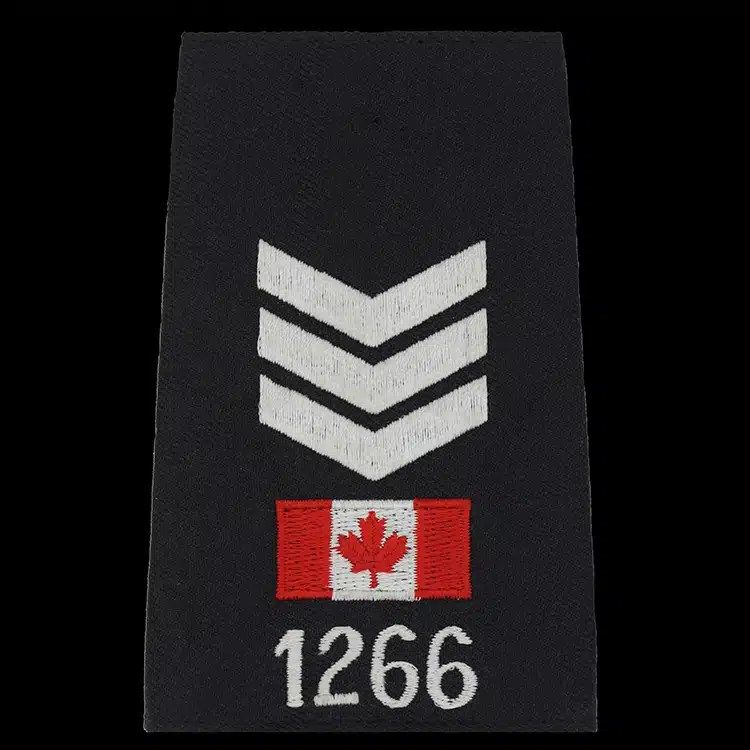
- Epaulet covers. Embroidered rank and insignia covers for uniform shoulder boards, made to your design with no setup or digitizing fees.
Ordering EMS patches for the whole crew
Count patches per person, not per agency. If each member wears a patch on both sleeves of two uniform shirts and one jacket, that is several patches each. Then add spares for new hires, replacements and damaged shirts.
Custom runs start from 100 pieces, confirmed on your quote, and quantity is counted per design. A larger run generally lowers the cost per patch because setup is spread over more pieces, so ask for prices at 100, 200 and 500 on the same quote.
- Artwork, a file or a clear photo of the current patch
- Size in inches and where it goes on the uniform
- Embroidered or woven, plus thread colours or a sample to match
- Edge finish and backing
- Quantity per design, including spares
- In-hands date, such as a new uniform issue or an event like EMS Week
If you need to match patches already on the crew's sleeves, a clear photo taken square on in good light is enough to start. We redraw it, and the proof is your chance to compare it with the patch in your hand. After the first run, the digitizing stays on file, so a reorder skips the setup and comes out the same.
For timing, allow 2 to 3 business days for the quote, usually 1 to 3 business days for the proof, and about 3 to 4 weeks of production after approval. A rush of around 10 business days is sometimes possible when the factory can hold it, but it is never guaranteed.
Coins, pins and medals for recognition
EMS agencies often order recognition pieces from the same artwork.
- Challenge coins, die struck or die cast, for crews, anniversaries and saves.
- Lapel pins for years of service and dress uniforms.
- Medals on ribbons for agency recognition awards.
- Lanyards, including moulded plastic straps that wipe clean, with a safety breakaway at the neck.
Getting your EMS patch quote
To see a design before you send it, upload your emblem to the free Patch Studio, set the shape, size, border and backing, and preview it on a jacket. It is a rendering, not a guarantee, and we review detail and size when we quote.
Then send your artwork, size, quantities and in-hands date through the quote form. We price the job with the factories that make that construction and send back one quote within 2 to 3 business days. Nothing is made until you approve the proof in writing.