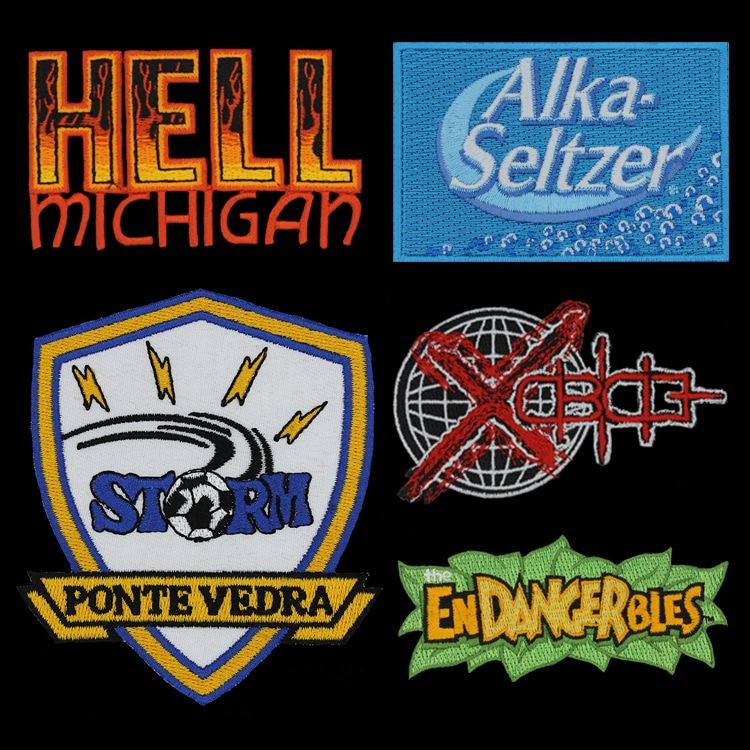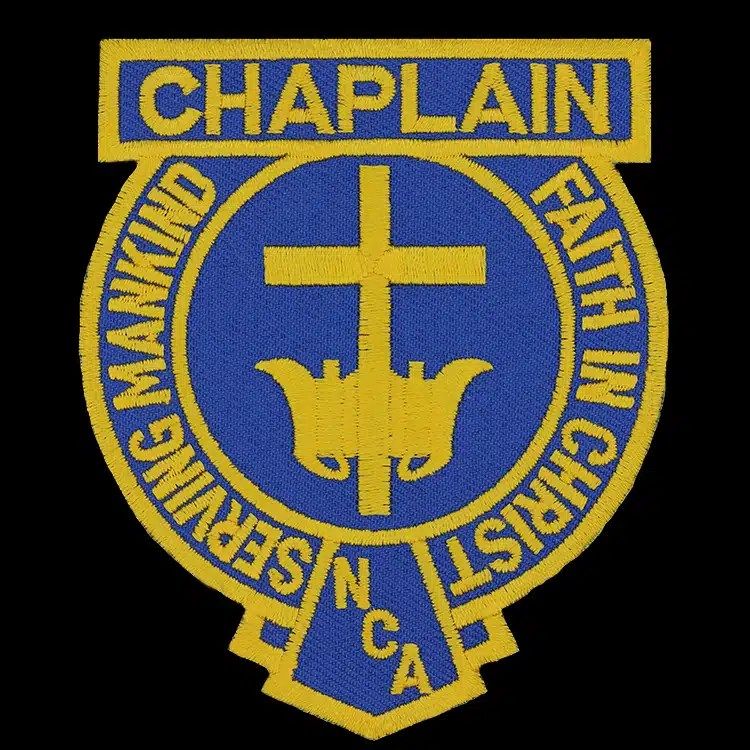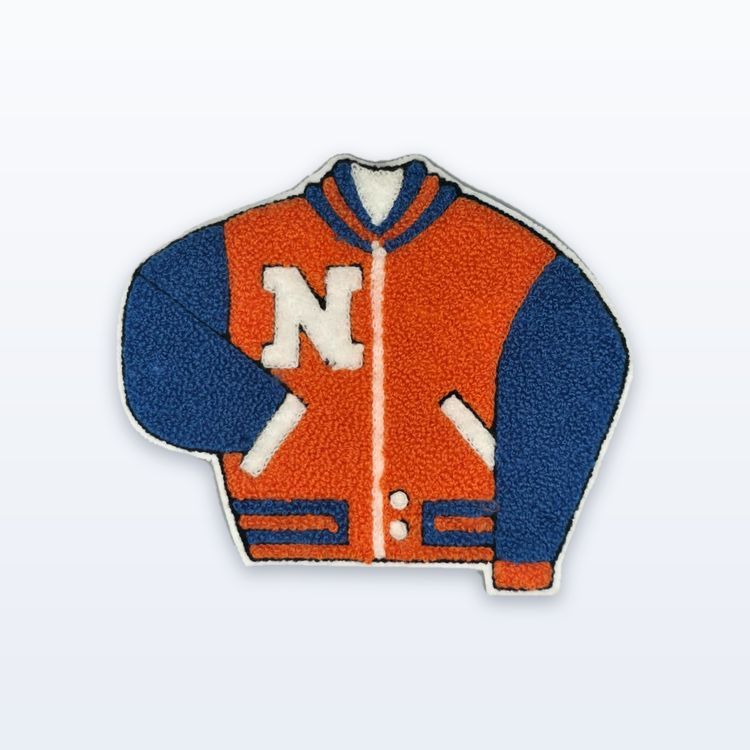
Chenille patches are made from tufted yarn that stands up in a soft, looped pile on a felt base, so they are thick, fuzzy and best for big, bold shapes like varsity letters and mascots. Embroidered patches are stitched flat onto twill or felt, so they are thinner and hold far more detail, including small text. Choose chenille when you want a large, tactile, retro look. Choose embroidery when the design has lettering, fine lines or needs to sit at a modest size on a uniform, cap or shirt.
The two are not rivals so much as partners. Most chenille patches use embroidery for their outlines and small text. Below we compare how each is made, how they look and wear, and how to pick for your project.
How chenille patches are made
Chenille comes from the French word for caterpillar, which describes the texture well. A machine works thick yarn up through a felt base in loops, building a raised, terry-like pile. The loops can be left as a dense, plush surface across the shape.
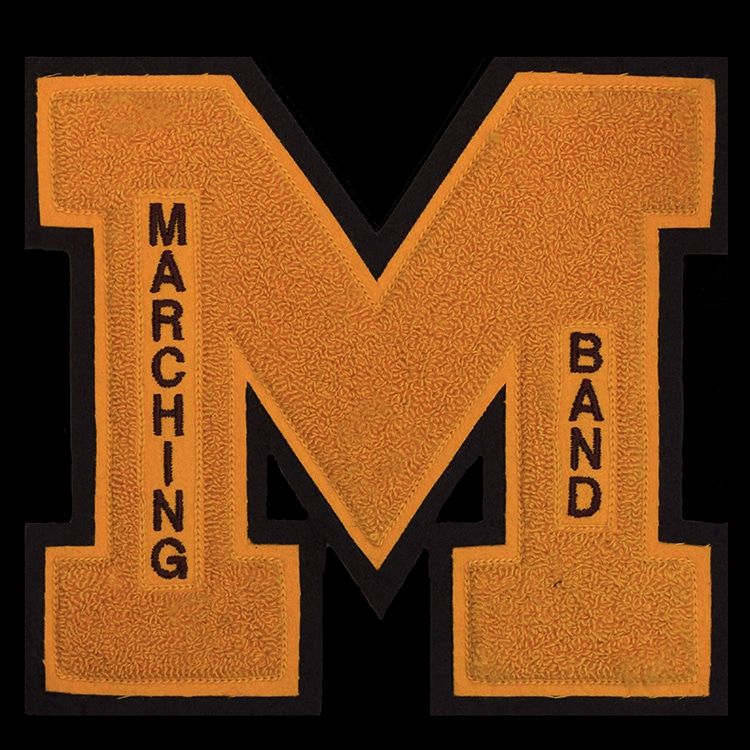
The felt underneath forms the visible edges and often a contrasting outline. Many chenille patches have two or more felt layers stacked to make a border, for example an orange chenille letter on a cream felt layer on a navy felt layer. Fine details, such as lettering inside a letter, a year or a small icon, are added with embroidery, because chenille yarn is too thick to form them.
How embroidered patches are made
An embroidered patch is made by stitching fine thread onto twill or felt, following a digitized stitch file. Satin stitches create borders, text and narrow shapes, while fill stitches cover larger areas. The thread sits on top of the base with a slight sheen, so embroidery has texture but stays much flatter than chenille.
That fine thread is the key difference. Embroidery can form readable lettering at around 1/4 in (6 mm) tall as a general guide, along with outlines, small icons and several colours in a compact space.
Look, feel and detail
Put the two side by side and the difference is obvious. Chenille is soft and deep, with a matte, fluffy surface that invites touch. It reads from across a gym or a football field. Embroidery is crisp and defined, with a satin sheen and much sharper edges.
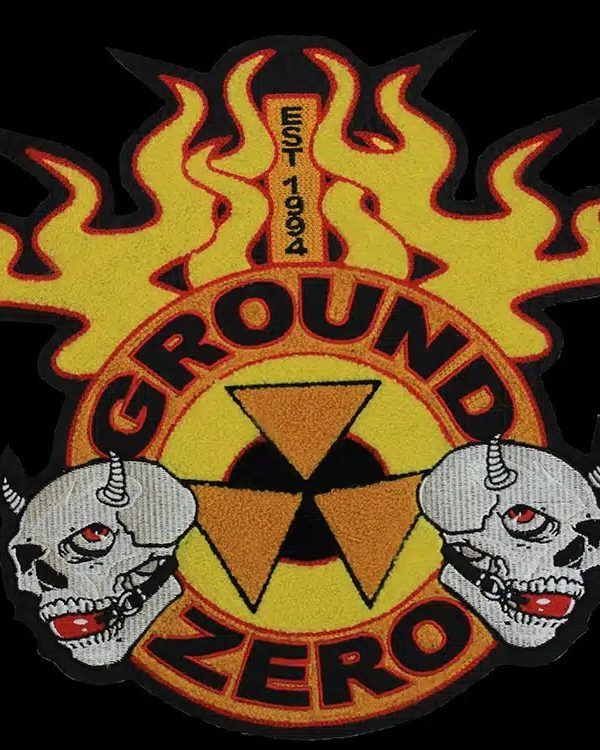
Detail is where they part ways. Chenille shapes need to be large and fairly simple. Thin strokes, small counters (the holes inside letters such as A and O) and tight inside corners tend to fill in. As a rule of thumb, chenille works best for elements a few inches across, with any fine detail handed to embroidery.
Chenille vs embroidered at a glance
| Factor | Chenille | Embroidered |
|---|---|---|
| Construction | Tufted yarn loops on felt | Thread stitched on twill or felt |
| Surface | Thick, soft, fuzzy pile | Flatter, crisp, slight sheen |
| Detail | Large, simple shapes only | Small text and fine outlines |
| Typical size | Larger letters and back pieces | Any size from small to large |
| Usual edge | Felt border, often layered | Merrowed or heat cut |
| Usual backing | Sew-on | Sew-on, iron-on, hook-and-loop, plastic |
| Classic uses | Letterman letters, mascots, retro merch | Uniforms, caps, logos, clubs |
Where chenille wins
Letterman and varsity jackets. The chenille letter is the tradition. Schools award a chenille letter, and athletes add sport pins, bars and numerals around it. Our guide to chenille patches for letterman jackets covers letter sizes, numerals and mascots.
Big back pieces and retro designs. Chenille gives a large back patch a vintage, hand-made feel that flat embroidery does not. Streetwear and band merch use it for bold wordmarks.
Spirit and mascot patches. A chenille mascot head or a big block initial makes a strong spirit item for schools, cheer squads and booster clubs.
Where embroidery wins
Anything with text. Names, mottos, department titles and dates belong in embroidery, or in woven if they are very small.
Uniform and work patches. Shoulder patches, chest logos and cap patches need to be compact, durable and readable. Embroidery does that at sizes where chenille would turn into a blur.
Caps and light garments. Chenille is bulky. On a cap front, a polo or a thin shirt, an embroidered patch sits flatter and looks neater.
Smaller patches in general. If the patch is around 3 in (76 mm) or smaller, embroidery is nearly always the better choice.
Combining chenille and embroidery
Many of the best chenille patches are really both. The big shape is chenille, and the details are embroidered on top or around it. Common combinations include:
- A chenille letter with the sport, year or name embroidered across it.
- A chenille mascot with embroidered eyes, outlines and small features.
- A back patch with chenille lettering and an embroidered emblem in the center.
- A chenille patch with an embroidered banner or ribbon underneath.
Designing for chenille
Artwork that suits embroidery does not always translate straight into chenille. A few adjustments help.
- Go bold. Thick block letters, chunky outlines and big shapes give the yarn room to form its pile.
- Use the felt. Plan one or two felt layers as outlines. A contrasting felt border is what makes a chenille letter pop on a jacket.
- Keep colours few. Chenille looks best with two or three yarn colours. Add colour detail through the embroidered parts instead.
- Leave text to embroidery. Names, years and slogans should be embroidered on or around the chenille, at a size embroidery can hold.
- Check the size. If the patch has to be under about 3 in (76 mm), consider embroidery instead.
When you are unsure, send the artwork with the size you need and ask for advice on the split between chenille and embroidery. We will mark it up when we quote.
Care and ordering
Chenille is usually sewn on, because its thickness and felt layers do not suit a heat seal backing as well as flatter patches do. Treat chenille garments gently: turn them inside out, wash cool or spot clean, and avoid high dryer heat, which can flatten the pile. Embroidered patches are more forgiving and take any of our backings.
For a quote, send your artwork with the size, quantity, colours (including felt layers for chenille), backing and in-hands date. Custom minimums start from 100 pieces and vary by product, confirmed on the quote. Quotes typically return in 2 to 3 business days, and production runs about 3 to 4 weeks after you approve the proof in writing. See our patch gallery for finished examples, then request your quote.