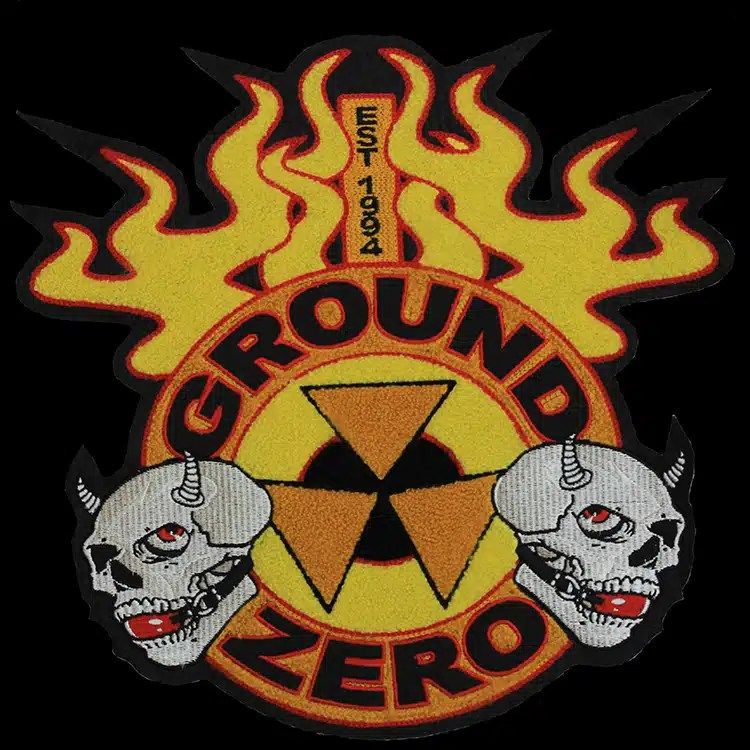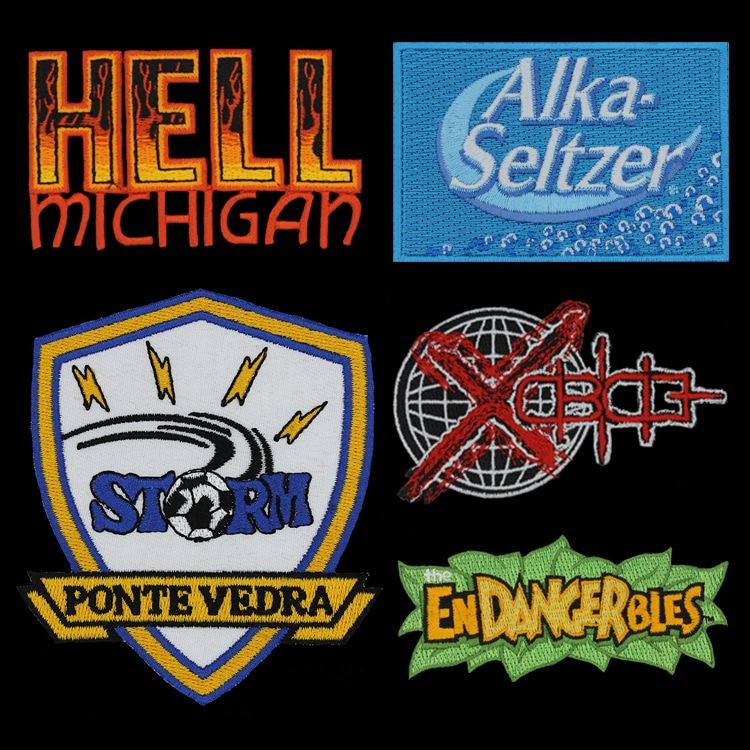
Most car club patches are a set of two: a large back patch, about 9 to 12 in (229 to 305 mm) wide, with the club name and emblem, and a small chest patch about 3 to 4 in (76 to 102 mm) for the front of the jacket, shirts and caps. Embroidered is the usual construction, with chenille for a retro varsity look. Keep car brand logos off the patch unless you have the brand's permission, and build the design around your club's own emblem instead.
This guide covers jacket layouts, how to make an emblem that reads from across a parking lot, show and cruise-in patches, and how to order for a membership that grows every season.
Jacket layouts that work
The back patch
The back is where the club shows itself at a show or a cruise. A single one-piece back patch, with the club name arched over an emblem and a city or chapter below, is the most common layout for car clubs. It is simpler to make and to sew on than a set of separate pieces, and the spacing never drifts between jackets.
Some clubs prefer separate pieces: a top rocker with the club name, a centre emblem and a bottom rocker with the city. That layout is closely associated with motorcycle clubs, where the number of pieces can carry meaning, so many car clubs stick to one piece to avoid confusion. If you are considering rockers, our guide to rockers and back patches explains how the sets are planned and why it matters.
The chest patch and extras
A small version of the emblem goes on the left chest of the jacket and on shirts, hoodies and caps. Many clubs add a name patch on the right chest, a sleeve patch with the founding year, or small patches for officers. Our jacket placement guide covers where each piece sits.
Designing an emblem that reads at a show
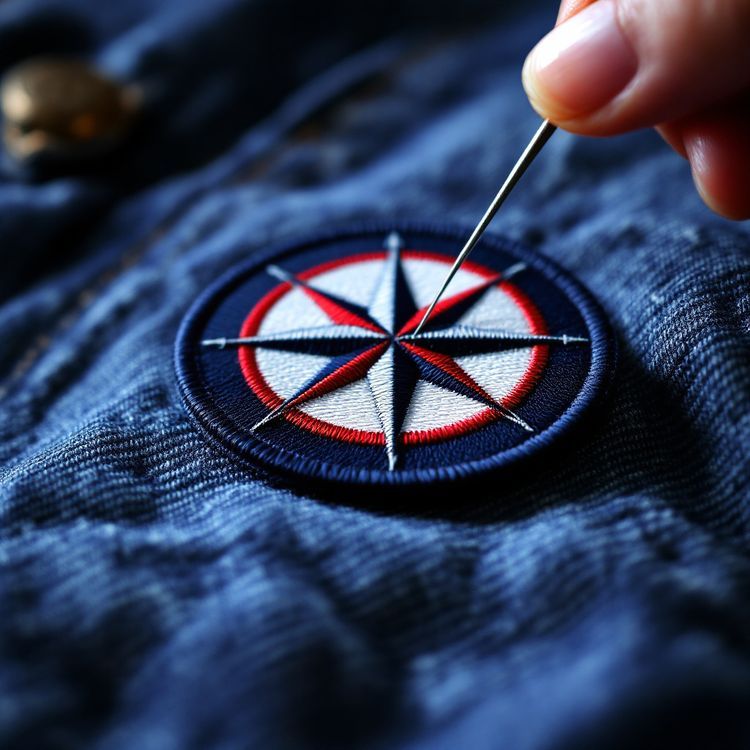
Car people want detail: the exact grille, the right body line, the hood scoop. Detail is fine on a 10 in back patch and a problem on a 3 in chest patch. Plan the design at both sizes.
- Use a side or three-quarter silhouette of the car rather than a detailed front view. Silhouettes read from a distance.
- Keep the club name in a bold, wide font. As a rule of thumb, embroidered letters need about 1/4 in (6 mm) cap height at the smallest size.
- Limit colours to what the design needs, usually four to seven thread colours.
- Leave out fine pinstripes and chrome reflections on the chest version. They can stay on the back patch.
- If you want flames, checkers or a sunset gradient, decide whether thread can do it or whether a printed patch suits it better.
An embroidered patch gives the classic raised look. For an old-school varsity or 1950s car club jacket, a chenille patch with tufted lettering on felt fits the era. For a photo-real car or a gradient sky, a sublimated (printed) patch reproduces the image, though without thread texture.
A word on car brand logos
Vehicle makers register their names, badges and model logos as trademarks and protect them. A club for one make or model often wants the brand's logo on the patch, but making merchandise with a registered mark generally needs the owner's permission or a license. The safer route is to design your own emblem: your club name, a silhouette of the car, your city and your founding year. That is often more distinctive anyway.
If your club is officially recognized by a manufacturer or has written permission to use a mark, tell us and include the approved artwork. Otherwise we will suggest keeping brand marks out of the design. We make patches to your artwork, and the club is responsible for having the right to use it.
Which patch for which use
| Item | Typical size | Construction | Backing |
|---|---|---|---|
| Back patch | About 9 to 12 in wide | Embroidered or chenille | Sew-on |
| Chest patch | About 3 to 4 in wide | Embroidered or woven | Sew-on or iron-on |
| Cap patch | About 2.5 to 3 in wide | Embroidered | Sew-on |
| Show or cruise-in patch | About 3 to 4 in | Embroidered | Iron-on or sew-on |
| Officer or year patch | About 1 x 3 in to 2 x 4 in | Embroidered | Sew-on |
Back patches on leather or heavy jackets should be sewn, since iron-on adhesive does not bond to leather and the heat can damage it. Our backing guide covers each option.
Show, cruise-in and event patches
If your club runs a car show, a dated patch is a keepsake entrants and visitors actually take home. Put the show name, the year and the location on it, keep it 3 to 4 in (76 to 102 mm), and use a merrowed border for a classic look. Collectors sew them on jackets and vests, so a design that matches year to year with only the date changing builds a collection. Reorders and year changes are quick because the base design stays on file.
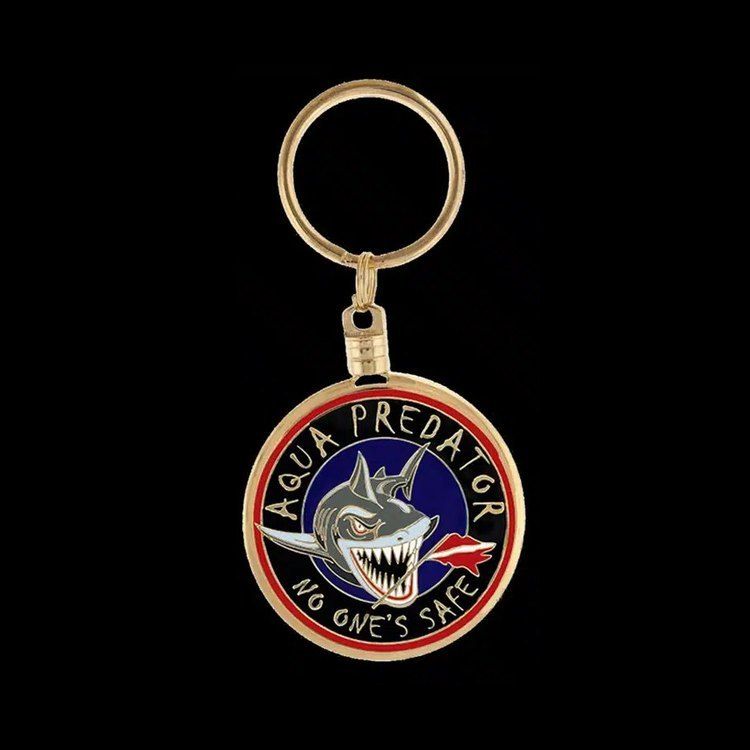
Clubs also use lapel pins and key chains for shows, and medals for class winners. Pins with a car silhouette in soft enamel are easy to trade and wear on a cap or a lanyard.
Member numbers and prospects
Some clubs mark rank or seniority: a small patch with the member number, a founding member tab, or a different border colour for officers. Keep these as separate small patches rather than versions of the main emblem. One emblem design stays consistent for everyone, and the small add-on patches handle the differences. That also keeps the main patch order simple and makes reorders for new members easy to match.
Ordering for a club
Count current members, add a stock for new members over the next year, and add show patches if you host an event. Custom minimums start from 100 pieces and vary by product. Many clubs reach it by ordering a year or two of stock, or by combining chest patches for jackets, shirts and caps. The quote confirms the minimum for each item.
Send your emblem as an AI, EPS or PDF file if you have one. A PNG or a photo of an old jacket is enough to start. A quote usually comes back in 2 to 3 business days, the proof about 1 to 3 business days after artwork, and production about 3 to 4 weeks after written approval. If you need patches for a show date, start two months out. Rush is around 10 business days when the factory can hold it. When you are ready, request a quote with sizes and quantities.