Bulk custom patches are ordered in one run of the same design, usually in the hundreds or thousands, so the setup work is spread across every piece and each patch comes out the same. To order well, decide the real quantity you will use over the next year or two, keep the design locked, choose one construction and backing for the whole run, and tell the factory how you want them packed. The per-piece cost generally falls as quantity rises, and your quote shows exactly how.
Below is how to plan the quantity, what changes at volume, how to keep a large run consistent, and how to handle splits, storage and reorders.
Why bulk patches cost less per piece
Every new patch design has fixed work before a single piece is made: the artwork is prepared, the design is digitized into a stitch file, and the machines are set up with the right thread colours. That work costs about the same whether you order 100 patches or 5,000. In a larger run it is shared across more pieces, so each one carries less of it.
Material and machine time still scale with quantity, so the price does not keep dropping forever. As a rule of thumb, the biggest drop per piece comes between the smallest runs and the mid hundreds, then it flattens out. We do not publish a price list, because every job is quoted from the factory price, but if you are deciding between two quantities, ask for both on the same quote and compare. Our guide to what drives custom patch prices explains the other factors, such as size and stitch coverage.
Choosing the right quantity
The right bulk quantity is the number you will actually use before the design changes. Ordering too few means paying for another run sooner. Ordering too many means boxes of patches with last year's logo. Start from use, not from price.
- Count the people or garments that need a patch now, including spares for new hires or members.
- Estimate how many you add in a year, and how long the design is likely to stay the same.
- Add a margin for damage, lost uniforms and replacements, often 10% or more for uniform programs.
- Check whether a rebrand, a merger or an anniversary is coming that would change the design.
- Consider storage: patches keep well in a dry, cool box, but someone needs to own that box.
Our custom minimum starts from 100 pieces and varies by product, confirmed on the quote. For the reasoning behind minimums, see custom patch minimum orders explained.

Splitting a bulk order across designs or sizes
Many bulk orders are really several orders in one: a uniform program with a shoulder patch and a smaller cap patch, or a company with one logo in two colourways. Each different design or size is usually its own setup, so splitting 1,000 pieces across four designs does not price the same as 1,000 of one design. That is not a reason to avoid splits. It is a reason to list them clearly on the quote request.
| Order shape | How it is usually set up | What to tell us |
|---|---|---|
| One design, one size | One setup, one run | Quantity, size, backing |
| One design, two sizes | Two stitch files, two runs | Quantity for each size |
| One design, two colourways | Separate colour setups | Thread colours and quantity for each |
| Several different designs | Each design is its own job | Artwork and quantity per design |
| Same patch, two backings | Same design, split at finishing | How many of each backing |
If you are rolling out patches across many locations or departments, our guide to patches for business uniforms covers planning by role and location.
Keeping a large run consistent
One of the main reasons to order in bulk is that every patch in a single run comes from the same stitch file and the same thread lots, so they match each other. Patches made months apart in two small runs can differ slightly in thread shade, even with the same colour numbers. If a uniform program needs every patch to look identical side by side, one larger run is the safest way to get that.
To keep things tight, approve the proof carefully, because every one of those thousands of patches will follow it. Check spelling, size, thread colours, border and backing line by line. Our proof approval checklist is worth printing for a large order.
Constructions that suit high volume
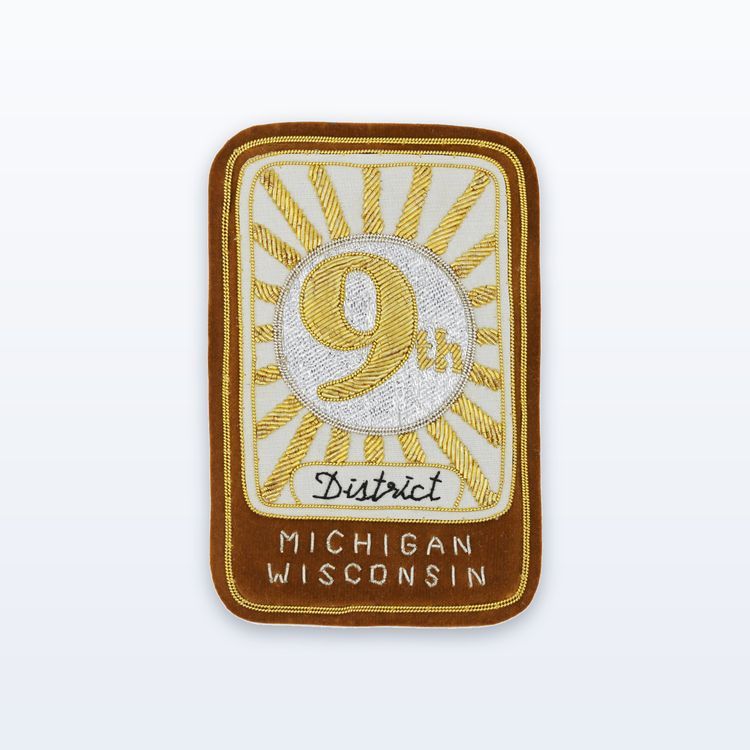
All six of our constructions can be ordered in volume, but some suit it better. Machine embroidered patches and woven patches are the most common choices for large runs, as they are made efficiently and consistently. Sublimated patches suit large runs of photographic or gradient art. Chenille and satin tackle twill involve more steps and are often ordered in smaller numbers for letters and team wear. Hand embroidered bullion is made by hand, so it is better suited to ceremonial and dress uniform quantities.
Coverage also matters at volume. A patch with 100% stitched coverage uses more thread and machine time than one where the base fabric forms part of the design. On a run of thousands, it can be worth asking for both options on one quote.
Packing, delivery and timing
Tell us how you want the patches delivered. A single box is fine if they go to one stockroom. If they need to reach several offices, say so on the quote request. Patches ship by UPS from Holly Hill, Florida. Production for a standard order runs about 3 to 4 weeks after proof approval, and large quantities are planned within that window on the quote. If you have a hard date, give it at the start. Our page on rush custom patches explains when a faster run is possible.
Planning the reorder
A bulk order is also the start of a reorder cycle. The digitizing stays on file, so the next run skips setup, and you can order the same patch again by referencing the original job. Keep the approved proof, note the thread colours, and set a reminder to check stock a couple of months before you expect to run out. See how to reorder custom patches for what to send.
Ready to price a bulk run? Request a quote with your artwork, sizes and quantities. You will hear back in 2 to 3 business days, and nothing is made until you approve the proof in writing.