The best search and rescue patches use high-contrast colours, the word RESCUE or SEARCH AND RESCUE in bold block letters, and your team or county name, on hook-and-loop backing so they move between jackets, packs and vests. For visibility, the patch works alongside reflective garments, not instead of them: a patch identifies who you are, while high-visibility apparel makes you seen.
SAR teams are a mix of volunteers, sheriff's office units and specialist groups such as mountain rescue, swift water, K9 and cave rescue. This guide covers what to put on the patch, how to make it readable in the field, where it goes on your gear, and how to order for a roster that changes every season.
What a SAR patch has to do
A search and rescue patch does three jobs at once. It tells a lost or injured subject that help has arrived. It tells other agencies at a command post which team you belong to. And it gives volunteers a sense of identity, which matters for teams that rely on unpaid members to train every month.
That means the patch should answer two questions at a glance: what are you (search and rescue) and who are you (the team or county). Everything else, from the mountain silhouette to the founding year, is secondary.
Designing for visibility
Colour and contrast
Orange, red and yellow are traditional SAR colours because they stand out against green, brown and white terrain. A blaze orange background with black or white lettering is easy to read from a distance. If your team wears orange jackets, a patch in the same orange will blend in, so consider a black or navy patch with orange or white lettering instead. Contrast between the patch and the garment matters as much as contrast within the patch.
Lettering
Use heavy block letters, and keep the role word large. As a general guide, embroidered text needs a cap height of about 1/4 in (6 mm) just to stay readable up close; for words meant to be read across a trailhead, go much larger. A separate back panel reading SEARCH AND RESCUE in letters 1.5 in (38 mm) tall or more is common on jackets and packs.
High-visibility apparel
In the US, high-visibility safety apparel is covered by the ANSI/ISEA 107 standard, which sets requirements for background fabric and retroreflective material on the whole garment. A patch does not make a jacket compliant. If your team needs compliant apparel, buy garments certified to the standard and add patches in areas that do not cover the reflective tape.
Design elements that work
Popular SAR imagery includes a compass rose, a mountain range, a cross or star, a rope or carabiner, a helicopter, waves for swift water teams, and a dog for K9 search units. Pick one strong image rather than all of them. The silhouette should still read if the patch is seen from 10 ft (3 m) away.
- Keep to four or five thread colours for a clean result.
- Put the team or county name in an arched band around the top.
- Use the bottom band for the role: SEARCH AND RESCUE, MOUNTAIN RESCUE or SWIFT WATER.
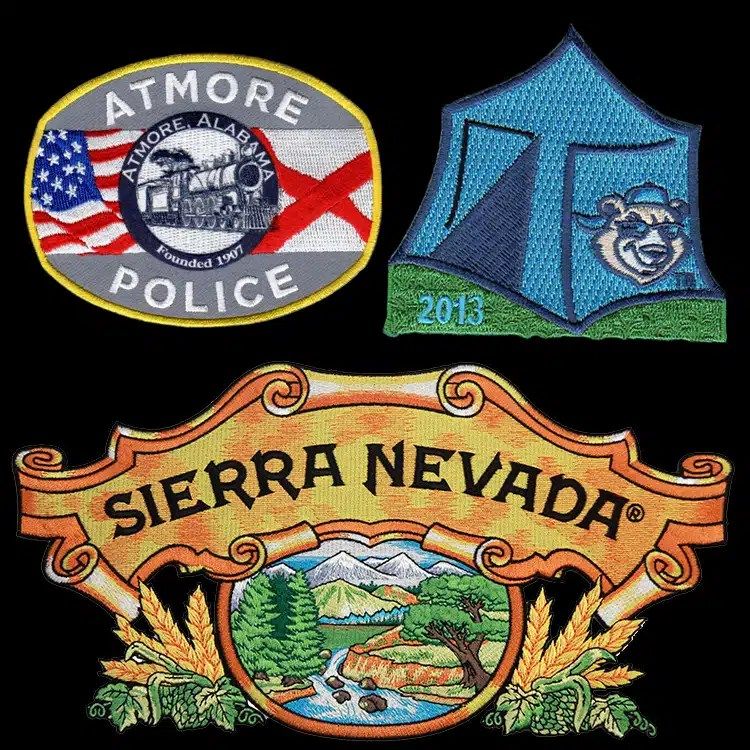
- If you want a detailed landscape, consider a sublimated patch, which prints gradients and fine shading that thread cannot.
Placement and sizes on SAR gear
| Gear | Typical patch | Approximate size | Backing |
|---|---|---|---|
| Jacket sleeve | Team shoulder patch | 3 to 4 in (76 to 102 mm) | Hook-and-loop or sew-on |
| Jacket or vest back | SEARCH AND RESCUE panel | About 8 to 11 in (203 to 279 mm) wide | Hook-and-loop |
| Chest | Name tape or role tab | About 4 in (102 mm) wide | Hook-and-loop |
| Pack lid or front | Team patch or callsign | 3 to 4 in (76 to 102 mm) | Hook-and-loop or sew-on |
| Cap front | Team logo | About 2 to 3 in (51 to 76 mm) | Sew-on |
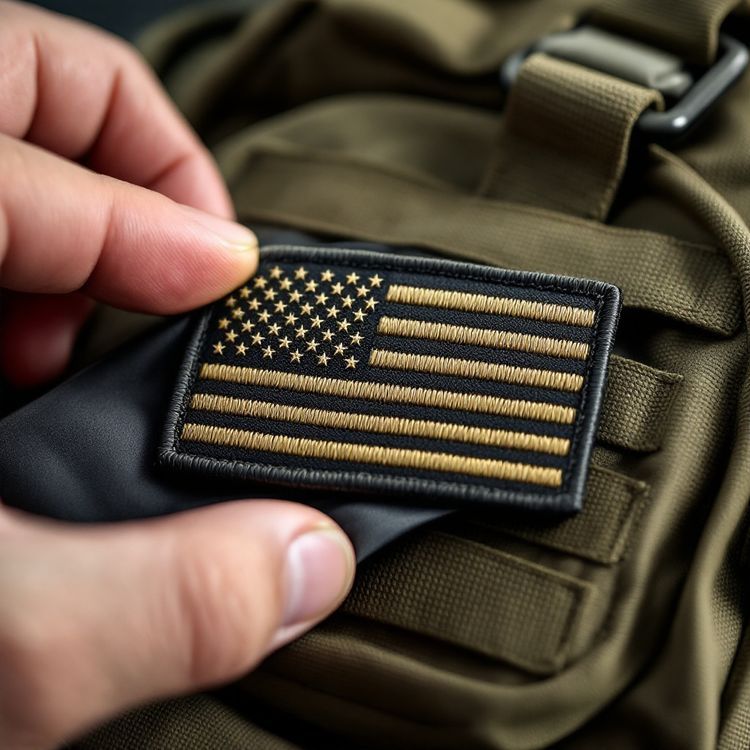
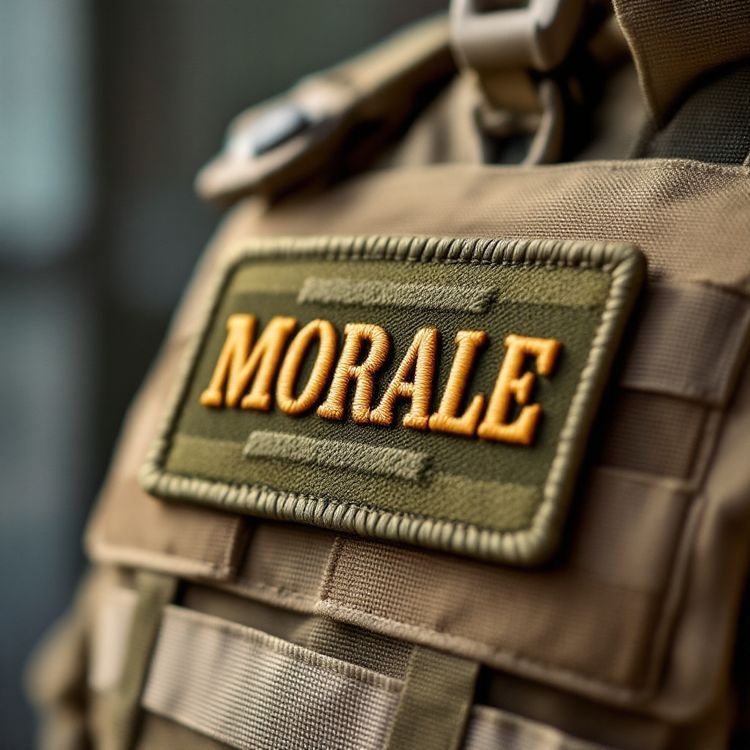
Sizes are a general guide; measure the panels on your own gear. Many packs and tactical jackets come with loop panels already sewn on, which makes hook-and-loop backing the natural choice. Our hook-and-loop patch guide explains how the two halves work and what to check.
Rosters, qualifications and changing members
SAR teams change every year as volunteers join, qualify and move on. Patches can help you mark progress without buying new jackets:
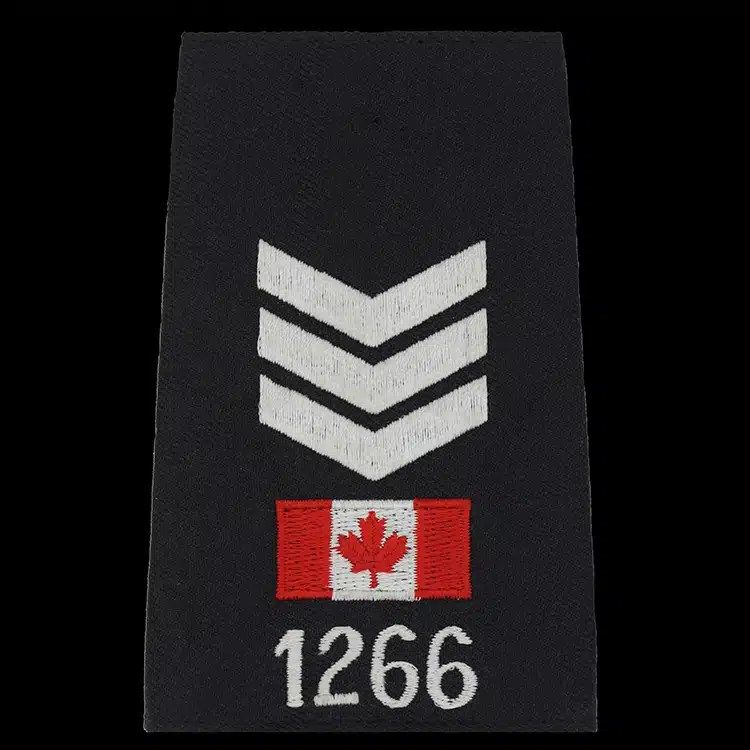
- Qualification tabs: small rockers or tabs for field team leader, medic, technical rope or K9 handler.
- Trainee patches: a different colour border for members still in training.
- Name tapes: hook-and-loop name tapes that move with the member, not the garment.
- Support members: a separate patch for base camp, communications and logistics volunteers.
Because custom runs start from 100 pieces, varying by product, many teams order a full run of the main patch and keep stock for new members. When you run low, reorders skip setup and the digitizing stays on file, so the next batch matches.
Durability in the field
SAR patches get rained on, rubbed by pack straps and dragged through brush. An embroidered patch with a merrowed border stands up well to abrasion. Heat cut edges suit custom outlines but are a little more exposed on the corners. For patches on packs and harnesses, hook-and-loop or sewn attachment is more reliable than iron-on, which can lift on synthetic outer fabrics and coated materials. Ironing a patch on a waterproof shell can also damage the membrane, so sew or use hook-and-loop instead.
Patches for fundraising and supporters
Many volunteer SAR teams fund equipment through donations, and a supporter patch is an easy thank-you. Make it a different design from the member patch, for example with SUPPORTER or FRIEND OF in the bottom band, so it cannot be mistaken for a team member's patch in the field.
Ordering patches for your team
- Decide the main team patch, a back panel and any tabs.
- Choose bright and subdued colourways if both are useful.
- Measure the loop panels on your packs and jackets.
- Count members, plus stock for the next intake.
- Send AI, EPS or PDF artwork, or a photo of your current patch.
A quote typically comes back in 2 to 3 business days, and production takes about 3 to 4 weeks after you approve the proof in writing. If your team is affiliated with an EMS agency, our guide to custom EMS patches covers design, size and backing for EMS services. When you are ready, request a quote with your sizes and counts.