
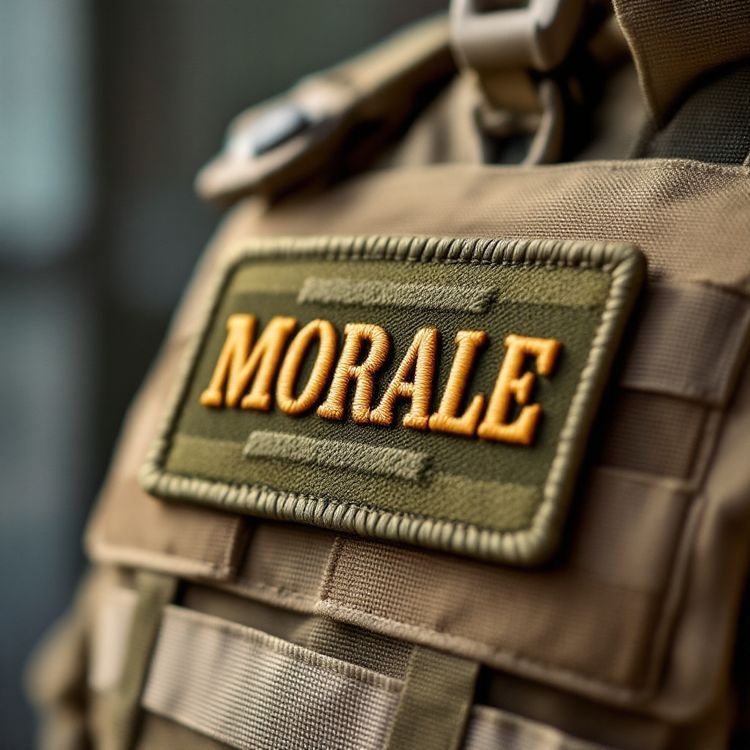
K9 patches come in two groups. Handler patches are uniform emblems: a unit shoulder patch, a K9 tab or rocker, and often a memorial or morale patch. Dog vest patches are working labels: large, plain words such as POLICE K9 or DO NOT PET, on hook-and-loop backing sized to the vest's panels. Plan both together so the unit looks consistent, and keep vest wording short enough to read from several feet away.
This guide covers police, sheriff, corrections and detection K9 teams, plus a short note on service dog patches, which follow different rules. It walks through design, vest panel sizes, materials and ordering for a unit that may only have a handful of dogs.
Handler patches: the unit emblem
The K9 unit patch is often the most personal patch in a department. Handlers and their teams design it themselves, and it tends to feature the dog's breed, the agency name and a motto. Common elements include:
- A German shepherd, Belgian Malinois, Labrador or bloodhound head in profile.
- The agency badge, star or shield shape behind the dog.
- An arched band reading the agency name and K9 UNIT.
- A paw print, crossed leashes or a thin line motif.
Dog fur and facial detail are the tricky part. As a general guide, lines thinner than about 1 mm do not stitch cleanly, so a realistic dog portrait needs to be simplified into bold shapes for an embroidered patch. If you want a portrait of a specific dog with shading, a sublimated patch prints photographic detail, and a woven patch holds finer lines than embroidery.
Tabs and rockers
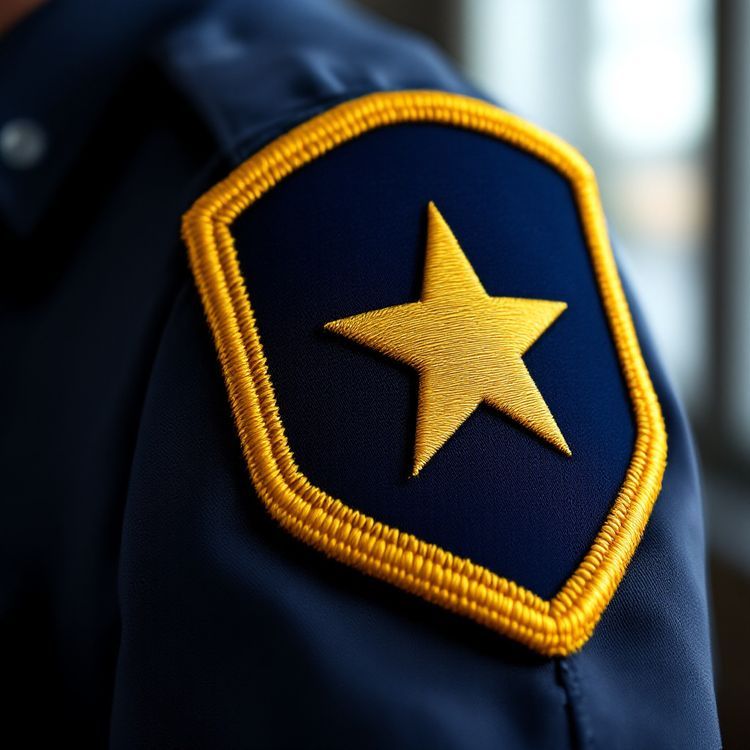
Many agencies add a curved K9 tab above the standard shoulder patch rather than replacing it. A tab is quick to sew and keeps the department's main patch unchanged. Our guide to police and sheriff patch design covers the main shoulder patch itself.
Dog vest patches: wording that works
A vest patch has one job: tell people, quickly, what the dog is and how to behave around it. Keep the wording to two or three words, in heavy block letters with strong contrast.
- Identity: POLICE K9, SHERIFF K9, K9 UNIT, DETECTION K9.
- Instruction: DO NOT PET, WORKING DOG, STAY BACK.
- Name: the dog's name on a smaller strip, which handlers and the public both like.
White lettering on a black panel reads well against a dark vest. For a tan or coyote vest, black lettering on tan can be more subdued for tactical work, while white on black is more visible for patrol and community events.
Typical K9 patch sizes
| Patch | Where it goes | Approximate size | Backing |
|---|---|---|---|
| Unit shoulder patch | Handler sleeve | 3.5 to 4.5 in (89 to 114 mm) | Sew-on |
| K9 tab | Above the shoulder patch | About 3 to 4 in (76 to 102 mm) wide | Sew-on |
| Vest side panel | Each side of the dog vest | About 2 x 6 in (51 x 152 mm) to 3 x 8 in (76 x 203 mm) | Hook-and-loop |
| Dog name strip | Vest top or side | About 1 x 4 in (25 x 102 mm) | Hook-and-loop |
| Morale or memorial patch | Handler gear or bag | 3 to 4 in (76 to 102 mm) | Hook-and-loop |
These are common starting points, not fixed standards. Small dogs, large breeds and harness-style vests all change the space available, so always measure. See our size guide for more on how patch size affects detail.
Backing and durability on a working dog
Dog vests take more punishment than most uniforms: brush, water, mud, kennel floors and the occasional chew. Hook-and-loop is the standard backing because it lets handlers swap patches between vests, remove them for washing and switch between a high-visibility and a subdued set. Our hook-and-loop patch guide explains the two halves and what comes on the patch.
A merrowed border gives the strongest edge on simple rectangles and ovals. Embroidered patches at full coverage are thick and tough, while a woven patch is thinner and lighter if weight on a small dog matters.
Memorial, retirement and morale patches
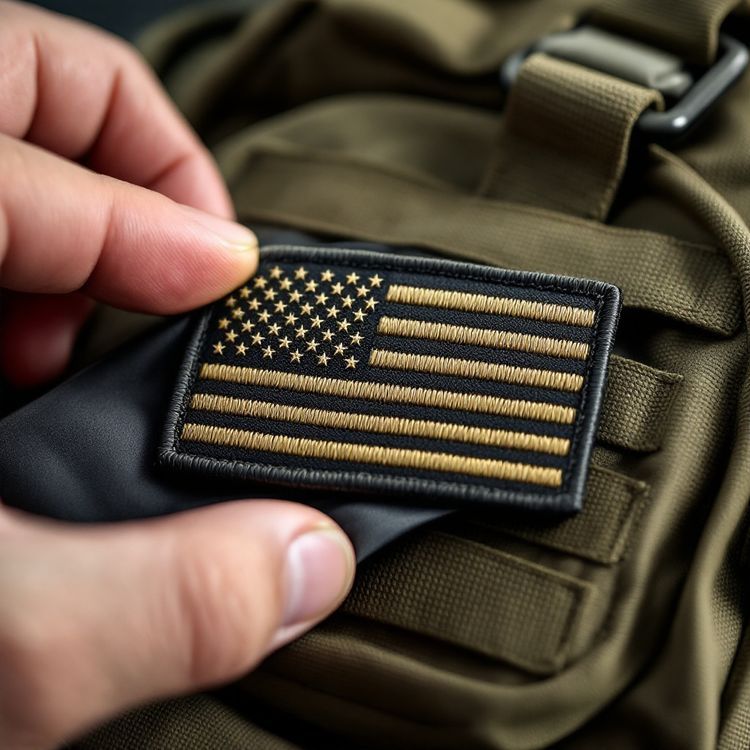
When a K9 retires or dies in service, many units create a memorial patch with the dog's name, badge number and years of service. These are usually small runs worn on gear and given to the handler's family, other units and supporters. Some agencies pair the patch with a challenge coin for the same occasion. Morale patches for K9 teams, with humor or a unit nickname, are popular for fundraising for vests and veterinary care.
A note on service dog patches
Service dogs are different from police K9s. Under the Americans with Disabilities Act, a service dog does not have to wear a vest, a patch or any identification, and a patch does not make a dog a service animal. The US Department of Justice ADA guidance on service animals explains what businesses may and may not ask. If you are ordering patches for a service dog training organization, plain wording such as SERVICE DOG or IN TRAINING is common, but the rules come from the ADA and state law, not from the vest.
Caring for vest patches
Vest patches last longer with a little routine care. Remove hook-and-loop patches before washing the vest, and press the patches onto a spare loop strip so the hook side does not pick up lint and dog hair, which weakens its grip over time. If a patch starts to lift at the corners, clean the hook side with a stiff brush. Keep a spare set of vest patches in the patrol vehicle so a dog is never deployed with a missing or unreadable label.
Ordering for a small K9 unit
K9 units are often small, but custom runs start from 100 pieces, varying by product, and the minimum is confirmed on your quote. Units commonly reach that by combining handler patches for the whole department, spares for each vest, and patches for supporters and fundraising.
- Send the unit emblem artwork in AI, EPS or PDF, or a photo of the current patch.
- List each vest maker and the panel sizes.
- Decide bright and subdued colourways.
- Include the dogs' names if you want name strips.
- Give your in-hands date, such as a K9 trial, a demo day or a memorial.
A quote typically comes back in 2 to 3 business days, and production takes about 3 to 4 weeks after you approve the proof in writing. Request a quote with your sizes and colourways.
