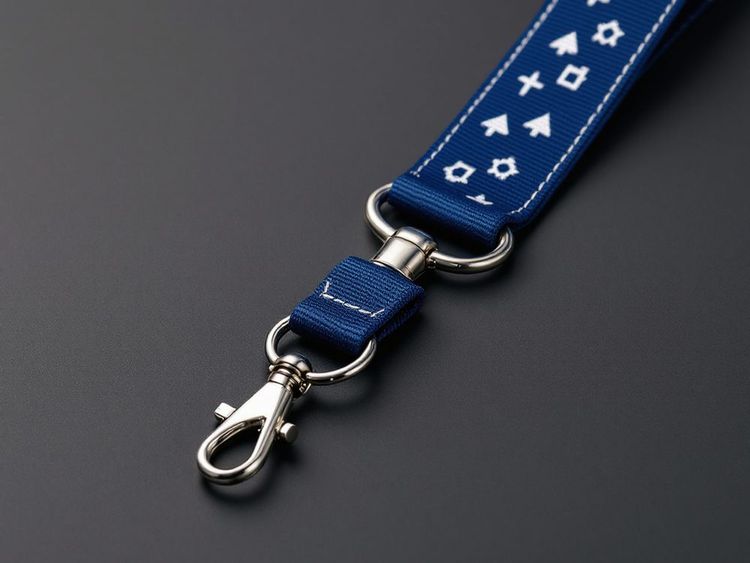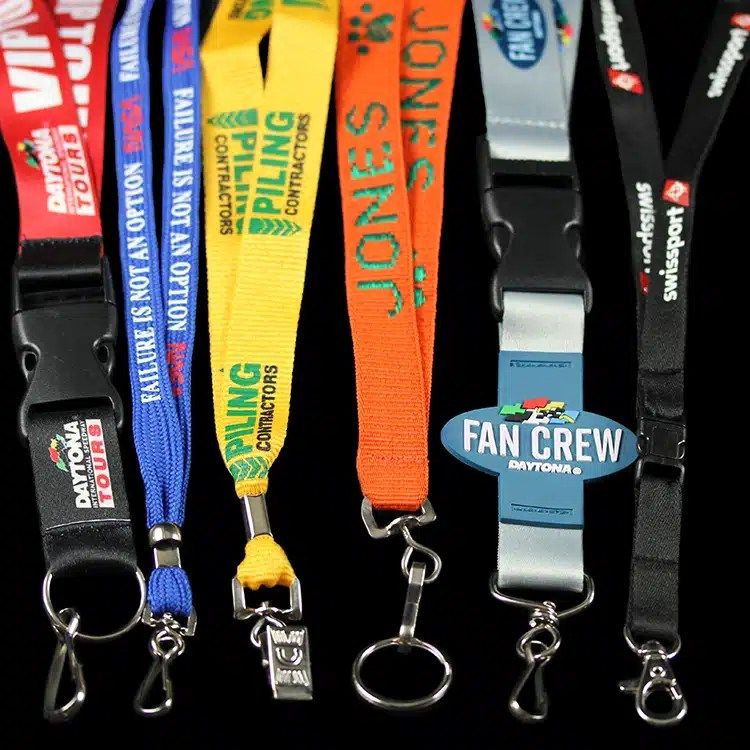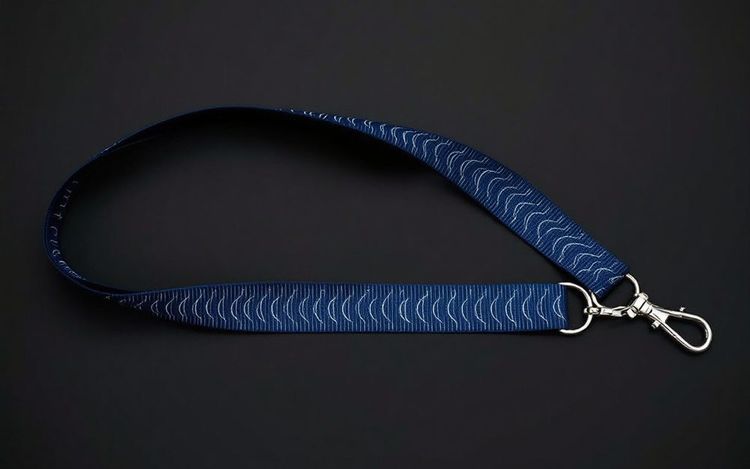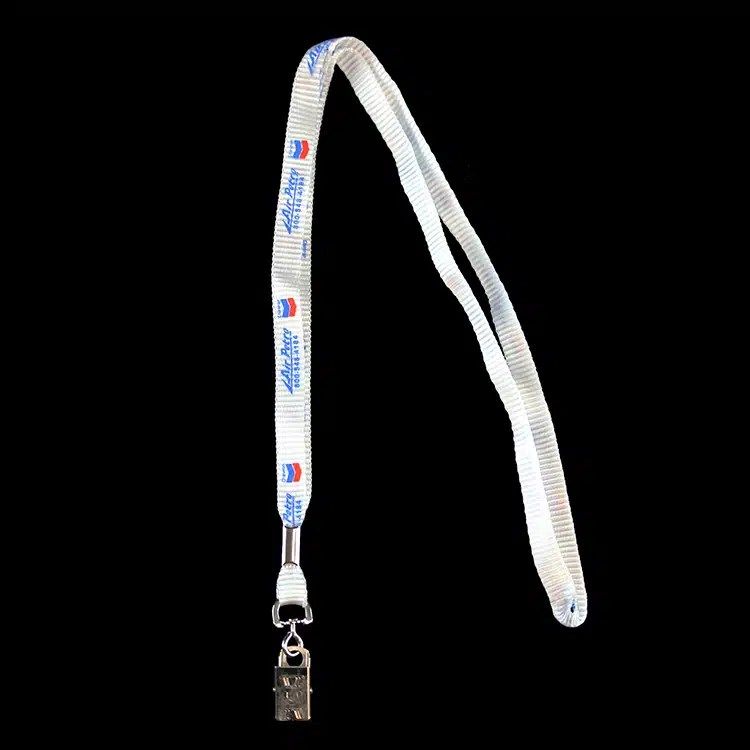
The right ID badge lanyard for employees is a soft, durable strap about 3/4 in (19 mm) wide, printed or woven with your logo, with hardware that matches your badge holder and a breakaway release at the neck for anyone working near machinery, patients or the public. Unlike an event lanyard that is worn for one weekend, a staff lanyard is worn every shift, so comfort, durability and a clear colour code for each role matter more than the imprint. Custom lanyards start from 100 pieces and typically take about 3 to 4 weeks after proof approval, both confirmed on your quote.
This guide is for HR, facilities and security teams setting up or replacing a badge program. It covers material, hardware, safety, colour coding, security and how many to order.
Materials that survive daily wear
Every lanyard starts as webbing, and the material decides how it feels against a collar after a long day and how it looks after a year.
- Polyester: a flat woven strap, screen printed with your logo. The everyday choice for staff badges, and a good balance of comfort and cost.
- Nylon: a smoother strap with a slight sheen that takes a sharp print and feels softer on the neck.
- Woven (jacquard): the logo is woven into the strap, so there is no print to wear off. Choose this when lanyards are expected to last several years of daily use.
- Tubular: a round, soft, rope-like cord that does not twist flat against the skin.
- Sublimated: full colour printing edge to edge, for gradients or photo-style brand patterns.
- PVC: a moulded, rubber-like strap that wipes clean and holds up outdoors, popular for marine, park and public safety work.
Our comparison of printed vs woven lanyards goes deeper on how each imprint wears over time.
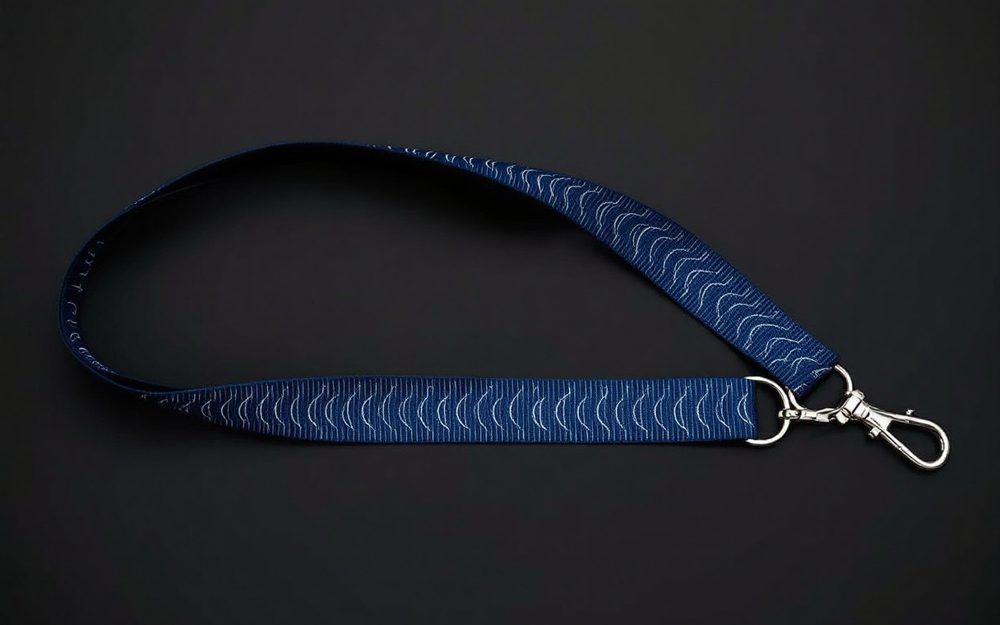
Width and length for a badge worn all day
As a rule of thumb, 5/8 in (16 mm) is light and discreet, 3/4 in (19 mm) is the most common staff width and gives room for a logo, and 1 in (25 mm) spreads the weight of a heavy badge holder or a badge plus keys. Length is usually set so the badge hangs around mid-chest, where a reader or a coworker can see it without the badge swinging into a keyboard or a patient. Our guide to lanyard sizes and widths lists the common combinations.
Hardware that matches your badge
The hardware is the part that fails first in a badge program, so match it to how staff actually use their badge.
| Hardware | Best for | Watch for |
|---|---|---|
| Swivel J-hook | Badge holders with a slot or hole | Swivel stops the badge twisting |
| Bulldog clip | Vinyl badge holders, a badge that hangs still | Clip grip on thick holders |
| Lobster claw clip | Access cards plus keys | Weight of a full key ring |
| Split ring | Keys and small tools | Harder to remove a badge quickly |
| Badge reel | Staff who tap or swipe all day | Reel adds weight at the end |
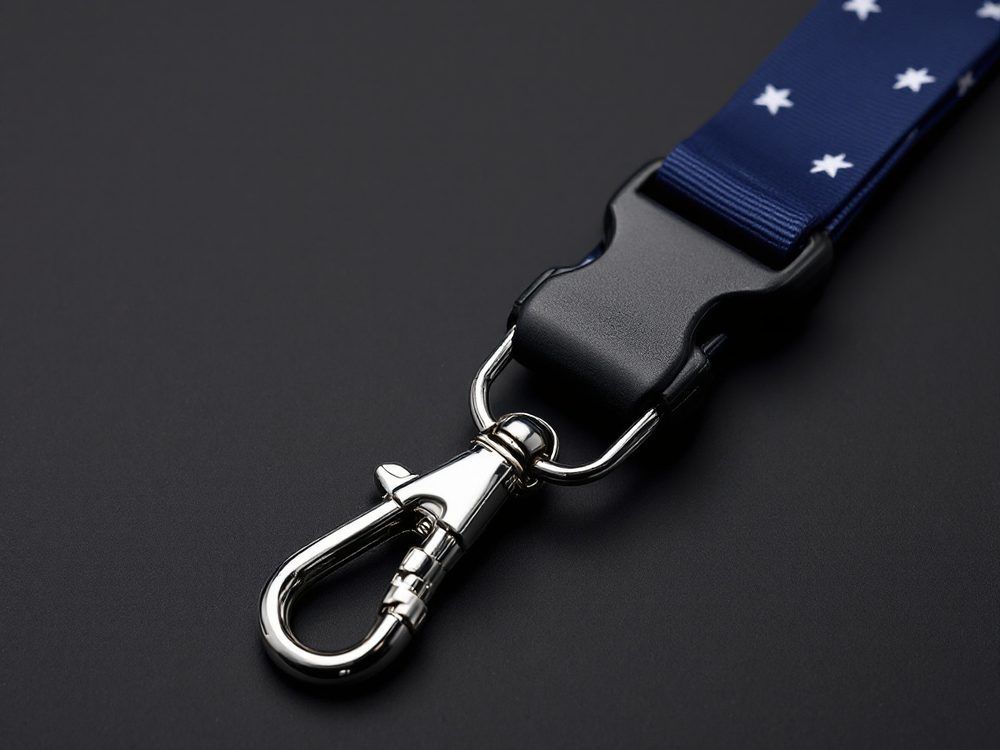
| Buckle release near the hook | Removing the badge without taking the lanyard off | Adds a part to wear |
For staff who swipe a card dozens of times a shift, a badge reel or a buckle release near the hook saves the lanyard and the patience of the wearer. See our guide to lanyard attachments and materials for more combinations. Exact hardware options are confirmed on your quote.
Breakaway releases for workplace safety
A lanyard around the neck can catch on machinery, a door handle, a vehicle or a person. A breakaway release at the back of the neck lets the strap separate under pressure. It is a sensible default for manufacturing, warehouses, workshops, healthcare, schools, security and any role where staff deal with the public in situations that can turn physical.
Your safety officer or insurer may have a policy on this, and some workplaces require breakaways for everyone wearing a neck lanyard. Check before you order. Our post on breakaway lanyards explains how the release works and where it is placed.
Colour coding by role and access
Lanyard colour is a fast visual check that a badge alone cannot give, because a badge is small and often flipped. Many organizations use one colour per group:
- Staff in the brand colour with the logo.
- Visitors in a high-contrast colour, often printed with the word VISITOR.
- Contractors and vendors in a third colour.
- Security, first aid or fire wardens in a colour reserved for them.
- New hires or trainees, if your site benefits from spotting them.
Each colour is usually its own quantity on the quote, so plan numbers per colour. Keep the code simple, publish it to staff, and keep the same colours across sites so people who move between buildings learn it once.
How many to order and how to restock
Start with headcount by group, then add spares for new hires, replacements for lost or worn lanyards, and a supply for visitors, who often walk off with theirs. A year's worth of spares in each colour is a common target. Reorders skip the setup and keep the same colours and imprint, so a later top-up matches the first run. Keep the quote and proof on file with whoever manages badges.
Rolling out new lanyards
If you are replacing an existing program, plan the switch rather than mixing old and new for months. Announce the new colour code a week or two ahead, hand out the new lanyards by department, and collect the old ones so a retired colour cannot be used to look like a current group. Give reception and security a printed card showing each colour and what it means. For multi-site organizations, ship each site its share with a short note on the code, so every building starts on the same day.
If you also run conferences or open days, those lanyards have different needs: one-time use, large volumes and a print tied to the event. Our guide to lanyards for conferences and trade shows covers that side.
What to send for a quote
Send the width and length, the quantity per colour, the material, the number of logo colours or a request for a full colour print, the hardware and any breakaway, your artwork (AI, EPS or PDF is cleanest; PNG accepted; a photo of your current lanyard is enough to start) and the date you need them. Quotes come back in 2 to 3 business days, and nothing runs until you approve the proof in writing. See the materials on our custom lanyards page, then request a quote.