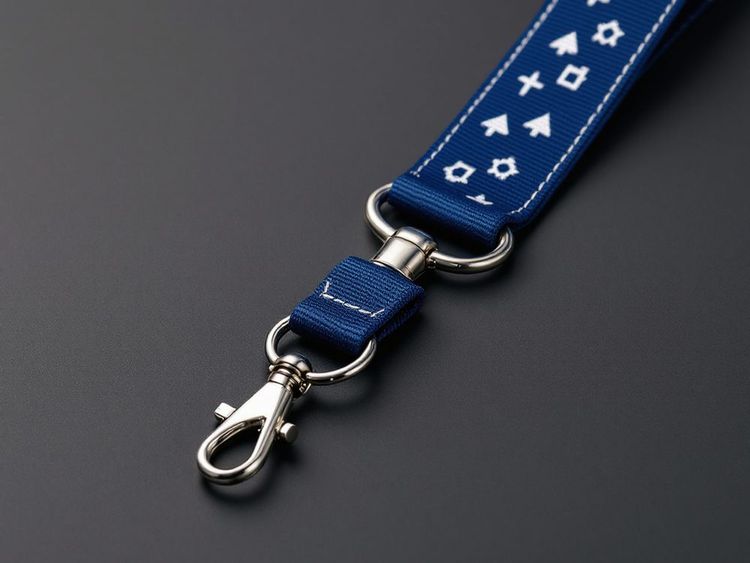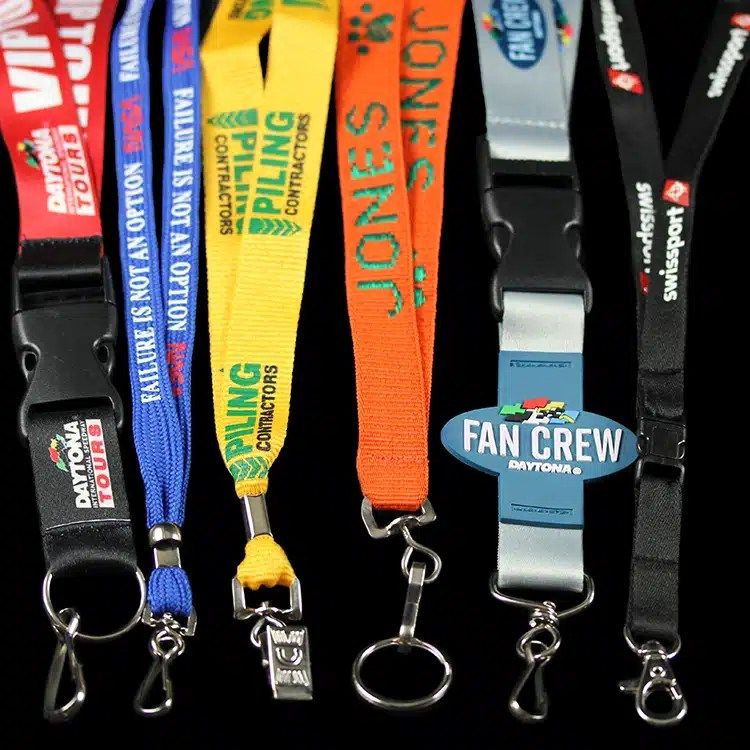
Custom printed lanyards carry your artwork on the strap, applied by screen printing or dye sublimation, while woven lanyards have the design built into the strap itself on a jacquard loom. Both hold a badge the same way. The choice comes down to your artwork, how long the lanyards need to last and the look you want around the neck.
This guide is for event planners, HR and security teams, schools and anyone ordering lanyards in quantity. It explains how each type is made, compares them side by side and shows which one suits which job.
How custom printed lanyards are made
A printed lanyard starts as a plain strap. The artwork is then added in one of two ways.
Screen printing
Screen printing lays solid ink colours on top of the strap, one colour at a time. On a flat woven polyester strap it is the everyday lanyard for staff badges and event credentials. On a smoother woven nylon strap the print comes out sharper, with a softer hand than polyester. Screen printing suits logos built from a few spot colours, and it has a practical limit on how many colours a design can use.
Dye sublimation
Dye sublimation prints the artwork edge to edge in full colour. Gradients, photographs and many colour logos reproduce without being reduced to a handful of spot colours, and there is no colour limit. The dye goes into the fabric rather than sitting on top, so the surface stays smooth and flat.
Tubular lanyards, a round, hollow core strap with a soft, rope like feel, can be printed or dye sublimated too.
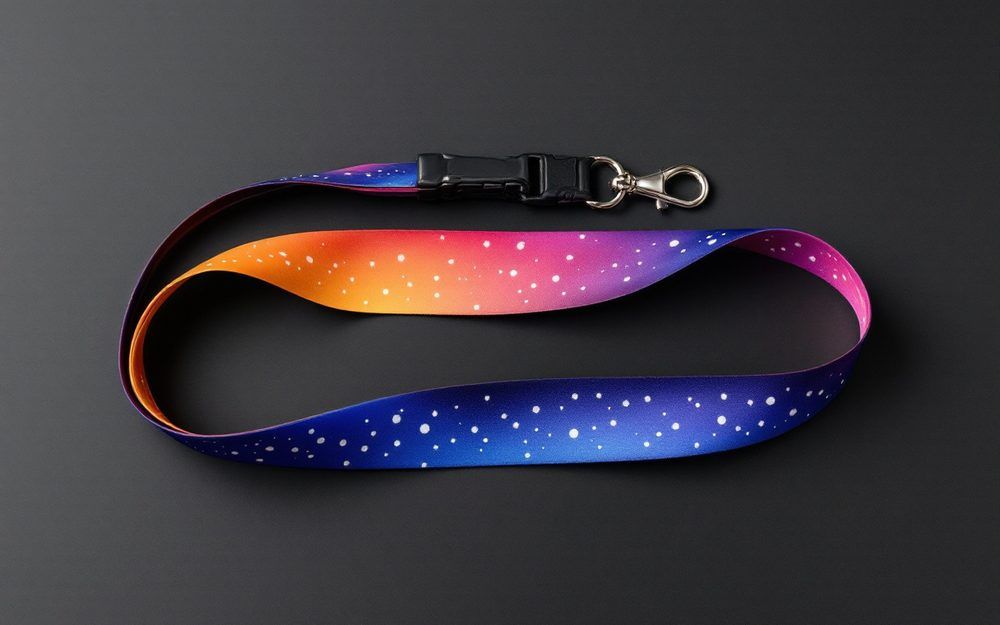
How woven lanyards are made
A woven lanyard is made on a jacquard loom. The threads that make up your logo or text are woven into the strap as it is made, so the design is part of the fabric instead of a layer on top. Nothing sits on the surface to rub off, which is why woven lanyards are built for jobs that have to survive years of daily wear.
Weaving suits bold logos, short words and repeating marks. Like screen printing, it has a practical colour limit, and very fine lines or small lettering are harder to hold in thread than in ink.
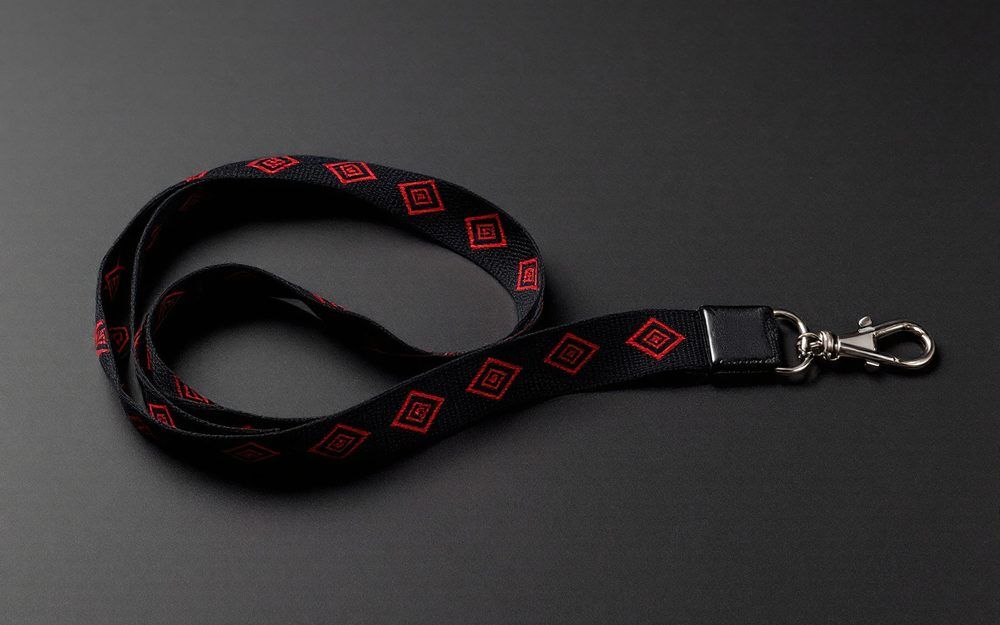
Printed vs woven lanyards compared
| Factor | Screen printed | Dye sublimated | Woven |
|---|---|---|---|
| How the design is made | Ink printed on top of the strap | Dye printed into the fabric | Threads woven into the strap |
| Colours | A handful of spot colours | Full colour, no limit | A practical colour limit |
| Detail | Crisp logos, sharpest on nylon | Photos, gradients and fine art | Bold logos and short text |
| Surface | Ribbed polyester or smooth nylon | Smooth and flat | Woven texture |
| Wear | Good for events and everyday badges | Good for events and branded giveaways | Built for years of daily use |
| Best for | Staff badges, conferences, credentials | Multi colour logos, sponsor art, photos | Long term staff and access lanyards |
Which lanyard suits your job
Choose a printed lanyard when
- The lanyards are for a single event, a conference or a season.
- Your logo uses a few solid colours, which screen printing handles cleanly.
- The artwork has gradients, photos or many colours, which calls for dye sublimation.
- You want a long name or several sponsor marks along the strap.
Choose a woven lanyard when
- Staff will wear the lanyard every day for years.
- The design is a bold logo or a short word that repeats well.
- You want the design to be part of the strap, with nothing to rub off.
Some workplaces use both. Woven lanyards go to permanent staff, and printed lanyards in a different colour go to visitors, contractors or event volunteers, so anyone checking badges can tell at a glance who is who. If you plan a split like this, ask for both on the same quote so the colours and artwork are set together.
For outdoor, marine, park and public safety work, a moulded PVC lanyard is a third option. It wipes clean and holds up outdoors, with the design formed as part of the strap. See every material on our lanyard types section.
Width, text and readability
Common widths are 1/2, 5/8, 3/4 and 1 in. A wider strap gives more room for the imprint and carries a heavier badge more comfortably.
- 1/2 in: light and discreet, room for a short name or a small repeating mark.
- 5/8 in: a common staff badge width.
- 3/4 in: room for a logo and a name, a popular event width.
- 1 in: the most imprint space, suited to sponsors and large logos.
Text needs more room on a woven strap than on a printed one, because thread cannot hold lettering as fine as ink. If a long company name has to go on a narrow lanyard, print it, go wider, shorten the text or repeat a simple logo instead.
Hardware and safety are the same either way
Printed or woven, the strap takes the same hardware. A swivel hook or bulldog clip holds a badge steady, a J-hook makes quick badge changes, a lobster claw clip or split ring works for keys and access cards, and a badge reel lets a card retract and return. A breakaway safety release at the neck lets the strap separate under pressure, which matters anywhere a lanyard could catch on equipment. A buckle release near the hook lets the badge come off without the strap. Our lanyard attachments and materials guide covers each one in detail.
What to send for a lanyard quote
Custom lanyards start from 100 pieces, confirmed on your quote once we know the material and hardware. They typically run 3 to 4 weeks after you approve the proof, with rush production available on some jobs, confirmed on your quote.
- Printed or woven, and the material: polyester, nylon, woven, tubular, dye sublimated or PVC.
- Width and length.
- Number of colours, or full colour sublimation.
- Attachment hardware, plus any breakaway or buckle release.
- Artwork: vector is cleanest, and a photo of an old lanyard is enough to start.
- Quantity, with one or two larger quantities for comparison.
- Your in-hands date.
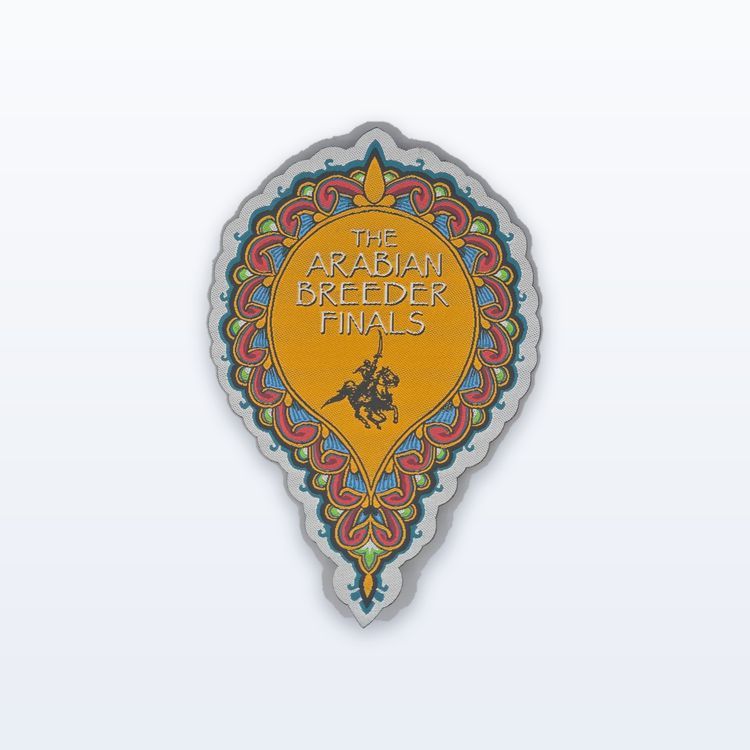
Ordering lanyards for an event that also needs patches or pins? Our guide to custom event patches covers the rest of the kit.
Mock it up, then request a quote
The free Patch Studio has a lanyard mode: upload your logo, choose a width, a material such as polyester, nylon, woven, tubular or dye sublimated, and an attachment, then turn it round in 3D. Send the mockup with your quote request and we come back with a quote from the factory price. The mockup is a rendering, and the proof is what you approve before anything is made.