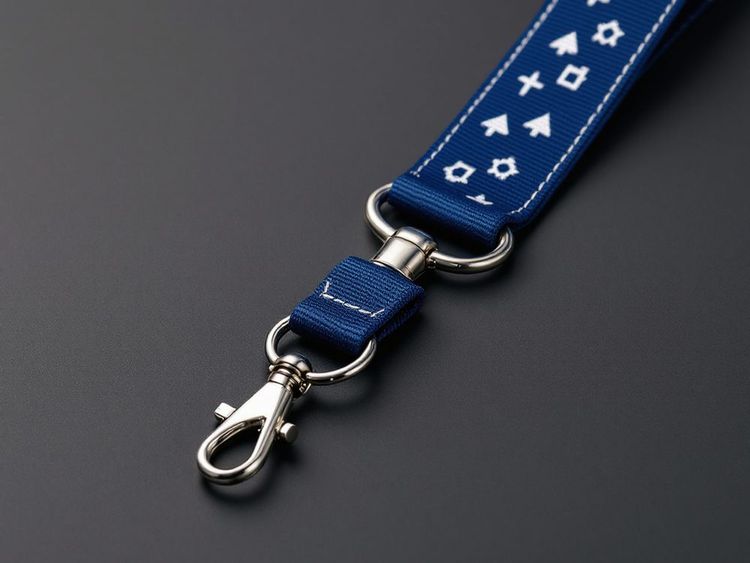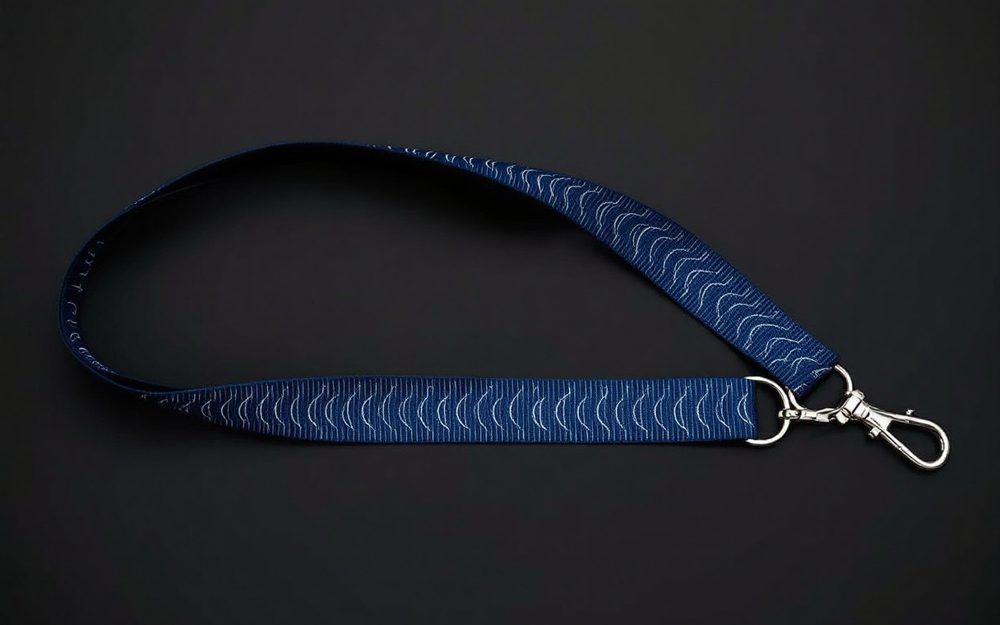
The most common lanyard widths are 1/2, 5/8, 3/4 and 1 in (13, 16, 19 and 25 mm). For a staff ID badge, 5/8 in is the comfortable default; 3/4 in gives room for a logo and a name at events; 1 in is for bold sponsor branding. Most neck lanyards use about 36 in (914 mm) of strap, which hangs the badge around mid chest. Choose the width from what the strap must carry and what it must say, then adjust the length to where the badge should sit.
This guide explains each width and length, how they interact with your artwork and hardware, and how to measure an existing lanyard if you want the new run to match.
How lanyard size is measured
Two numbers describe a lanyard:
- Width is the strap measured flat, edge to edge. It is the main choice and drives both comfort and imprint space.
- Length is usually quoted as the total strap length laid out flat before it is joined, not including the hardware. A 36 in (914 mm) strap folded in half hangs roughly 18 in (457 mm) from the back of the neck, plus the length of the hook and the badge.
Suppliers do not all measure length the same way, so when matching an older lanyard, lay it flat and measure from the fold at the back of the neck to where the strap meets the hardware, then double it. Write both the width and that length on your quote request.
Lanyard widths and what they fit
| Width | Approx. mm | Imprint room | Good for |
|---|---|---|---|
| 3/8 in | 10 mm | A tiny repeating mark only | Keys, light cards, discreet straps |
| 1/2 in | 13 mm | Short name or a small logo | Light badges, budget event runs |
| 5/8 in | 16 mm | Logo or name at a readable size | Everyday staff ID, the common default |
| 3/4 in | 19 mm | Logo plus text, two colours with room | Conferences, trade shows, volunteers |
| 1 in | 25 mm | Large logos, sponsor text, bold colour | Sponsor lanyards, VIP and heavy loads |
Narrower and wider straps exist, but these five cover nearly every job. Our custom lanyards page shows each material, and the exact widths available for each material are confirmed on your quote.
Choosing the width: three questions
What hangs from it?
A single ID card in a slim holder is comfortable on any width. A heavy badge holder, a badge reel, keys and a pen all pulling on one strap dig into the neck on a narrow lanyard. As a rule of thumb, go to 3/4 or 1 in when the load is heavier than a single card.
What does it need to say?
The width sets the maximum height of your logo and lettering, because the imprint runs along the strap. On a 1/2 in strap, a long company name either shrinks until it is hard to read or gets cut down. If the name is long, go wider, shorten the text, or repeat a simple icon instead.
Who wears it, and for how long?
Staff who wear a lanyard for a full shift every day care more about comfort than imprint space. A soft nylon or tubular strap at 5/8 in often feels better than a stiff 1 in strap. Event attendees wearing it for a day or two will put up with more width for the sake of branding.
Standard lengths: neck, short and wrist
- Neck lanyard, standard: about 36 in (914 mm) of strap. The badge sits around mid chest on most adults, which is where card readers and security staff expect it.
- Neck lanyard, shorter: about 32 in (813 mm) or so, for a badge that sits higher, or for younger wearers. Useful for schools and youth events.
- Wrist lanyard: a short loop, often about 6 to 7 in (152 to 178 mm) of strap, for keys, small cameras and USB drives.
- Short key strap: a few inches, made to clip to a belt loop or bag.
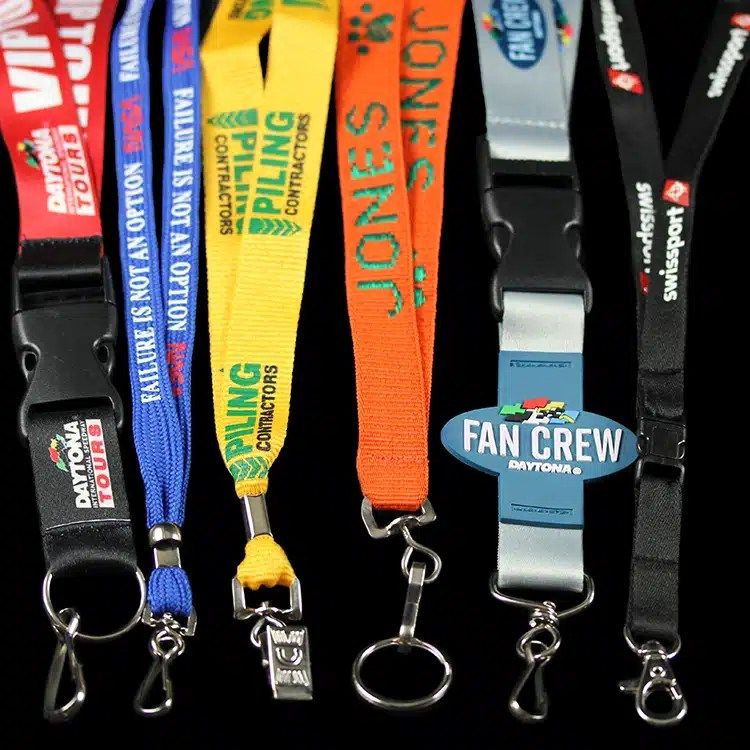
If staff often tap a badge on a reader, a buckle release near the hook lets them unclip the badge without changing the length. If they need it closer, a badge reel lets the card extend and retract. Our lanyard attachments and materials guide covers each piece of hardware.
How width affects the imprint method
The imprint method you choose has its own sweet spot for width:
- Screen printed polyester: works at all common widths. Solid ink colours stay sharp, though very fine text on a 1/2 in strap is a stretch.
- Woven (jacquard): the design is built into the strap. It suits bold text and simple marks, and more width gives the weave room for detail.
- Dye sublimated: prints edge to edge in full colour, so it makes the best use of every bit of a wide strap.
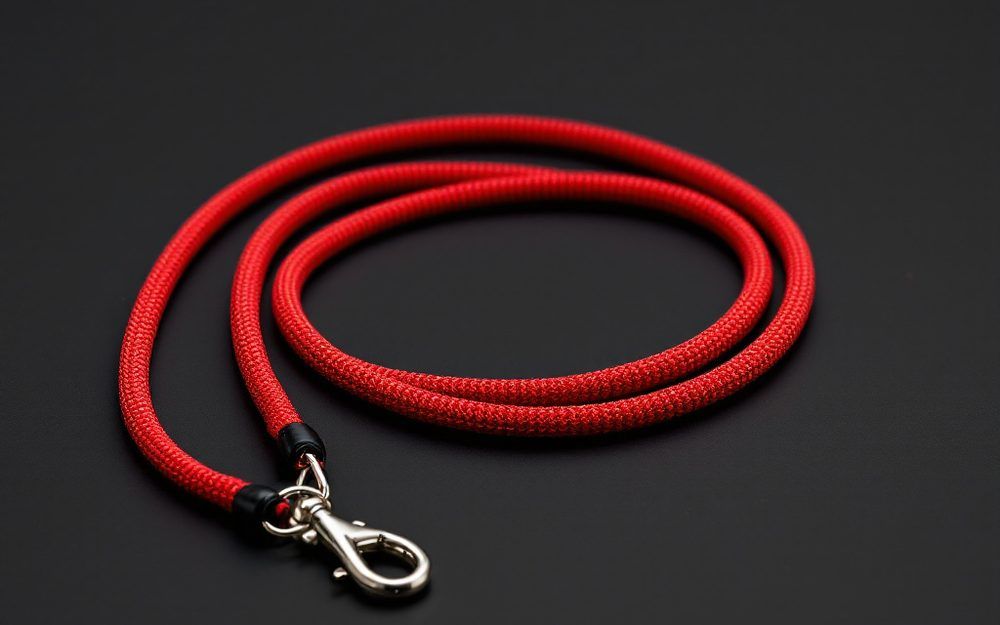
- Tubular: round and rope like, so the visible print area is narrower than the strap width suggests.
Our comparison of printed vs woven lanyards goes deeper on the imprint choice.
Matching an existing lanyard
If you are replacing lanyards your team already wears, send a photo of one laid flat beside a ruler, with the width, the length measured as described above, and the hardware at each end. Note the material too: a ribbed polyester strap and a smooth nylon strap at the same width look and feel different. A clear photo of an old lanyard is enough to start a quote, and the proof confirms width, length and hardware before anything runs.
What to put on the quote
- Width, and length if it is not the standard neck length.
- Material and imprint method, or a description of the look you want.
- Hardware: J-hook, lobster claw, swivel hook, bulldog clip, key ring or badge reel.
- Any breakaway at the neck or buckle release near the hook.
- Artwork, number of colours, quantity and in-hands date.
Not sure on width? The free Patch Studio has a lanyard mode where you can set the width from 1/2 to 1 in, pick a material and hardware, and turn it round in 3D. When you are ready, request a quote. Custom lanyards start from 100 pieces, quoted from the factory price, and nothing runs until you approve the proof in writing.