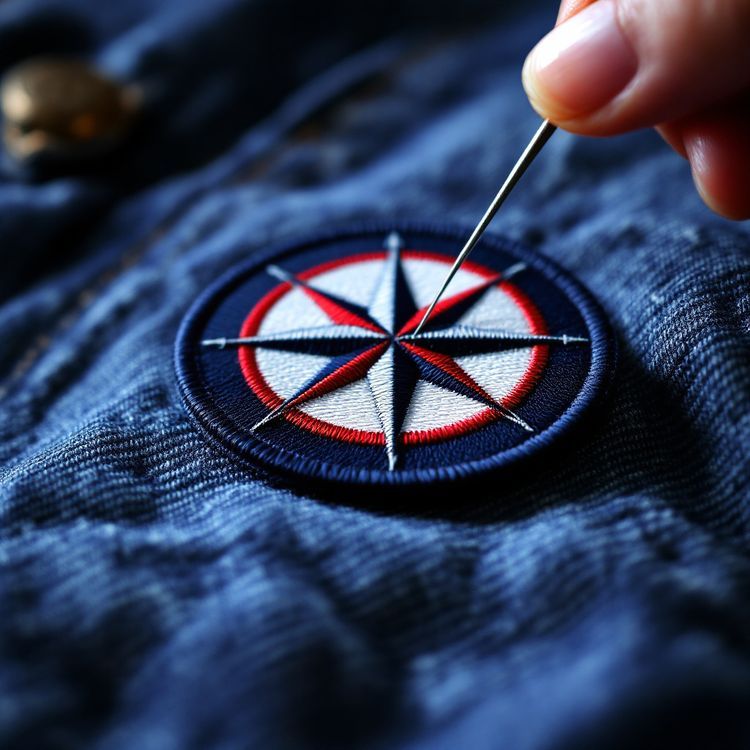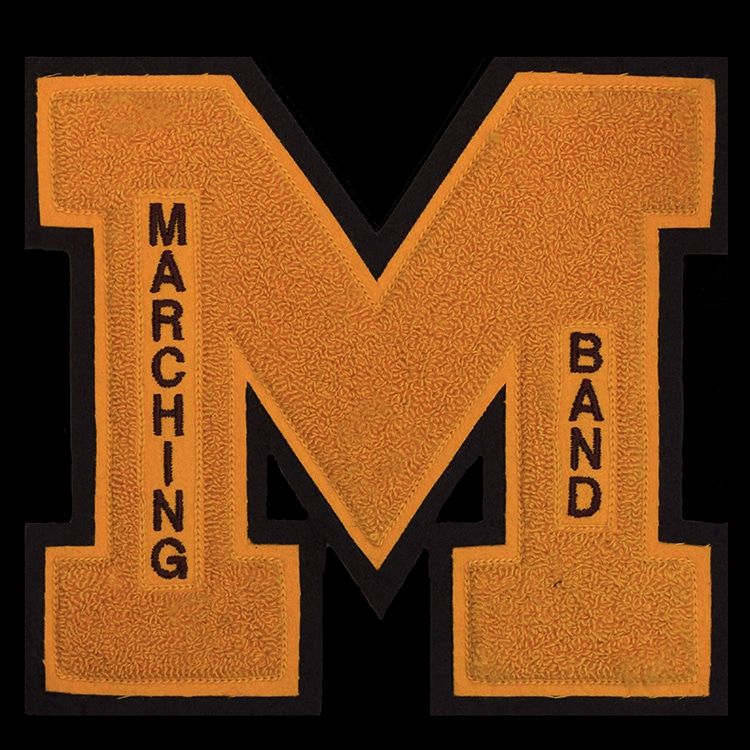
The best way to put a patch on a sweater is to sew it on by hand with loose, even stitches that catch the knit without pulling it, ideally with a thin piece of fabric or stabilizer behind the area to stop it stretching. Iron-on patches rarely hold on sweaters: open knits give the adhesive little to grip, and wool and acrylic yarns can be damaged by the heat an adhesive needs. Lay the sweater flat, pin the patch with the knit relaxed, and stitch through the patch edge and the outer layer only.
Below: why knits behave differently, how to sew a patch on without puckers, where patches sit on letter sweaters and cardigans, and what to order if you are making sweaters for a team or school.
Why knits are tricky
A sweater is made of loops of yarn linked together. That structure is what makes it soft and stretchy, and it causes three problems for patches.
- The fabric moves. A patch is stable and a knit is not. If you sew the patch to stretched fabric, the knit springs back and gathers around it.
- There are gaps. Chunky or open knits have spaces between the loops, so an adhesive touches only the tops of the yarns. That is why iron-on patches tend to peel off sweaters.
- Heat can hurt the yarn. Wool can scorch or felt, and acrylic can melt or go flat and shiny under a hot iron. Even when the adhesive bonds, it can leave the knit stiff or marked.
Fine, tight knits such as a cotton sweatshirt behave more like a hoodie, and our guide to putting patches on a hoodie covers that kind of fabric. For true sweaters, plan to sew.
Before you start
- A patch with a sew-on backing, or an iron-on patch you will sew anyway.
- A blunt tipped or ballpoint needle, which slides between the yarns instead of splitting them. For fine knits, a sharp but thin needle works.
- Polyester or cotton thread matching the patch border. For chunky knits, a matching yarn on a tapestry needle can hide better.
- A piece of thin, lightweight fabric or tear away stabilizer slightly larger than the patch, if the knit is loose or very stretchy.
- Pins, or for delicate knits, a few basting stitches instead.
- Something flat to slide inside the sweater, such as a piece of card or a cutting board, so you do not catch the back.
How to sew a patch onto a sweater
- Lay it flat and relaxed. Place the sweater on a table and smooth it with your hands without pulling. Slide the card inside under the area.
- Add support if needed. For a loose or chunky knit, put the stabilizer or fabric piece inside the sweater, centered behind where the patch will go. It spreads the load across more loops.
- Position the patch. Pin it at the center and corners, or tack it with a few long basting stitches. Try the sweater on and check the position in a mirror.
- Stitch around the edge. Bring the needle up just inside the patch border, then down through the knit right at the edge, catching a yarn rather than the gap between yarns. Space stitches about 1/8 in (3 mm) to 1/4 in (6 mm) apart.
- Keep tension loose. Each stitch should lie flat. If the knit dimples, you are pulling too hard.
- Finish inside. Knot the thread on the inside, trim the stabilizer close to the stitching if you used tear away, and remove the basting.
For stitch types and finishing knots, see our guide to sewing on a patch. Machine sewing is possible on firm knits with a walking foot, a ballpoint needle and a stabilizer, but on most sweaters hand sewing gives you more control.
Letter sweaters and chenille
The classic patch sweater is the letter sweater: a heavy cardigan or pullover with a large varsity letter on the chest. Those letters are usually chenille, a tufted loop yarn on a felt base, and they are sewn on, not ironed.
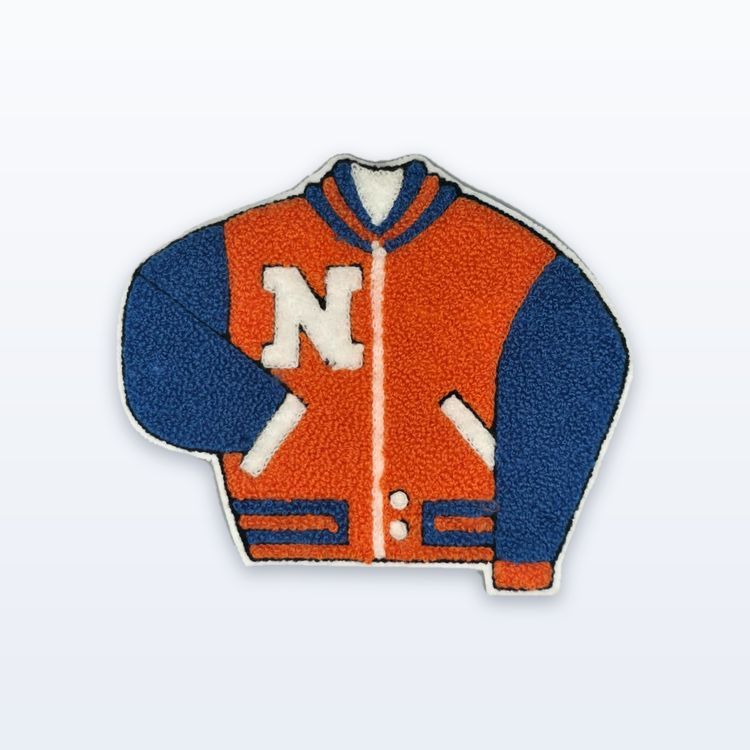
The felt edge around a chenille letter gives you a clean margin to stitch through. Sew right at the outer edge of the felt with matching thread so the stitches disappear. Letters are commonly placed on the left chest of a cardigan, between the button band and the side seam, or centered on a pullover. Smaller chenille or embroidered pieces for activities, years or awards often go on the sleeve. Our post on chenille patches for letterman jackets covers letter sizes and layouts that carry over to sweaters.
Where patches sit on a sweater
| Placement | Typical patch | Notes |
|---|---|---|
| Left chest, cardigan | Chenille letter or crest | Keep clear of the button band and buttonholes |
| Center chest, pullover | Large letter or logo | Sit it below the neckline ribbing |
| Upper sleeve | Small emblem or year patch | Sew with the arm slightly bent to allow for stretch |
| Elbow | Elbow patches | Center on the elbow with the arm bent |
| Back | Large name or club design | Heavy patches can drag a light knit down |
Avoid ribbed cuffs, the waist ribbing and the neckband. Ribbing is designed to stretch a lot and will fight any patch.
Choosing a patch for a knit
Weight matters on a sweater more than on a jacket. A large, fully stitched patch on a fine merino knit will pull the fabric down and look stiff. Some general guidance:
- For fine knits, choose a smaller patch or a thin, flexible woven patch.
- For chunky knits and letter sweaters, chenille and embroidered patches look proportionate.
- A merrowed border is easy to stitch around on simple shapes. Heat cut edges follow custom outlines.
- Order sew-on backing. An iron-on layer adds stiffness and does not help on most knits.
If you are outfitting a school, team or club with sweaters, send us the sweater style, yarn content and placement with your artwork and we will suggest construction and size on the quote. You can request a quote and expect it back in about 2 to 3 business days, with a proof to approve in writing before anything runs.
Washing a sweater with patches
Follow the sweater's care label, which usually means hand washing or a gentle wool cycle in cool water and drying flat. Turn the sweater inside out first so the patch does not rub against other items. Chenille in particular prefers gentle handling, and many letter sweaters are dry cleaned. If a stitch breaks, repair it before the patch edge starts to curl.
Fixing a patch that pulls or puckers
If the knit has gathered around a patch you already sewed, do not try to stretch it out by force. Snip the stitches along the puckered side only, relax the fabric, and restitch that side with looser stitches. If the whole patch drags the sweater down, the patch is too heavy for the knit: add a slightly larger piece of soft backing fabric inside to spread the weight, or move the patch to a firmer area such as the upper chest near the shoulder seam. A snagged loop next to the patch can be eased back to the inside of the sweater with a crochet hook rather than cut, which keeps the knit from running.