To choose a custom patch company, compare how each one handles the parts of a job that can go wrong: a clear written quote with no hidden extras, a proof you approve in writing before production, honest turnaround dates, a straight answer on minimums, the constructions you actually need, and a real person who answers when you call. Price matters, but two quotes are only comparable when they describe the same patch. The questions below help you find out what you are really being offered.
Get your own specification ready first
You cannot compare quotes if every company is quoting a different patch. Before you contact anyone, write down the same specification and send it to each.
- Artwork, ideally as AI, EPS or PDF. A PNG or a photo of an old patch works to start.
- Width and height in inches, and where the patch will go.
- Construction: embroidered, woven, chenille, twill, bullion or sublimated, or ask for a recommendation.
- Border and backing.
- Quantity, and whether you want a second quantity priced for comparison.
- In-hands date and delivery address.
If you are unsure about any of these, our step by step guide to ordering custom patches covers each choice.
Questions about the quote
Does the quote include everything?
Ask what the price covers. Some suppliers show a low patch price, then add digitizing, setup, border upgrades, backing or shipping separately. A useful quote states the size, construction, border, backing, quantity and every charge, so you can see the total. If a line is missing, ask whether it is included or extra.
How is size measured?
Many patch makers price by the average of width and height. Others state width and height. If one company quotes a 3 in patch and another quotes 3 x 3.5 in, those are not the same patch. Our guide on how to measure a patch explains the common methods.
How fast will I get a quote?
A quote should not take weeks. Ours come back in 2 to 3 business days. Any company should be able to give you a clear timeframe for the quote itself.
Questions about proofs and approval
The proof is your protection. Ask whether you will see a proof before production, how long it takes, and whether production waits for your written approval. It should. A company that starts production without your sign-off leaves you with no say if a name is misspelled.
Also ask how revisions work. Fixing the proof so it matches what you asked for should be part of the job. At Patchworks USA, the proof usually comes 1 to 3 business days after we have artwork, and nothing runs until you approve it in writing. Our patch proof checklist shows what a good proof should list.
Questions about what they make
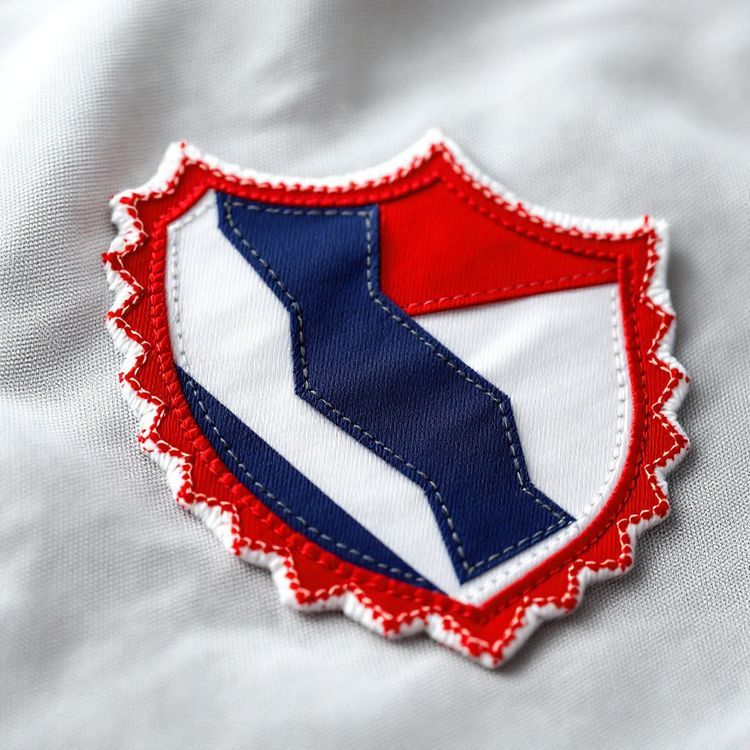
Some companies make one or two patch types well and recommend those for everything. Ask which constructions they offer and when they would suggest each one. A good supplier will tell you when your design suits woven better than embroidery, or when a photo-based design needs sublimation. We make six constructions: embroidered, woven, chenille, satin tackle twill, hand embroidered bullion and sublimated, with sew-on, iron-on, hook-and-loop and rigid plastic backings. You can see them on the custom patches page.
If you also need lapel pins, challenge coins, lanyards or woven labels for the same program, ask whether the company handles those too. One supplier for related items can simplify approvals and keep branding consistent.
Equally, ask what they do not make. A clear "we don't make that" is more useful than a promise that turns into a substitute. For example, we do not make PVC or leather patches, 3D puff or glow-in-the-dark thread, and we say so.
Questions about turnaround and minimums
Ask for typical production time after proof approval, and whether a rush is possible. Be wary of any company that promises a date before it has seen your design. Turnaround depends on construction, quantity and the factory schedule. Our standard production runs about 3 to 4 weeks after proof approval, with rush around 10 business days when the factory can hold it. See rush custom patches for what affects a rush.
Ask about minimums too. Many custom patch companies set a minimum because setup costs need to be spread across enough pieces. Ours starts from 100 pieces and varies by product. A company that quotes very small quantities may be charging more per piece to cover the setup, so compare the total, not just the headline.
| Question | A good answer | A warning sign |
|---|---|---|
| What does the quote include? | Every charge listed in writing | Extras appear after you pay |
| Will I see a proof? | Yes, and production waits for written approval | Production starts without sign-off |
| How long will it take? | A typical range confirmed on the quote | A firm date before seeing the art |
| What is the minimum? | A clear number for your product | Vague or changes later |
| What about reorders? | The file stays on record | You pay for setup again each time |
| Who do I call? | A named person and a phone number | A web form only |
Questions about reorders and the long term
A patch program usually lasts years. Ask what happens when you need more. A company that keeps your digitizing on file can repeat the patch without new setup, which saves money and keeps every run consistent. Ours does: reorders skip setup. Ask, too, whether you can get a copy of the final artwork for your records.
Comparing two quotes side by side
Once the quotes are in, put them in one table: size, construction, border, backing, quantity, each charge, production time and shipping. Any line one supplier filled in and another left blank is a question to ask. Check, too, whether each quote is for the same quantity. A quote at a higher quantity will always show a lower price per piece, which can make it look cheaper when the total is actually higher.
Then weigh what is not on the page. How clearly did each company answer your questions? Did anyone point out a detail that would not stitch well at your size, or suggest a better backing for your garment? Small signals like these usually tell you how the rest of the job will go.
Talk to a person before you commit
Before placing an order, call or email with one real question about your design. How the company answers tells you a lot. Does someone reply clearly and quickly? Do they ask the right questions about placement and backing? Do they explain trade-offs, or simply say yes to everything? You can send your design for a quote and judge the answer for yourself.