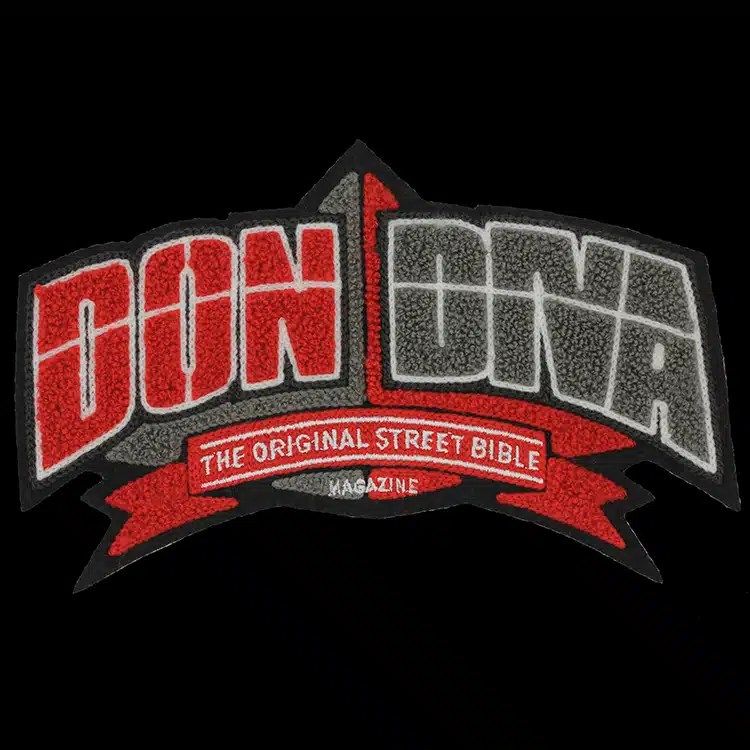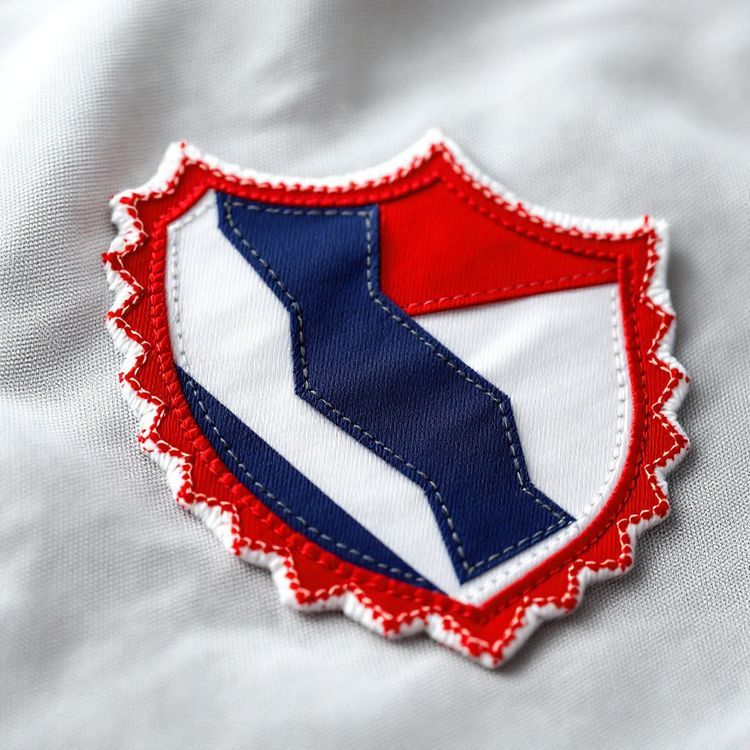
A hockey jersey usually carries four kinds of patches: the front crest, captain and alternate letters (the C and A), shoulder patches with a secondary logo, and the occasional commemorative or tournament patch. Crests and letters are traditionally satin tackle twill or embroidered and sewn on. Captain letters are usually about 3 in (76 mm) tall, but check your league's rulebook. Shoulder patches are typically about 3 to 4 in (76 to 102 mm).
This guide goes through each patch in turn, the materials that survive hockey, and how to order a set for a whole program, from mites to adults.
The front crest
The crest is the team's main logo on the chest, and it is the biggest patch on the jersey. On adult jerseys it is commonly about 10 to 12 in (254 to 305 mm) wide, scaled down for youth sizes. Some programs order two crest sizes, one for youth jerseys and one for adult, so the logo sits in proportion on both.
There are two common ways to make it:
- Satin tackle twill: layered fabric shapes with a zigzag stitched edge. This is the classic pro look, light for its size and flexible enough to move with the jersey.
- Embroidered: thread over a twill base. It holds finer detail, such as a small mascot face or thin outlines, but a fully stitched 11 in crest is heavier and stiffer.
A common approach is a twill crest with embroidered detail for the small parts (eyes, teeth, fine lines), which gets you both the pro look and the detail.
Captain and alternate letters
The captain wears a C and alternates wear an A. Major rulebooks typically describe the letter as about 3 in (76 mm) high, worn in a conspicuous place on the front of the jersey, usually the upper left chest. Rules vary between governing bodies and leagues, so confirm the size and placement in your own rulebook before you order. Some leagues allow the letter on the right chest or require it on both home and away jerseys.
Construction
Captain letters are usually tackle twill in two layers (a team colour letter on a contrasting outline) or embroidered with a merrowed or heat cut edge. Heat cut follows the letter outline closely. A letter on a small shield or circle lets you use a merrowed border.
Sewn on or removable
Junior and adult teams with a set captain usually sew the letter on. Youth teams that rotate the captain game by game often prefer a removable letter: sew a hook-and-loop field on each jersey once, and put the matching backing on the letters, so the C moves between players in seconds. Check that your league accepts removable letters. Our hook-and-loop patch guide explains how the backing works.
Shoulder patches
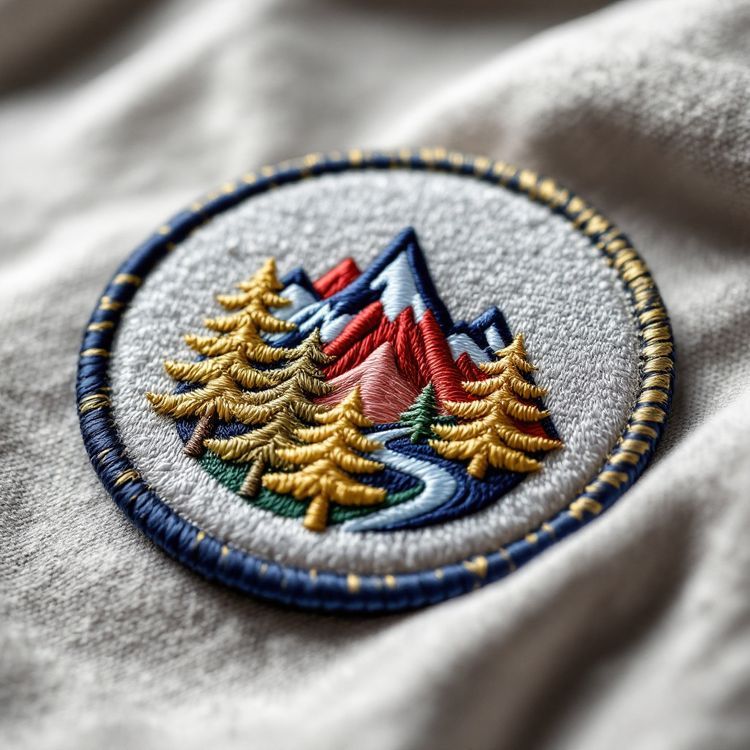
The shoulder yoke is where many teams put a secondary logo: a monogram, a city mark, a league logo or a simpler version of the crest. Shoulder patches are usually about 3 to 4 in (76 to 102 mm) and round, shield-shaped or cut to the logo outline. Because they are smaller, an embroidered patch is the natural choice. Embroidery holds small lettering better than twill at this size.
Keep shoulder logos simple. At 3 in, lettering below about 1/4 in (6 mm) tall stops reading clearly in embroidery. If the secondary logo has fine text, a woven patch holds smaller detail.
Memorial, anniversary and tournament patches
Teams add patches for a season: a memorial patch for a coach or player, an anniversary year, a championship or a tournament. These usually go on the chest opposite the captain letter, on the sleeve, or on the back above the name bar. Common sizes are about 2.5 to 3.5 in (64 to 89 mm).
Plan them with the season in mind. If the patch is for one season, a sew-on patch tacked at the edges comes off cleanly afterward. A tournament host can order a patch for every participating team, which players then add to bags or jackets as a keepsake.
Hockey patch sizes at a glance
| Patch | Typical size | Usual construction | Placement |
|---|---|---|---|
| Front crest, adult | About 10 to 12 in wide | Tackle twill or embroidered | Centre chest |
| Front crest, youth | About 8 to 9 in wide | Tackle twill or embroidered | Centre chest |
| Captain or alternate letter | About 3 in tall, check rulebook | Tackle twill or embroidered | Upper left chest |
| Shoulder patch | About 3 to 4 in | Embroidered or woven | Shoulder yoke |
| Memorial or anniversary | About 2.5 to 3.5 in | Embroidered | Chest, sleeve or back |
Goalie jerseys are cut wider, so some teams order the goalie crest one size up to keep the proportions right. If you outfit several age levels, list each crest size with its own quantity on the request. These are general guides. Measure your jersey, especially for youth sizes and goalie cuts, before you settle on a size.
Attaching patches to hockey jerseys
Hockey jerseys are usually polyester mesh or knit, they are stretched over pads, and they go through a lot of washing. Sewing is the dependable method. Iron-on adhesive is designed for cotton and blends, and heat can mark or melt some jersey fabrics, so it is best avoided as the only attachment.
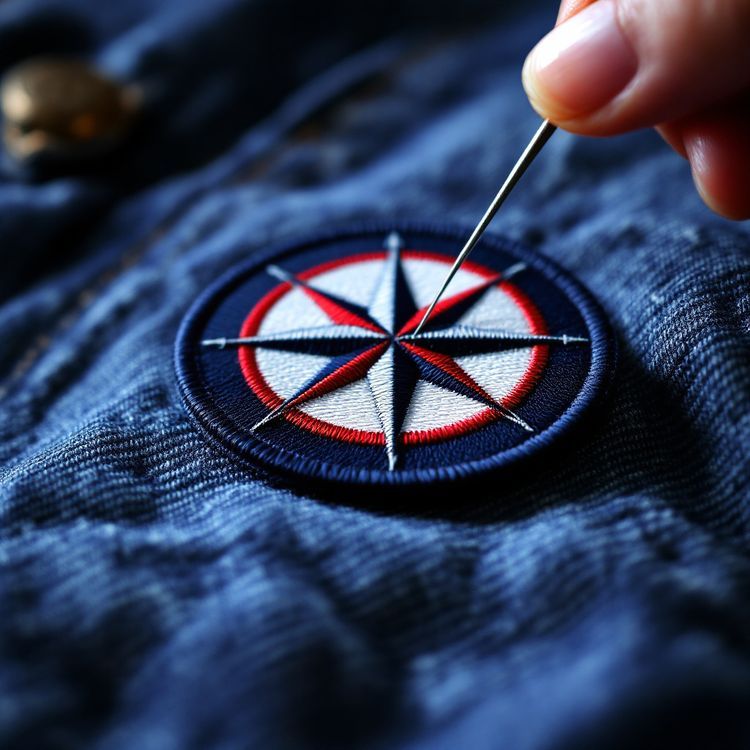
Use a zigzag or straight stitch just inside the edge, with polyester thread that matches the patch border. Many teams have a local sewing shop or the jersey supplier attach crests for the whole order. If you sew them yourself, our guide on how to sew on a patch covers hand and machine methods.
Ordering for a team or program
Put every patch on one quote: crests in each size, letters, shoulder patches and any season patch. Custom minimums start from 100 pieces and vary by product, so a single team often adds spares, practice jersey crests or patches for the rest of the club. Send a vector file (AI, EPS or PDF) of the logo if you have one. A photo of an old jersey is enough to start.
Timing matters before the season. A quote typically returns in 2 to 3 business days, the proof about 1 to 3 business days after artwork, and production about 3 to 4 weeks after your written approval. Allow extra time for sewing onto jerseys. Rush is around 10 business days when the factory can hold it, confirmed on the quote. Our sports team patches guide covers numbers and tournament patches across other sports too.
Ready to start? Send your logo and jersey details for a quote.