Greek letter patches are usually made one of three ways: chenille for a soft, raised varsity look on jackets and sweatshirts, satin tackle twill for the classic stitched-letter look, and embroidery for smaller letters, crests and chapter details. For most chapter orders, choose twill or chenille letters at about 3 to 4 in (76 to 102 mm) tall for the chest, and embroidered patches for crests, caps and bags. Check with your national office about trademark licensing before you order anything with your letters or crest.
This guide covers the three constructions, sizes that work on common garments, colour choices, the licensing question most chapters forget, and how to put together one order that covers new members, officers and alumni.
Three ways to make Greek letters
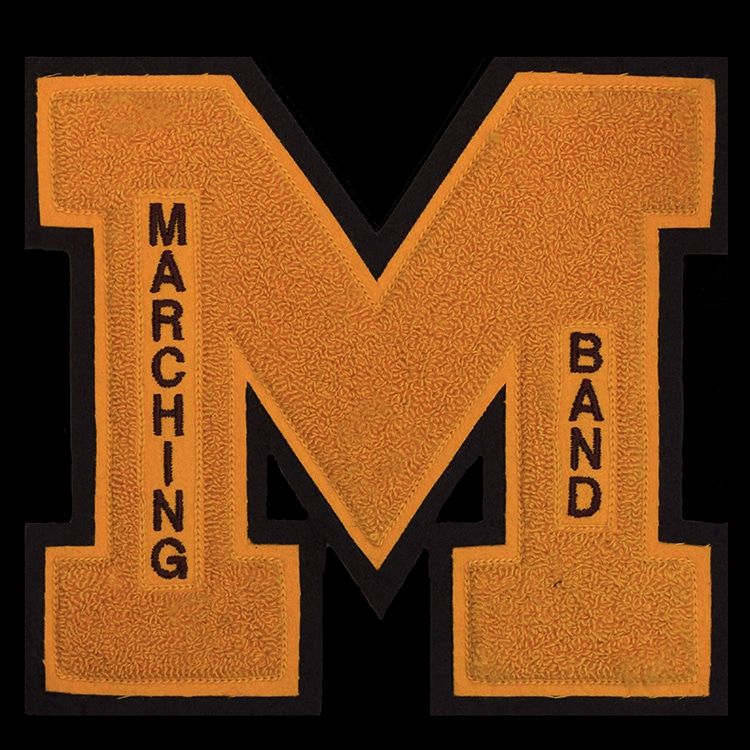
Chenille letters
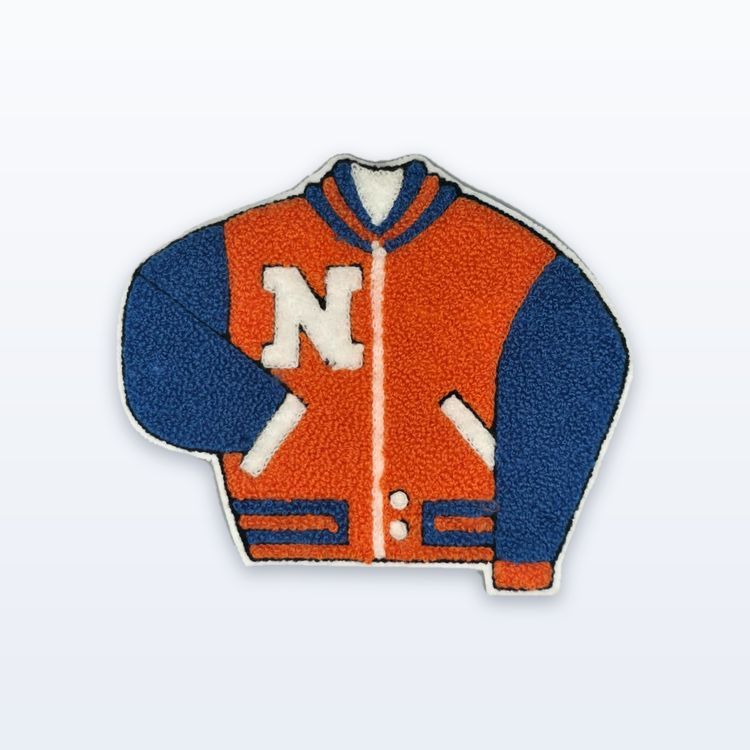
Chenille patches are made from looped yarn tufted onto a felt base, so the letters have a thick, fuzzy pile you can feel from across the room. They are the same construction used for varsity letters, which is why they suit letterman-style jackets, crewneck sweatshirts and blankets. Chenille works best for bold shapes, and Greek letters are ideal for it: they are simple, blocky and usually only two or three characters.
A chenille letter normally sits on a felt border in a second colour, and small details such as a chapter name or founding year can be added in embroidery on the felt.
Tackle twill letters
Satin tackle twill is cut fabric applique, finished with a zigzag stitch around each edge. It is the look people mean when they say stitched letters on a sweatshirt. Twill letters are flatter and lighter than chenille, so they suit hoodies, T-shirts, jerseys and anything that is washed often. Layered twill (one colour on top of another, like a white letter on a navy letter) gives the outlined look many chapters want.
Embroidered patches
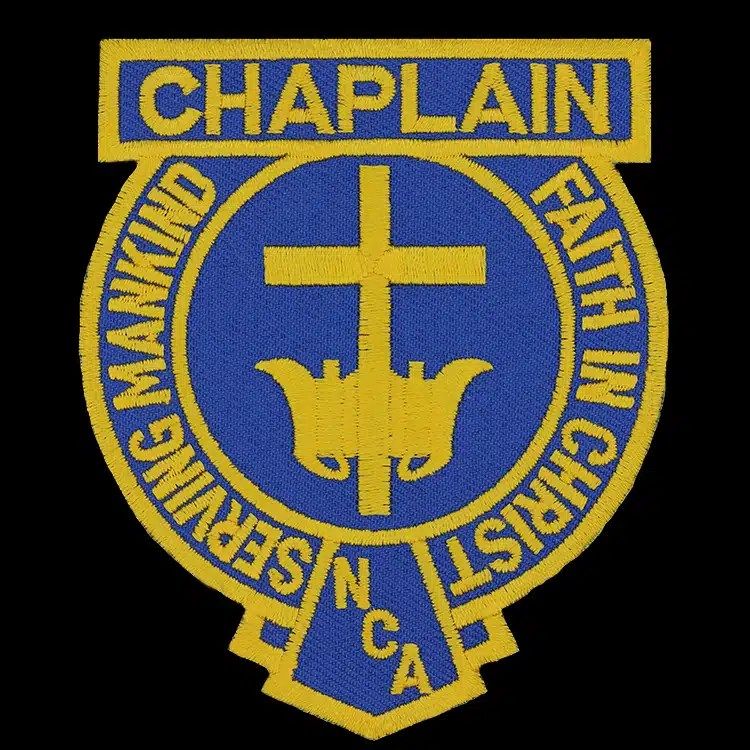
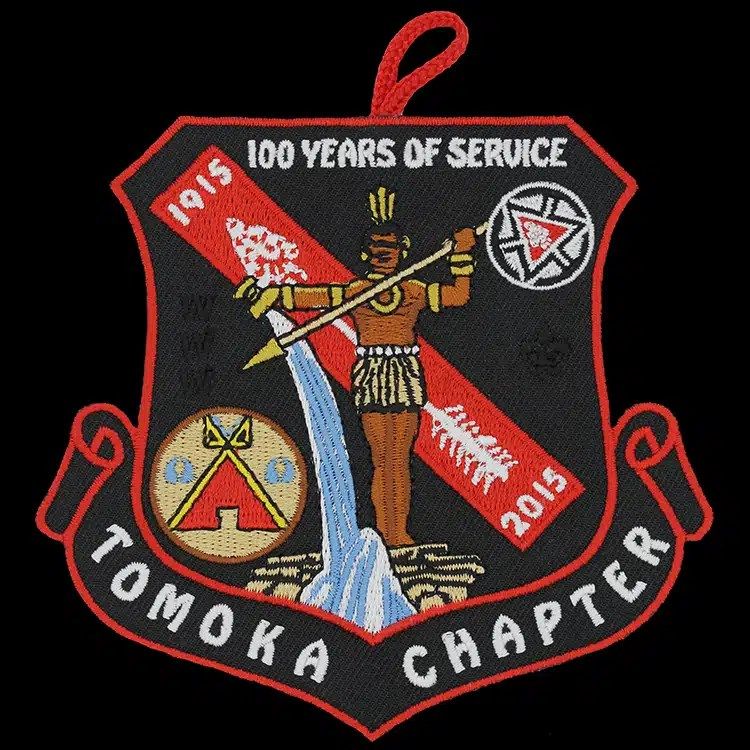
An embroidered patch is thread stitched over a twill base. It holds more detail than chenille or twill, so it is the right choice for a full crest, a coat of arms, a small letter patch for a cap, or a design that combines letters with a chapter name, a symbol and a year.
Chenille vs twill vs embroidered at a glance
| Factor | Chenille | Tackle twill | Embroidered |
|---|---|---|---|
| Look | Thick, fuzzy, varsity | Flat fabric with stitched edge | Raised thread, fine detail |
| Best for | Jackets, crewnecks, blankets | Hoodies, tees, jerseys | Crests, caps, bags, small letters |
| Typical letter height | About 3 to 5 in | About 2.5 to 4 in | Under 3 in or a full crest |
| Fine detail | Low | Low to medium | High |
| Weight on garment | Heaviest | Light | Medium |
Many chapters order two of these: twill or chenille letters for apparel, plus an embroidered crest patch for jackets, bags and gifts.
Sizes and placement that work
Greek letters are wide, so measure the full letter set, not one character. As a general guide:
- Across the chest of a sweatshirt or hoodie: letters about 3 to 4 in (76 to 102 mm) tall, with the set spanning roughly 8 to 11 in (203 to 279 mm).
- Left chest of a jacket or quarter zip: about 2 to 2.5 in (51 to 64 mm) tall.
- Back of a jacket: a larger chenille set or a crest of 8 to 10 in (203 to 254 mm).
- Cap front: a small embroidered letter patch about 2 in (51 mm) tall.
- Sleeve: a 3 in (76 mm) crest or a short line with the chapter name.
For two-letter and three-letter sets, decide whether you want each letter as a separate piece (more flexible spacing, common for stitched letters) or the whole set joined as one patch (faster to apply and always spaced the same). Joined sets are easier for members who apply their own. Our patch size guide covers measuring for each placement.
Colours, outlines and pattern fills
Most chapters use their official colours, and many have specific shade references from their national office. Send those with your artwork. Thread and felt are matched as closely as possible to your references, so give us a Pantone number if you have one.
Outlines make letters readable on any garment colour. A light letter with a dark outline (or the reverse) reads on both light and dark sweatshirts, so one patch design covers more of the apparel your members already own. A two-layer twill letter, or a chenille letter on a contrasting felt border, gives you that outline built in.
Patterned letters, where the letter is filled with plaid, florals or a print, are popular on sorority apparel. A flat thread or felt construction cannot reproduce a printed pattern. If the fill has to be a photo or a busy print, a sublimated patch, which is dye printed in full colour, is the construction that can carry it. Tell us early so we quote the right type.
Check licensing with your national office
Many national fraternities and sororities register their names, letters, crests and badges as trademarks, and some require that merchandise carrying them be made by a licensed vendor or approved by headquarters. The rules differ by organization, and some treat the crest or badge more strictly than the letters alone. Before you order, ask your chapter advisor or national office what approval is needed and whether there are rules about where the crest may appear.
We make patches to your artwork, and it is the chapter's responsibility to confirm it has the right to use the marks. Getting this answer first avoids a reprint, and it often gets you the official artwork files, which are cleaner to work from than a photo.
Planning one chapter order
The easiest chapter orders combine several needs on one quote, with each design priced separately:
- Letter sets for new member apparel, in one or two sizes.
- An embroidered crest patch for jackets, bags and gifts.
- Officer or recruitment patches with a title line, if you need them.
- Alumni or anniversary patches with a founding year.
- Matching lapel pins for recruitment or recognition, if national rules allow.
Custom minimums start from 100 pieces and vary by product, so a chapter of 40 often orders letters for current members plus a spare stock for the next new member class. Reorders skip setup and the digitizing stays on file, which makes the next class easy to match. Our step-by-step ordering guide lists everything to collect before you request a quote.
Backing, timing and getting a quote
For letters that go on sweatshirts and hoodies, iron-on (heat seal) backing makes application easy and is often finished with a quick stitch around the edge for long-term wear. Chenille on a heavy jacket should be sewn. Embroidered crests can be sew-on or iron-on depending on the garment. Our guide to patch backing types explains each option.
Work back from your date. A quote typically comes back in 2 to 3 business days, the proof about 1 to 3 business days after artwork, and production about 3 to 4 weeks after you approve the proof in writing. If you need letters for bid day or a formal, start a month and a half out. Rush is around 10 business days when the factory can hold it, confirmed on your quote.
To start, send us your letters or crest with the colours, sizes, quantity, backing and in-hands date. A photo of an existing patch is enough to begin. You can also try the design in our free Patch Studio first.