Custom metal badges are struck metal emblems made to your organization's design, plated in gold, silver or nickel, often filled with enamel colour, and fitted with a pin back, clip or magnet so they can be worn on a uniform, a jacket or a lanyard. Organizations, private security companies, event teams, award programs and collectors all order them. One rule comes first: official law enforcement badges need the agency's authorization, and impersonating an officer is a crime. We do not make replicas of real agency badges without that authorization.
Below we cover who uses metal badges, how a badge design is laid out, finishes and attachments, the rules on insignia, and what to send for a quote.
Who orders custom metal badges
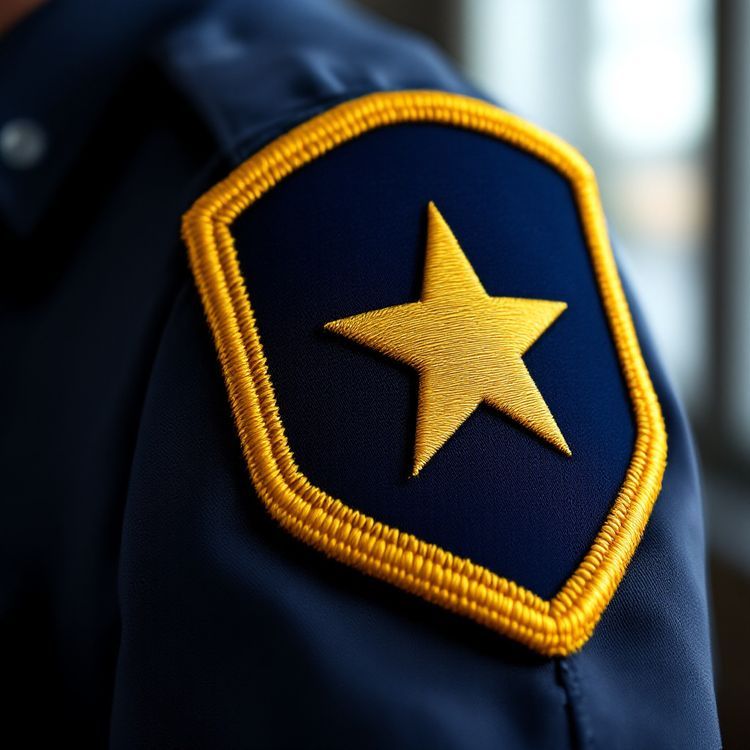
- Private security companies: a company badge worn with the uniform or carried with an ID card, alongside the shoulder patch.
- Organizations and associations: fraternal lodges, auxiliary groups, clubs and volunteer organizations that present a badge as a mark of membership or office.
- Agencies ordering their own badges: fire, EMS, corrections, campus safety and other departments ordering official badges through their own authorized purchasing.
- Events and venues: staff, marshal and official badges for large events, worn on a lanyard or a jacket.
- Awards and collectibles: honorary badges, anniversary editions and commemorative pieces made to sit in a display case.
Authorization, impersonation and official insignia
Badges carry authority, so the rules matter. Federal law makes it a crime to falsely pose as a federal officer or employee (18 U.S.C. 912), and every state has its own laws against impersonating a police officer. Many states also restrict how private security companies may describe themselves and what their badges and patches may look like, so the public is not misled into thinking a guard is a police officer. The details vary by state, so check with your state's security licensing authority before you finalize a design.
In practice, that means:
- Official law enforcement badges are ordered by, or with written authorization from, the agency.
- We do not reproduce a real agency's badge without that authorization, including for gifts, displays or film use.
- Security companies should use their own name and design, and avoid words and layouts your state reserves for police.
- Seals, coats of arms and military insignia have their own rules on use; check with the body that owns them.
How a badge design is laid out
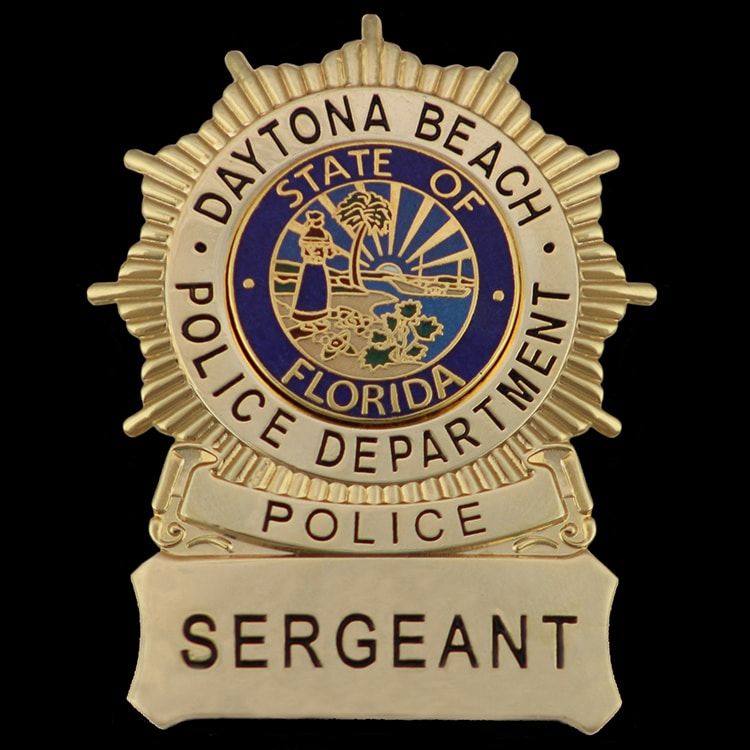
Most badges follow a familiar structure, and working within it makes the design read as a badge rather than a large pin.
| Element | Where it sits | What it usually carries |
|---|---|---|
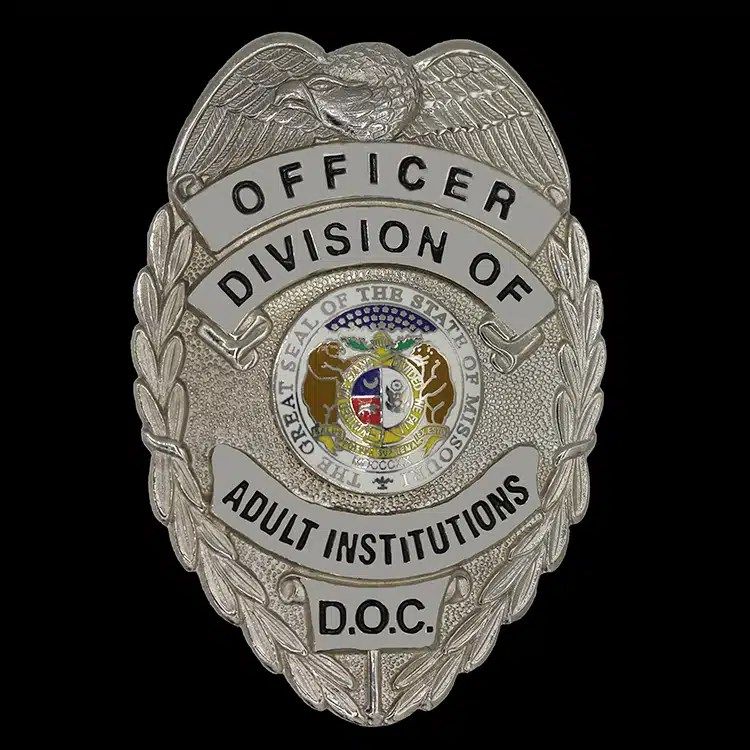
| Outline | The whole badge | Shield, star, eagle-topped shield, sunburst or oval |
| Top panel | Upper banner | Organization name or title such as Officer or Member |
| Center seal | Middle | Logo, crest or emblem, often in enamel |
| Bottom panel | Lower banner | Location, division or number |
| Topper | Above the outline | An eagle or other emblem, struck as part of the badge |
Keep panel lettering short and large. Metal holds fine lines better than thread, but small letters on a curved banner can still fill in, especially once enamel is added. Our police and sheriff patch design guide covers the same principles of hierarchy for the matching shoulder patch, and our post on security guard patches covers the uniform side for security companies.
Plating, enamel and finish
A badge is struck from a die made from your artwork, which gives raised metal lines and recessed areas. The finish then comes from plating and colour:
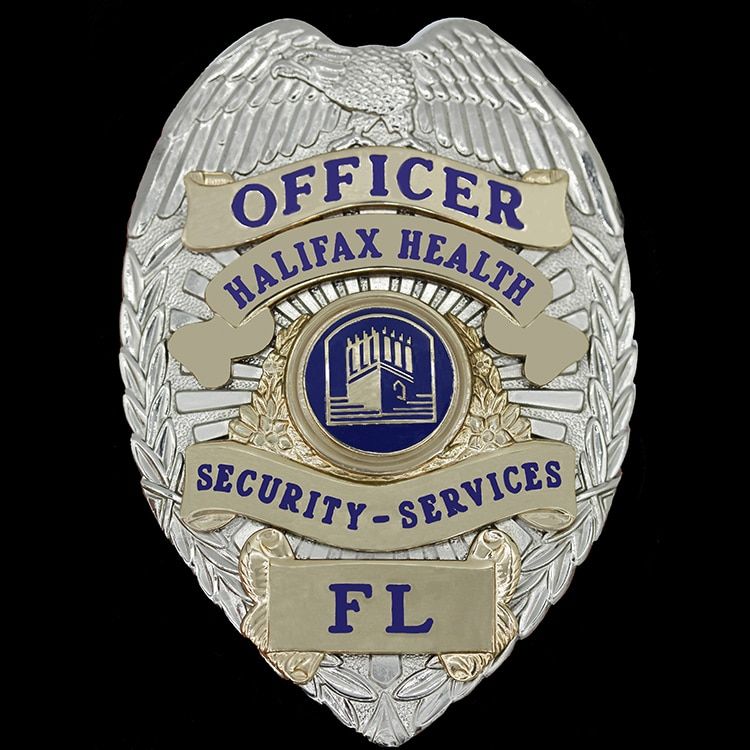
- Plating: gold, silver and nickel are the usual choices. A badge can combine two platings, such as a silver body with gold scrolls, which reads as a premium piece. Ask on the quote whether your design suits two-tone plating.
- Enamel: colour fills the recessed areas, typically the center seal and the panel lettering. Fewer colours look cleaner at badge size.
- Plain struck: no enamel at all, for a classic all-metal look that relies on relief and polish.
- Polished or antique: polished metal gives a bright, uniform finish; an antique finish darkens the recesses for contrast and an aged look.
The trade-offs are similar to pins. Our guide to die struck vs enamel pins explains how relief and colour fill change the look. Exact plating, enamel and finish are confirmed at the proof stage.
Attachments and how the badge is worn
Decide how the badge will be worn before you finalize the size, since the attachment and weight go together.
- Pin back: the usual choice for a badge worn on a shirt or jacket. A heavier badge benefits from a sturdier pin or two posts so it does not tilt.
- Clip: for a badge worn on a belt or a pocket edge.
- Magnet: no holes in the garment, which suits event staff and anyone wearing the badge on good clothing for a day.
- Badge holder or wallet: some badges are carried rather than worn; tell us the holder so the size fits it.
For a closer look at how backs hold, see lapel pin backs explained; the same logic applies to badges.
Size and quantity
As a general guide, uniform badges are often around 2 1/2 to 3 in (64 to 76 mm) tall, while membership, event and lapel-style badges run smaller. Measure the badge against the garment or holder it will be used with. Custom badges start from 100 pieces, confirmed on your quote. For small departments and companies, ordering a little above current headcount covers new hires, and reorders skip the setup because the die stays on file.
If badges carry individual numbers, plan how numbering will work before you order. A number struck into the die is the same on every piece, so badges that each need a different number are usually handled with a blank panel, an applied numeral or a separate run per number. Ask on the quote request which approach suits your quantity, and keep a simple register of who holds which badge.
Match the badge to the rest of the uniform
A badge rarely stands alone. It sits beside a shoulder patch, a name tape and sometimes a lapel pin or collar insignia. Using one approved artwork for all of them keeps the colours and the crest consistent, and lets one quote cover the set.
What to send for a quote
Send the size, the quantity, the outline, the plating and enamel colours, the attachment, your artwork (AI, EPS or PDF is cleanest; PNG works; a photo of the badge you are matching is enough to start) and your in-hands date. For agency badges, include the written authorization. Quotes come back in 2 to 3 business days, the proof usually follows 1 to 3 business days after artwork, and production runs about 3 to 4 weeks after you approve the proof in writing, all confirmed on your quote. See badges alongside our other hardware on the more custom products page, then request a quote.