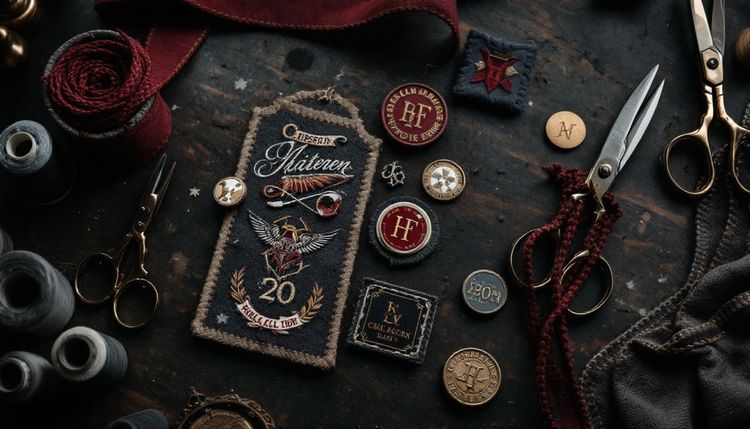
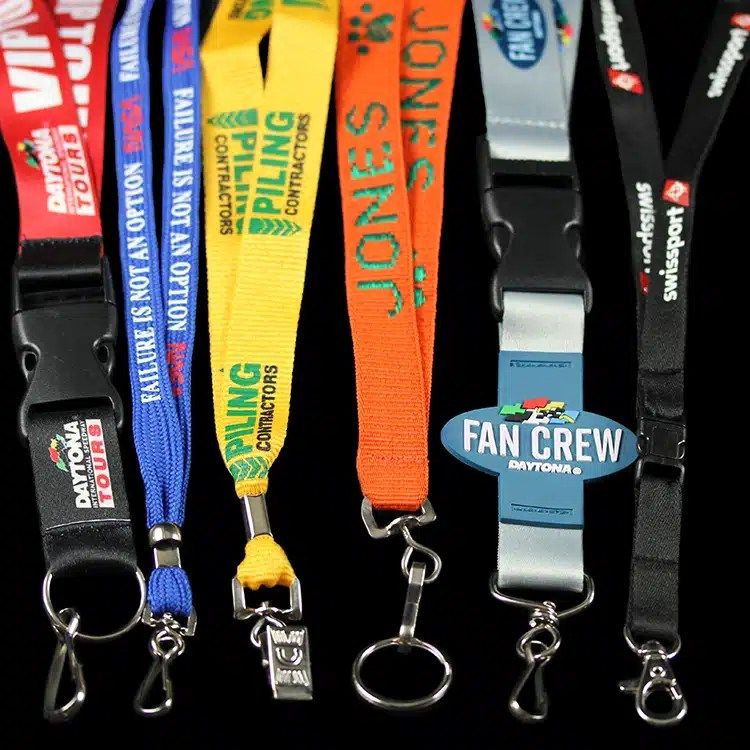
The promotional products people keep share three traits: they are useful or collectible, they are well made enough to feel like an object rather than a flyer, and they carry a design the recipient is happy to show, not just a logo. Embroidered patches, enamel lapel pins, key chains, lanyards, challenge coins and embroidered luggage tags all fit that pattern, because they get attached to something the person already uses every day. If you pick one of these, design it as a keepsake first and an ad second, and order with a clear plan for who receives it.
This guide covers why some items last and others do not, a set of ideas from our catalog matched to goals, how to design for keeping, and the practical side of quantities and timing.
Why some promotional items get kept
Think about where a promotional item ends up a month after an event. The ones that survive have found a home: a patch on a backpack, a pin on a lanyard or a hat, a key chain on a set of keys, a tag on a gym bag, a coin on a desk. Items without a home, such as a flyer or a flimsy gadget, get thrown out.
That gives a simple test for any idea: where will this live after today? If you can name the place, you have a promotional product with a chance of being seen for years. If you cannot, choose something else.
The second test is quality. People keep things that feel solid: metal with weight, dense embroidery, a strap that does not fray. A cheaper item that breaks in a week is not cheaper per day of exposure, and it puts your name on something that failed.
Ideas matched to what you want the item to do
| Item | Where it lives | Best for |
|---|---|---|
| Embroidered patch | Jackets, backpacks, hats | Communities, outdoor brands, clubs, events |
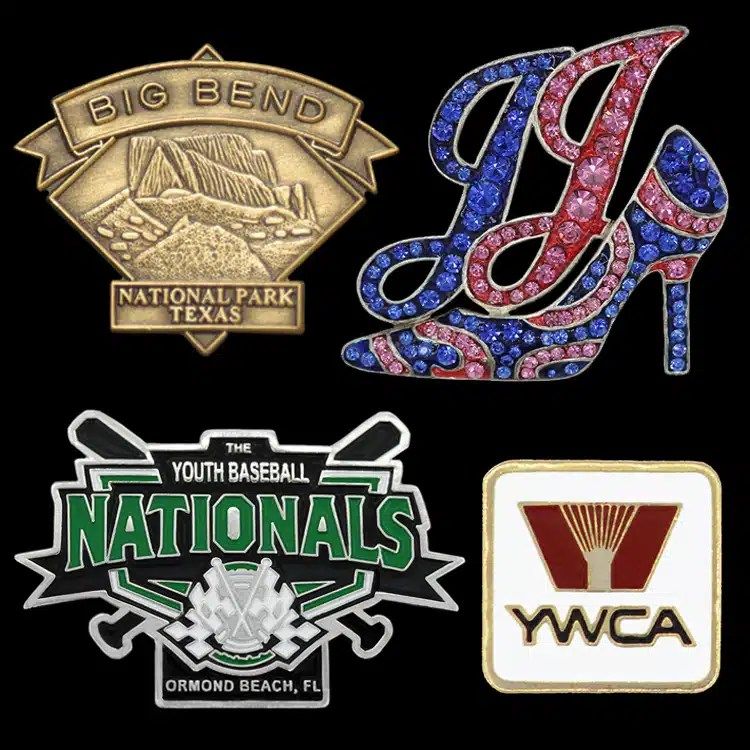
| Enamel lapel pin | Lanyards, hats, jackets, pin boards | Collectors, conferences, fan bases |
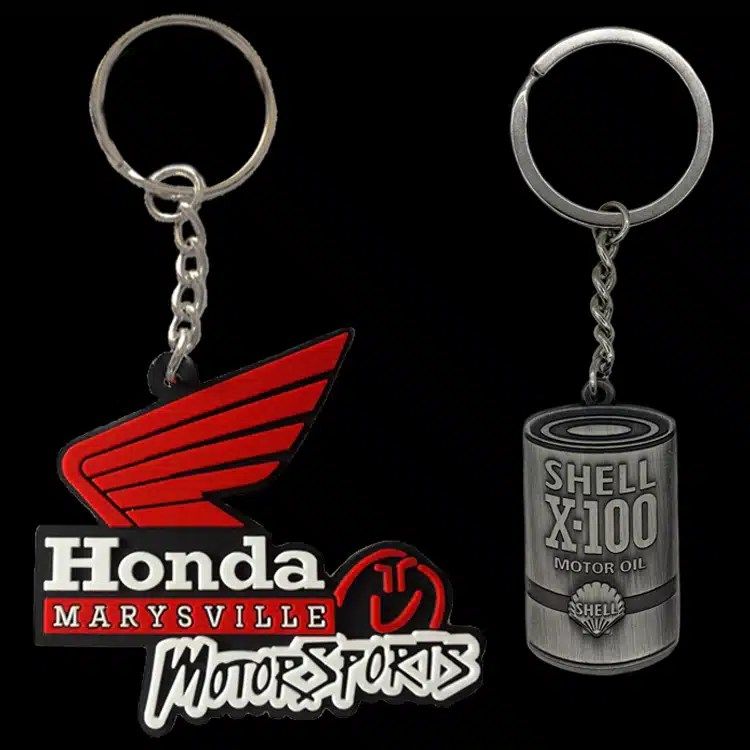
| Key chain | Every set of keys | Local businesses, dealerships, real estate |
| Lanyard | Around the neck at work or events | Credentials, staff, schools |
| Challenge coin | Desks, pockets, display cases | Recognition, milestones, partners |
| Embroidered luggage tag | Travel, gym and sports bags | Travel firms, clubs, teams |
| Rhinestone heat transfer | Shirts and fan wear | Cheer, dance, boutiques, events |
Pens, mugs and tote bags are common promotional products too, and other suppliers make them. We focus on the items above, which is where embroidery, metal and weaving give a piece the weight people hold on to.
Patches, pins and key chains: the everyday carriers
Patches
A patch is a small, flat, light item that turns any jacket or bag into a place for your brand. Iron-on backings let recipients apply it at home, and hook-and-loop backings suit outdoor and tactical gear. Patches work best when the design looks like something people would buy, such as a trail badge, a mascot or a local landmark, rather than a plain logo on a rectangle.
Lapel pins
Pins are collectible by nature. A series of pins, one per event or one per year, gives people a reason to come back for the next one. Our comparison of patches vs pins for merch helps if you are choosing between the two.
Key chains
A key chain is handled several times a day. We make PVC, enamel and embroidered key chains; our guide to custom key chains compares the three.
Design it as a keepsake, not an ad
The design decides whether an item is kept or hidden. A few principles hold across every product:
- Make the artwork the hero. A mascot, a place, an illustration or a clever shape is kept; a logo with a phone number is not.
- Keep the brand present but smaller, often on the border, a banner or the back.
- Use a custom outline. Die cut shapes look like collectibles; plain circles look like giveaways.
- Tie the design to a moment: an event, a year, a milestone. People keep souvenirs.
- Respect the detail limits of the construction. As a general guide, embroidered text needs about 1/4 in (6 mm) of height to stay readable.
Decide who gets it and how
Even a great item is wasted if it is handed to the wrong people. Decide in advance whether the item is for everyone who passes, for qualified prospects, for customers at purchase, or for members and staff. A table of free pins for anyone is a different plan from a coin handed to each partner in person.
Distribution changes the item too. Items mailed to customers should be flat and light, like patches and pins. Items handed out at events should be small enough to pocket. Items given in person to key contacts can be heavier and come in a box. For event giveaways, see our guide to trade show giveaways; for gifts to clients and staff, see branded corporate gifts.
Quantities, reorders and timing
Custom items start from 100 pieces, varying by product and confirmed on your quote. Plan quantities from the distribution plan, not the other way round: count the events, customers or members, add a margin for staff and partners, and decide what happens to leftovers. A design without a date stays useful next year.
It also helps to decide how you will judge whether the item worked. A unique web address or offer code on the backing card, a count of how many people asked for a second one, or simply noticing your patch on bags around town all tell you something. Write down what you expect before the order, and compare it after the season. That record makes the next order easier to plan and easier to justify.
For timing, allow 2 to 3 business days for the quote, 1 to 3 business days for the proof after artwork, about 3 to 4 weeks of production after you approve the proof in writing, and UPS shipping from Holly Hill, Florida. Rush, around 10 business days, is sometimes possible when the factory can hold it. Reorders skip the setup; digitizing and molds stay on file. All timings are typical and confirmed on your quote.
Getting a quote for promotional products
Tell us the item, the size, the quantity, the colours, the backing or attachment, the artwork (AI, EPS or PDF is cleanest; PNG accepted) and the date you need it in hand. If you are not sure which product fits, describe the audience and how you plan to hand it out, and we will suggest options. Browse the full range on our custom products page, then request a quote.