Pilot patches and wings are usually made two ways. Metal wings are die struck lapel pins worn on a uniform shirt or jacket, and embroidered wings and name patches are worn on flight suits and jackets, often on hook-and-loop. Flight schools, flying clubs, charter operators and squadrons typically order a set: wings for each rating or milestone, a name tag for the flight suit, and a shoulder or chest patch with the organization's emblem.
This guide covers civilian aviation, from flight schools and airlines to helicopter operators and clubs, plus squadron and association patches. It explains wing designs, the sizes that suit flight suits and jackets, and how to order a set that grows with each new class of pilots.
Wings in metal or in thread
The pilot wing is one of the oldest and most recognized uniform emblems. Civilian organizations design their own wings in the same spirit, to mark a first solo, a certificate, a type rating or years with the company.
Metal wings
Metal wings are made the same way as die struck lapel pins: the design is stamped into metal, then plated in gold, silver or antique finishes, with optional enamel colour. They usually fasten with pin backs or clutches and sit above the left breast pocket. Detailed feathering stays crisp in metal, and an antique finish brings out the relief. Our guide to lapel pin backs explains which fastening suits a uniform shirt.
Embroidered wings
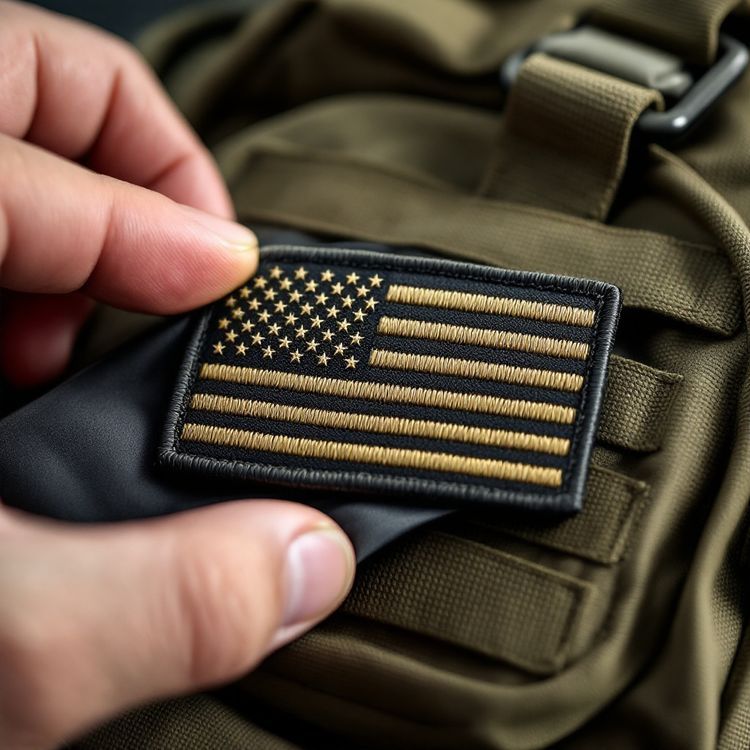
On a flight suit or a soft jacket, metal wings can snag and are uncomfortable under a harness. Embroidered wings solve that. They are often stitched in gold or silver thread on a dark twill, or subdued in tan and black for operational crews, and paired with the pilot's name on one patch.
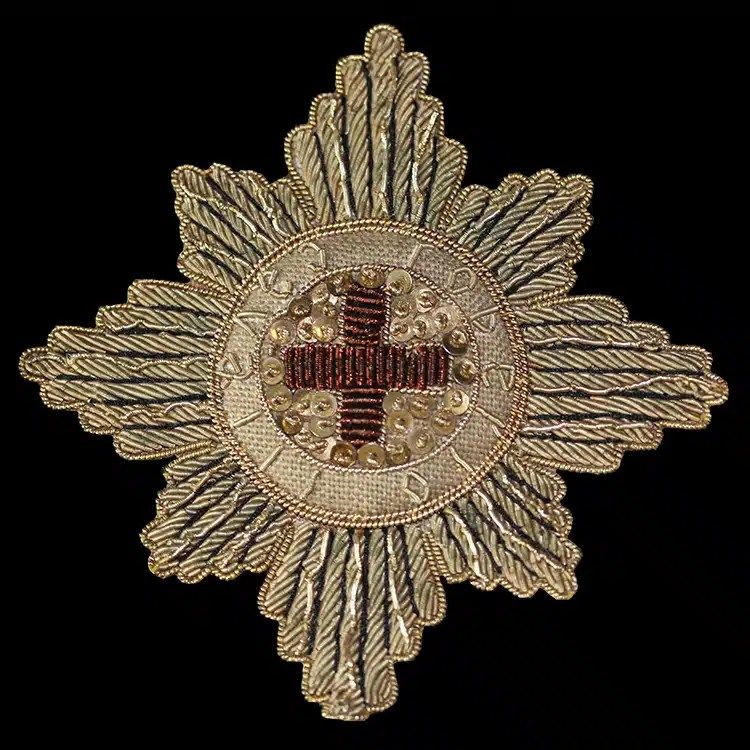
Bullion wings for dress uniforms
For airline captains' blazers, honorary wings or a flying club's formal dinner, hand embroidered bullion wings use coiled metallic wire for a raised, formal look. Bullion is made by hand, so it suits small, special runs rather than everyday flight wear.
Designing your own wings
A wing design has three parts: the wings themselves, a center device, and sometimes a top element such as a star or wreath to show a higher level.
- Center device: your logo, a shield, a propeller, a rotor for helicopter pilots, or the organization's initials.
- Feathering: fine feather lines work in metal; for embroidery, simplify to fewer, bolder feathers.
- Levels: add a star, a wreath or a different metal finish to mark instructors, captains or chief pilots.
- Width: metal wings are commonly around 2 to 3 in (51 to 76 mm) across; embroidered wing name tags are often wider, around 4 to 5 in (102 to 127 mm).
Flight suit and jacket patches
Flight suits and aviator jackets have a well-established patch layout. Many come with loop panels already sewn on, so hook-and-loop backing is the norm.
| Placement | Typical patch | Approximate size | Backing |
|---|---|---|---|
| Left chest | Name tag with wings | 4 x 2 in (102 x 51 mm) | Hook-and-loop |
| Right chest | Organization or squadron emblem | 3 to 4 in (76 to 102 mm) | Hook-and-loop |
| Left shoulder | Flag or company patch | About 3.5 x 2 in (89 x 51 mm) | Hook-and-loop |
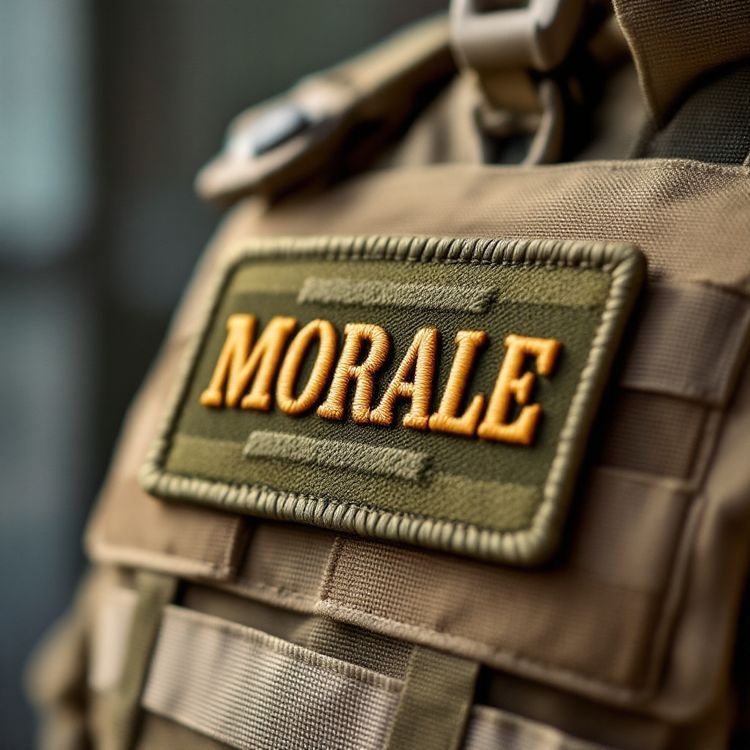
| Right shoulder | Aircraft type, event or morale patch | 3 to 4 in (76 to 102 mm) | Hook-and-loop |
| Leather jacket | Squadron or club patch | 4 to 5 in (102 to 127 mm) | Sew-on |
A 4 x 2 in name tag is a widely used size, but panels vary by suit maker, so measure the loop panels you have. Our hook-and-loop patch guide explains how the two halves work.
A note on leather jackets
Leather flight jackets need sew-on patches. Iron-on adhesive should not be heated on leather. If you want to move patches between jackets, have a loop panel sewn to the leather and use hook-and-loop backing.
Who orders aviation patches, and what they choose
- Flight schools: first solo wings, private pilot wings and instructor wings, plus a school patch for students' jackets.
- Flying clubs and associations: member patches, fly-in event patches and annual pins.
- Charter, air ambulance and helicopter operators: name tags with wings, company shoulder patches and rank devices for captains and first officers.
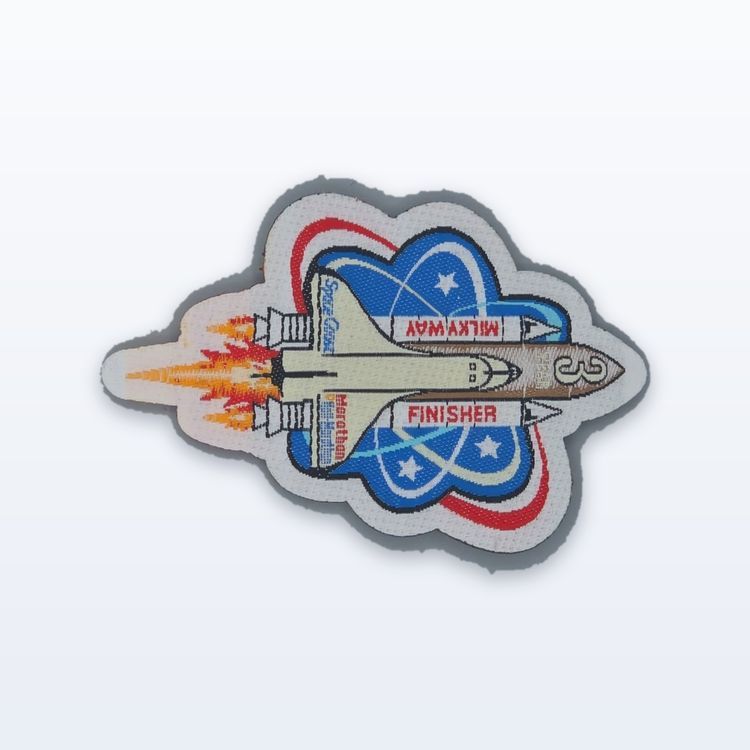
- Squadrons and reunion groups: squadron emblems, deployment patches and coins. Our guide to mission patches covers designs for specific flights and deployments.
- Air shows and museums: event patches, aircraft patches and souvenir pins.
Putting an aircraft on a patch
Aircraft silhouettes stitch well when they are drawn as bold shapes. Thin antennas, rivet lines and registration numbers often need to be simplified or enlarged. As a general guide, lines thinner than about 1 mm do not stitch cleanly, and lettering needs a cap height of about 1/4 in (6 mm). If you want a detailed aircraft over a sky gradient, a sublimated patch prints the full image, while a woven patch holds finer outlines than embroidery.
Building a wings program for milestones
Flight schools and operators that award wings often set up a simple ladder, so each pilot knows what comes next. A common pattern is first solo wings, then wings for each certificate or rating, then instructor wings, with captain or chief pilot wings at the top. Changing one element per level, such as adding a star or switching from silver to gold finish, keeps the family consistent while making each step visible.
Decide the whole ladder before you order the first set. It is much easier to design four related wings at once than to add a fifth that matches years later. Order each level in the quantity you expect to award over a year or two, keep the artwork on file, and reorder as stock runs low. Presenting wings in a small ceremony, at the end of a checkride or at a club dinner, makes them mean more than anything you can stitch or strike.
Ordering a wings and patch set
- List each level of wings and how many of each you need.
- Decide which wings are metal, which are embroidered, and whether any are bullion.
- Collect names for name tags, spelled exactly as they should appear.
- Measure the loop panels on your flight suits and jackets.
- Send AI, EPS or PDF artwork, or a photo of your current wings.
Custom minimums start from 100 pieces and vary by product, so check the minimum for each item on your quote. A quote typically comes back in 2 to 3 business days, and production takes about 3 to 4 weeks after you approve the proof in writing. Request a quote for your wings, patches and name tags together.