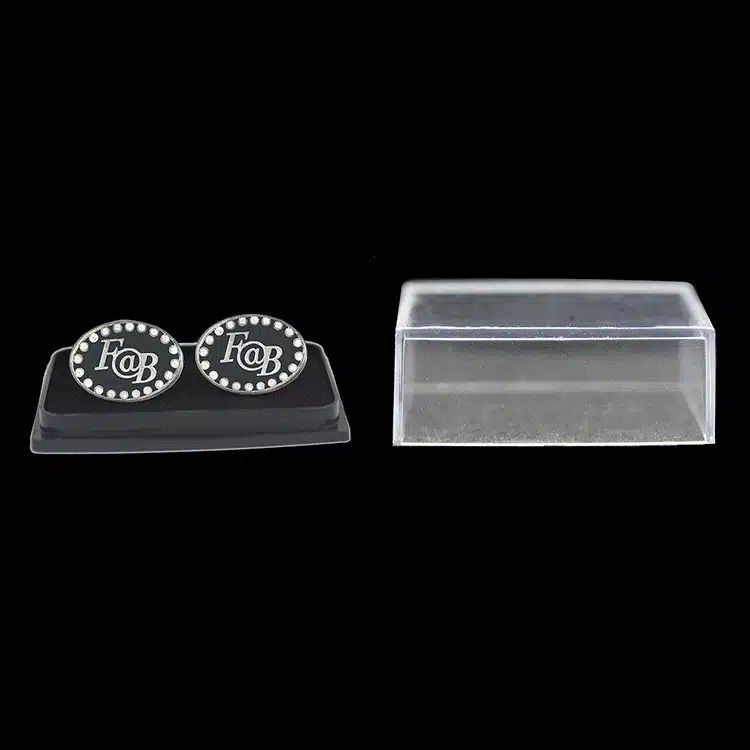
Custom cufflinks and tie bars are small metal pieces made the same way as lapel pins: your logo or crest is struck or cast in metal, plated, and filled with enamel colour if the design needs it. Cufflinks are usually about 5/8 in to 3/4 in (16 to 19 mm) across, with a swivel back that slips through a French cuff. Tie bars clip across the tie and are sized to about three quarters of its width. They are a strong choice for wedding parties, executive gifts, department ceremonies, fraternal lodges and service awards.
This guide covers how they are made, the choices that matter, how to wear them and what to put on your quote request.
When cufflinks and tie bars are the right gift
Cufflinks and tie bars suit occasions where people dress up and where a keepsake should feel personal rather than promotional. They are worn close to the hands and the chest, so they get noticed in handshakes and photos without shouting.
- Retirement, promotion and years of service gifts.
- Department and agency ceremonies, often paired with a challenge coin.
- Board, partner and client gifts carrying a company mark.
- Fraternal lodges, alumni groups and clubs with a crest.
- Wedding parties and family events with a monogram or a date.
Many organizations order the two together as a set. A matching tie bar and pair of cufflinks in a presentation box makes a complete gift.

How custom cufflinks and tie bars are made
The face is produced like a custom lapel pin. The design is cut into a steel die, the metal is struck or cast, and the piece is plated. Recessed areas can be filled with soft or hard enamel. Hard enamel is polished flat and glossy, which suits the smooth, jewelry-like look that cufflinks often call for. Soft enamel keeps the metal lines slightly raised for a textured feel.
Some designs work best with no colour at all. A crest or monogram in raised polished metal against a textured or antiqued background looks classic and quiet, especially in gold or silver tones. Our guide to soft vs hard enamel pins explains the enamel options in more detail, and the same choices apply here.
The face is then joined to the fitting: a cufflink back or a tie bar clip. Plating colour is usually matched across the face and the fitting so the piece looks finished from every angle.
Cufflink backs: which one to choose
The back is the part that holds the cufflink in the shirt. There are a few common types:
| Back | How it works | Good for |
|---|---|---|
| Bullet or swivel back | A small bar flips flat to pass through the cuff, then turns to lock | Most custom cufflinks, easy to put on |
| Whale back | A flat piece flips on a hinge to lock | A secure hold with a simple action |
| Fixed back | A solid post and bar with no moving parts | Sturdy, slower to fit through the cuff |
| Chain link | Two faces joined by a short chain | A traditional look, both sides decorated |
For a group order, the swivel back is the safe choice: it is familiar, easy to use and fits most cuffs. Whatever back you choose, the shirt needs French cuffs or cuffs with buttonholes on both sides.
Tie bars: size and placement
A tie bar, also called a tie clip, holds the tie to the shirt placket. As a rule of thumb it should be shorter than the tie is wide, at about three quarters of the width. A standard width tie suits a bar around 2 in (51 mm) long, while a slim tie needs a shorter one. A bar wider than the tie looks out of proportion.
The usual placement is between the third and fourth buttons of the shirt, level with the lower chest, clipped through both blades of the tie and the shirt placket. The design sits on the visible face of the bar, often at one end or across the center. Keep it compact: a tie bar is only a fraction of an inch tall.
Designing for a very small surface
A cufflink face is smaller than most lapel pins, so detail has to be simplified. As a general guide, keep only the core mark, limit text to a few letters or a short word, and use two or three colours at most. Thin lines and small text close up or disappear at this size.
- Use the simplest version of your logo, or a monogram.
- Give lettering strong contrast against the metal or enamel behind it.
- Choose one plating colour for the whole set.
- Decide whether both cufflinks match or each carries a different element, such as initials on one and a crest on the other.
If the design already exists as a pin or a coin, it usually adapts well. Our challenge coin design guide covers how to simplify a seal for small metal surfaces.
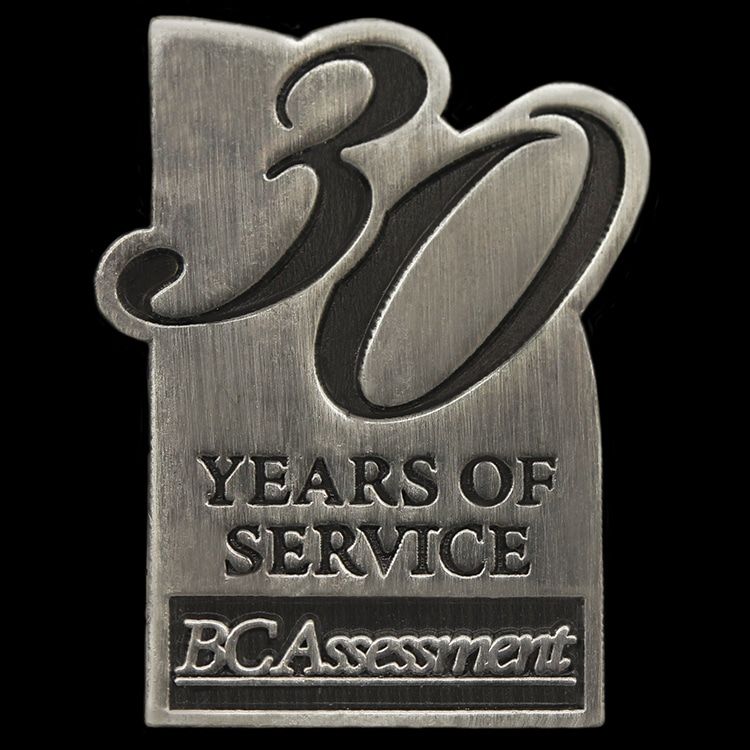
One more decision is the finish on the metal itself. Polished gold and silver tones look formal and suit evening events and weddings. Antique finishes darken the recessed areas and suit heritage crests, lodges and service awards. Black or gunmetal plating gives a modern look that works well with a bright enamel colour. If the set is a gift for a group that already has coins or pins, match the plating to those pieces so the collection looks consistent. Ask for the plating you want on the quote, and the proof will show it before anything is made.
Ordering cufflinks and tie bars
Cufflinks and tie bars are part of our other custom products. On your quote request, list the pieces you want (cufflinks, tie bars or both), the size of each, the plating, enamel colours, the cufflink back, the quantity and whether you want presentation boxes. Custom minimums start from 100 pieces and vary by product, confirmed on your quote.
Send the details with your artwork: AI, EPS or PDF is cleanest, and a PNG or a photo of an existing piece is enough to start. A quote usually comes back within 2 to 3 business days, and a proof about 1 to 3 business days after artwork. Production is about 3 to 4 weeks after you approve the proof in writing. For a ceremony date, work backward and leave time for shipping.