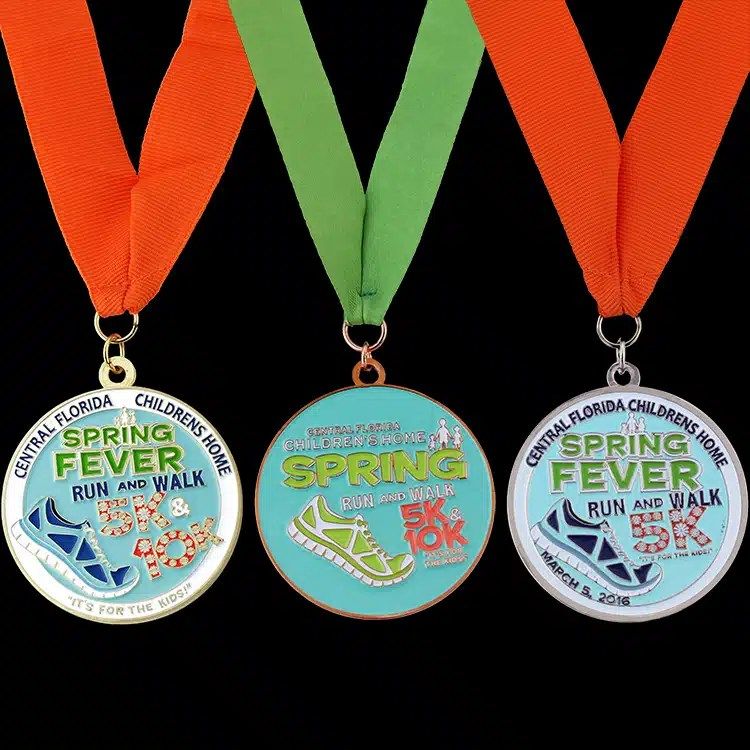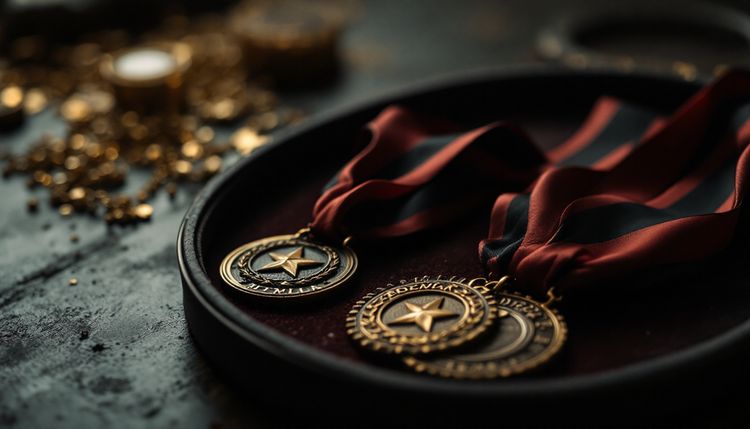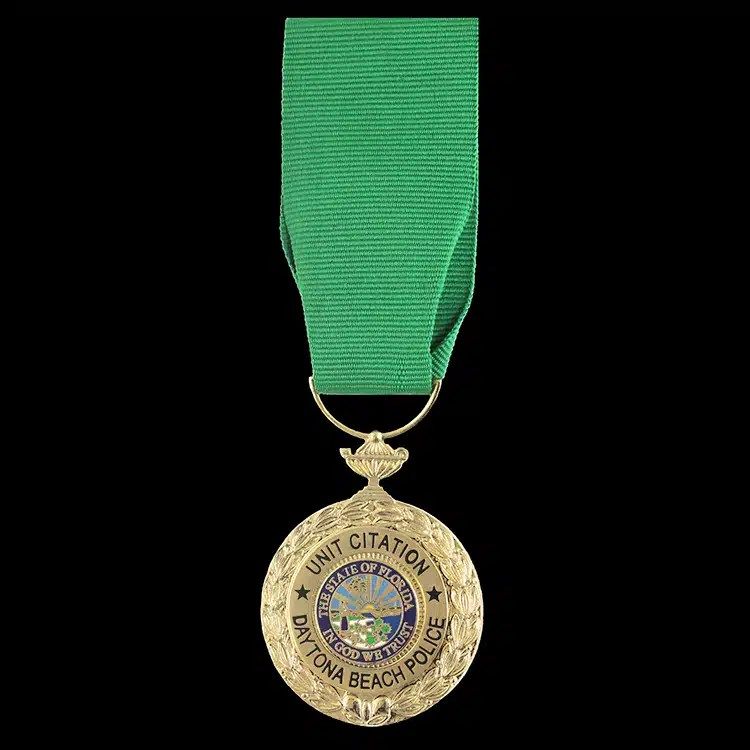
Academic medals are custom medals a school awards for scholarship: honor roll, subject awards, academic competitions and graduation honors such as valedictorian. The most practical approach for most schools is one medal design with the school crest, made in a single run, with the award level shown by plating or ribbon colour rather than by a separate die for every award. Order in late winter or early spring for a May or June ceremony: production typically runs about 3 to 4 weeks after you approve the proof, and custom medals start from 100 pieces, both confirmed on your quote.
Below we cover how to structure an academic medal program, what to put on the medal, which sizes and finishes suit students, how ribbons do the sorting for you, and how to time the order around the school calendar.
What schools typically award medals for
Every school sets its own awards, but most academic medal programs draw from the same list:
- Honor roll and principal's list, often awarded each semester or at year end.
- Subject awards for the top student in English, mathematics, science, history, languages or the arts.
- Graduation honors: valedictorian, salutatorian and students graduating with distinction.
- Competitions such as science fairs, spelling bees, math leagues, quiz bowl and academic decathlon.
- Attendance, citizenship and character awards, which many schools present at the same ceremony.
Writing the full list down before you design anything shows you how many medals you need in total, which is the number that decides how to structure the order.
One design or several
A custom medal is made from a die built from your artwork. Each new design means a new die and its own run, so the way you split the designs drives the cost and the quantities.
One school medal for everything
The school crest and name on the front, a line such as "Academic Excellence" around it, and the award itself identified by the ribbon or by a certificate presented with it. One die, one run, and because custom medal minimums start from 100 pieces, a single design gets you past the minimum quickly. Reorders skip the setup because the mold stays on file, so next year's medals are simple.
A small family of designs
Some schools want a distinct medal for graduation honors and a general one for everything else. Two designs is a sensible maximum for most schools. Keep the crest and the frame identical and change only the center wording, so the set looks planned.
A district program
Districts sometimes order one academic medal for every school, with the district seal on the front. Each school then has its own ribbon colour. The volume makes a district design efficient, and every student receives the same quality of award.
Designing an academic medal
Medals are small, so the rules of good coin and pin design apply. As a rule of thumb, keep to the crest, the school name and one short line of text. Mottos in small type, fine scrollwork and long award titles can fill in or blur at medal size, especially on a struck design.
- Use the official school crest or seal, cleaned up as vector art if possible (AI, EPS or PDF).
- Choose one or two enamel colours from the school colours, or a plain struck finish with no fill for a classic look.
- Put the general wording on the medal and the specific award on the ribbon or the certificate.
- Avoid dates on the medal face if you want leftover medals to stay usable next year.
- Leave the back simple. A plain or lightly patterned back looks deliberate.
If you use an honor society's name or emblem, check that society's rules first. National organizations usually control their insignia, and many supply their own official items to member chapters.
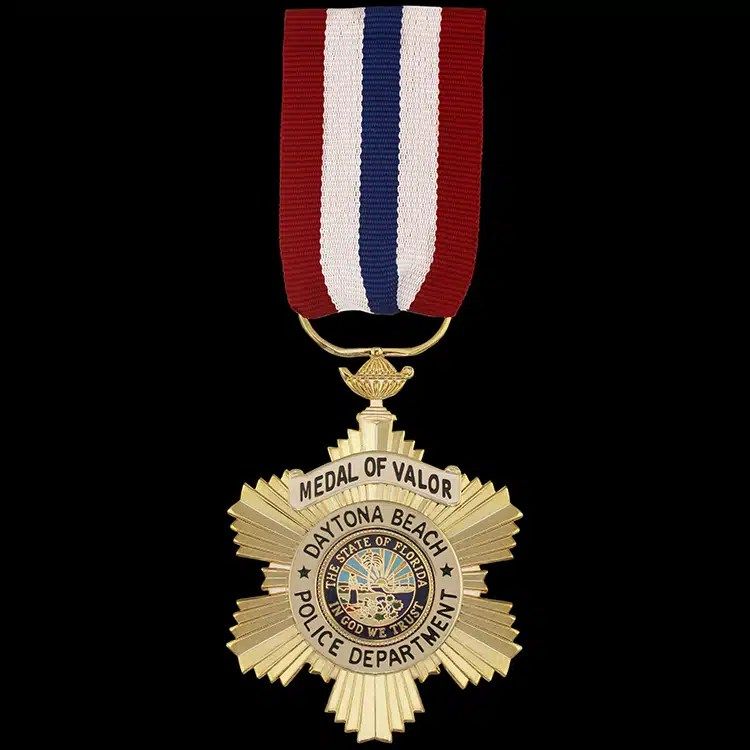
Size, construction and plating
As a general guide, 2 in (51 mm) is a comfortable size for a high school academic medal, and about 1 1/2 to 1 3/4 in (38 to 44 mm) suits younger students. Larger medals feel more formal but cost more metal, which is worth weighing when the order covers hundreds of students.
Medals are made die struck or die cast. Die struck gives crisp lettering and fine lines; die cast allows deeper relief and cutout shapes, such as a lamp of learning or an open book standing out from the medal. Plating options include gold, silver, antique bronze, antique brass and nickel, confirmed at the proof stage.
| Award level | Plating idea | Ribbon idea |
|---|---|---|
| Graduation honors | Gold | School colours, printed with the honor title |
| Subject awards | Gold or antique brass | One colour per department |
| Honor roll | Silver or nickel | School colours |
| Competition placings | Gold, silver, antique bronze | One ribbon for the event |
Splitting plating across levels means separate runs of the same design, so check quantities per plating when you request the quote.
Let the ribbon do the sorting
The ribbon is the cheapest place to show which award a student earned. A neck ribbon can be printed or woven with text, so one medal design can hang from a ribbon that reads "Valedictorian", "Mathematics" or "Honor Roll". Students also wear neck ribbons at graduation and in photos, so the ribbon is part of what families see.
Agree a colour code before you order, write it down, and give it to whoever runs the ceremony. Our guide to medal ribbons and drapes explains widths, attachments and printed versus woven text.
Medals, academic letters and pins
Medals are not the only academic award. Many schools award an academic letter for a letterman jacket, often with a small pin added for each year of honors. If your school already letters in sports, an academic letter in chenille lets scholars wear their achievement the same way athletes do, and custom lapel pins can mark the years. Our post on medals vs trophies also helps if you are deciding between a medal and a larger award for the top honors.
Ordering around the school calendar
School award budgets and ceremony dates are usually set months ahead, so the risk is not time, it is approvals. A workable plan for a spring ceremony:
- January or February: agree the award list and the design approach with the principal or committee.
- Request a quote with the medal size, quantity per design, plating, ribbon colours and the ceremony date. Quotes come back in 2 to 3 business days.
- Review the proof, usually 1 to 3 business days after we have your artwork. Nothing runs until you approve it in writing.
- Allow about 3 to 4 weeks of production after approval, plus shipping, all confirmed on your quote.
- Aim to have the medals at school at least two weeks before the ceremony, so they can be sorted by award.
When you have the crest and the award list, request a quote and include the ceremony date so the schedule is built backward from it. You can see the medal options on our custom medals and awards page.