
Custom woven textured labels use interlaced thread and a patterned surface to add visual depth that flat ink can't match. Suppliers like Britannia Packaging note that garment labels carry the brand name and help portray brand reputation. This guide covers what textured labels are, how to design for them, which materials and constructions exist, and how to prepare an order.
Key Takeaways
- Textured woven labels get their surface from thread and weave pattern, not printed ink.
- Texture adds character to garments, bags, and merchandise, but it must never hurt legibility.
- Size, placement, attachment method, and quantity should drive your choice.
- Preview your artwork before quoting to catch fine-detail problems early.
What Are Custom Woven Textured Labels?
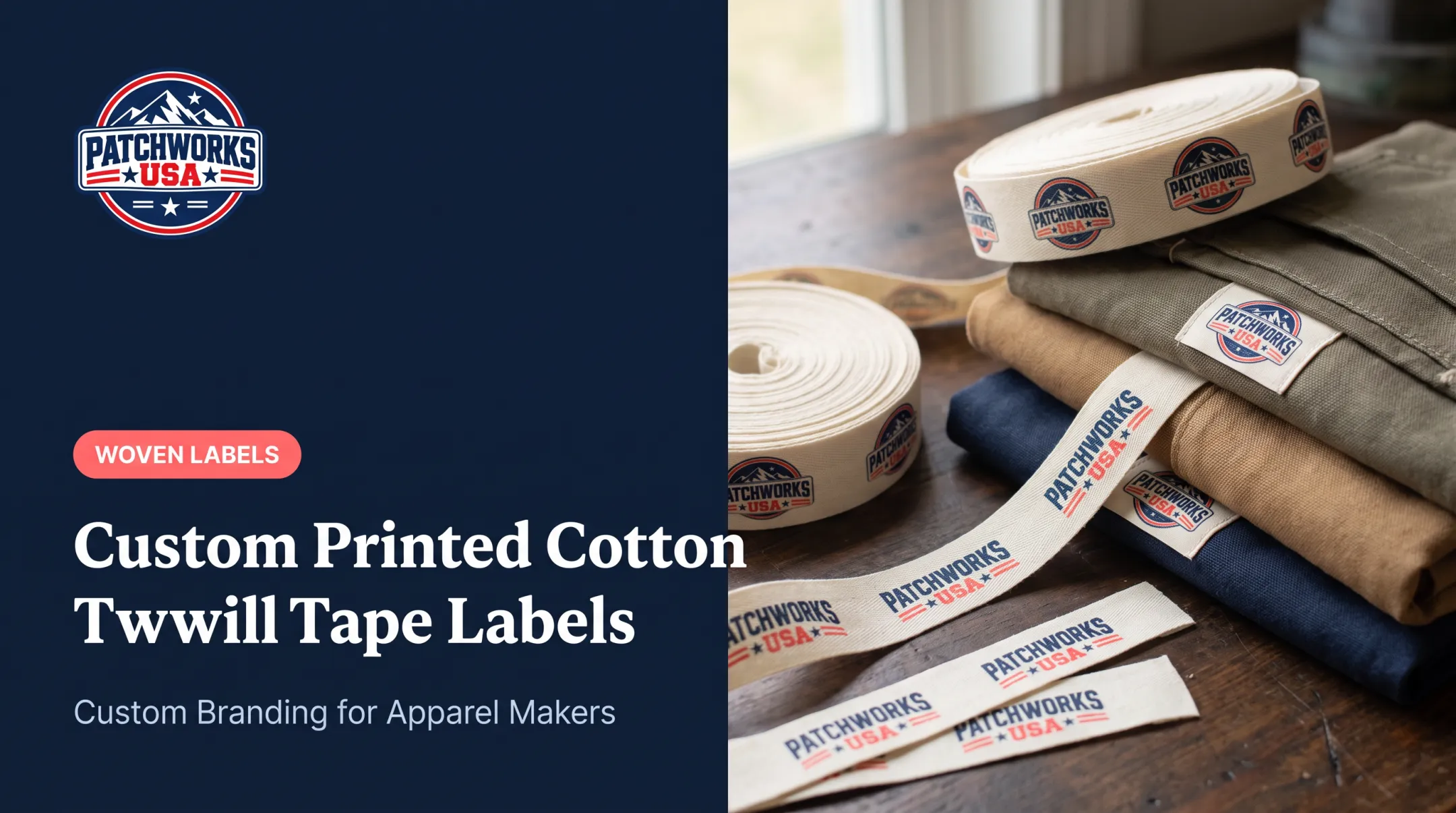
A custom woven textured label is made from interlaced threads, and the weave itself contributes to how the label looks and feels. Colored threads form the design on a loom.
Texture can come from weave pattern, tension, yarn material, and yarn thickness, according to Wunderlabel's guide.
Weave Patterns You'll Encounter
- Twill: a diagonal line pattern
- Herringbone: an offset, broken twill variation
- Rib: heavier yarns create a ribbed look
- Lined backgrounds: horizontal, vertical, or diagonal; Wunderlabel calls horizontal and diagonal very subtle, and vertical 1 mm alternating stripes
Those figures are one supplier's specs, not universal dimensions. Ask for close-up photos of any texture you're considering.
Textured vs. Smooth, Printed, Satin, and High-Density
- Smooth woven: a uniform background that puts the logo first.
- Textured woven: surface pattern and dimension are part of the look.
- Printed: the design is applied to existing material, which suits complex visuals and dense text.
- Satin: soft and lustrous, though satin can also be a base for printed labels.
- High-density woven: fine yarns and tight construction for intricate detail. Finotex links this to small lettering clarity.
Texture is a design feature only. Softness, edge finish, and wash durability depend on the specific construction and the manufacturer's specifications.
Textures, Design Options, and Common Uses
Design Choices to Evaluate
- Texture direction
- Background and logo colors
- Label shape and border treatment
- Fold style and edge finish
- Attachment method
Subtle horizontal lines read clean and modern. Diagonal or herringbone patterns add movement. Stronger ribbed textures suit heritage, workwear, or handmade brands.
Contrast and Spacing
A busy background competes with small text and thin lines. BCI Labels warns that similar background and logo colors can blend together, reducing clarity. Pick a texture quiet enough for your smallest detail.

Uses by Product Type
- Garments: neck, hem, side-seam, size, and maker labels on shirts, jackets, denim, and uniforms
- Accessories and goods: bags, hats, scarves, wallets, blankets, pillows, and quilts
- Groups and collections: team and club apparel, school merchandise, event products, and limited editions
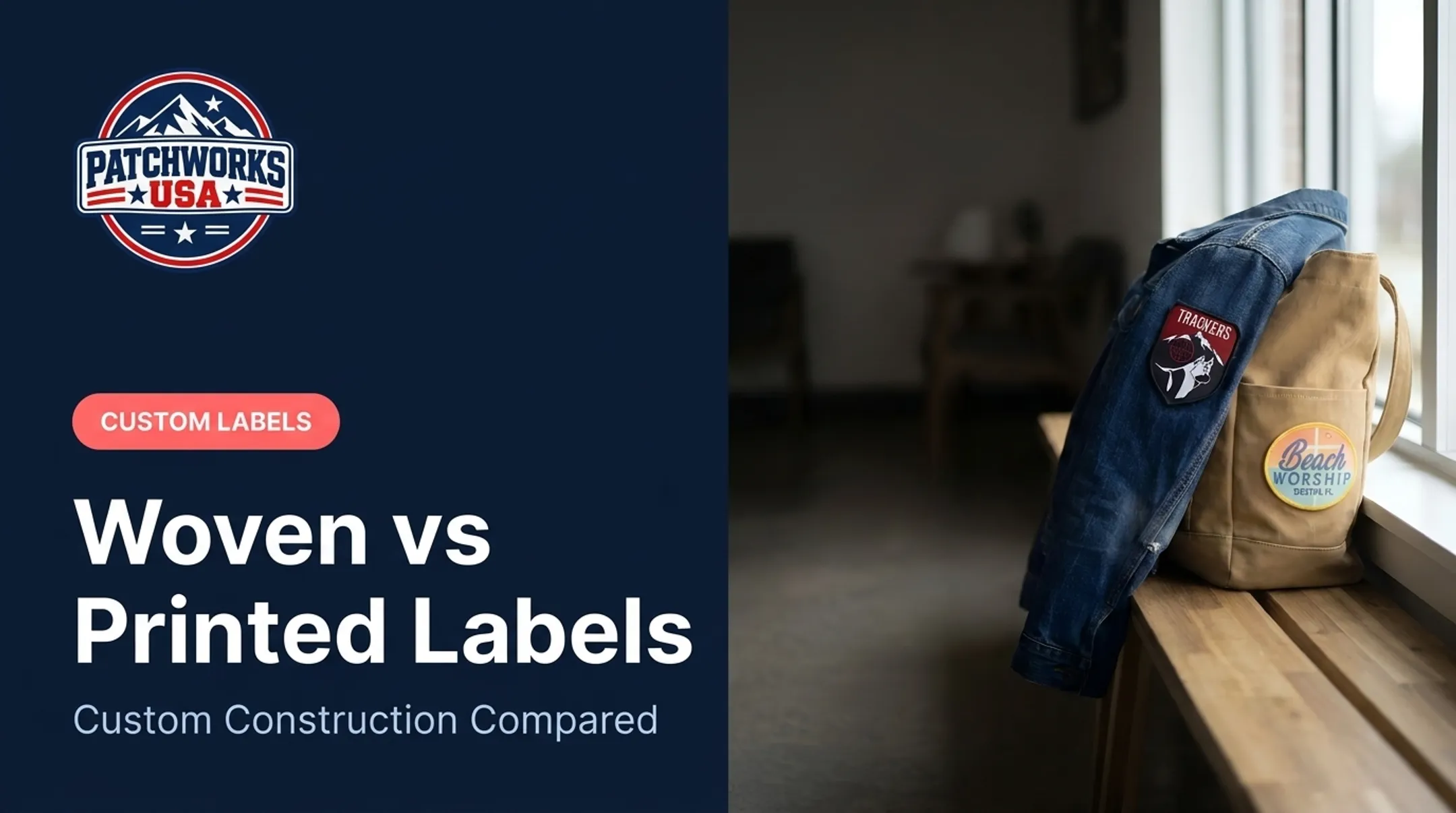
Patchworks USA's woven label examples include a black label with a yellow palm-tree logo from California Pizza Kitchen and an H. Christiansen Co. fish label. Both are sewn into denim jackets.
When to Choose Something Else
Go smooth or printed when your artwork has photographic detail, heavy gradients, very small text, or long care instructions. Printed labels generally handle multilingual and information-heavy content better.
Materials and Construction
Thread and Base Materials
Polyester and cotton are the most common woven-label yarns. Recycled polyester, recycled nylon, and specialty yarns exist too. Cotton labels may fray at cut ends and generally need folded ends, per DORTEX. Confirm the exact fiber, backing, adhesive, and certification options for your product before ordering.
What Changes the Feel
- Thread thickness affects visible texture
- Weave density affects definition and detail
- Yarn finish and tension affect softness and opacity
No single denier or thread count works for every label. Request a sample if hand feel matters.
Cuts, Folds, and Attachment
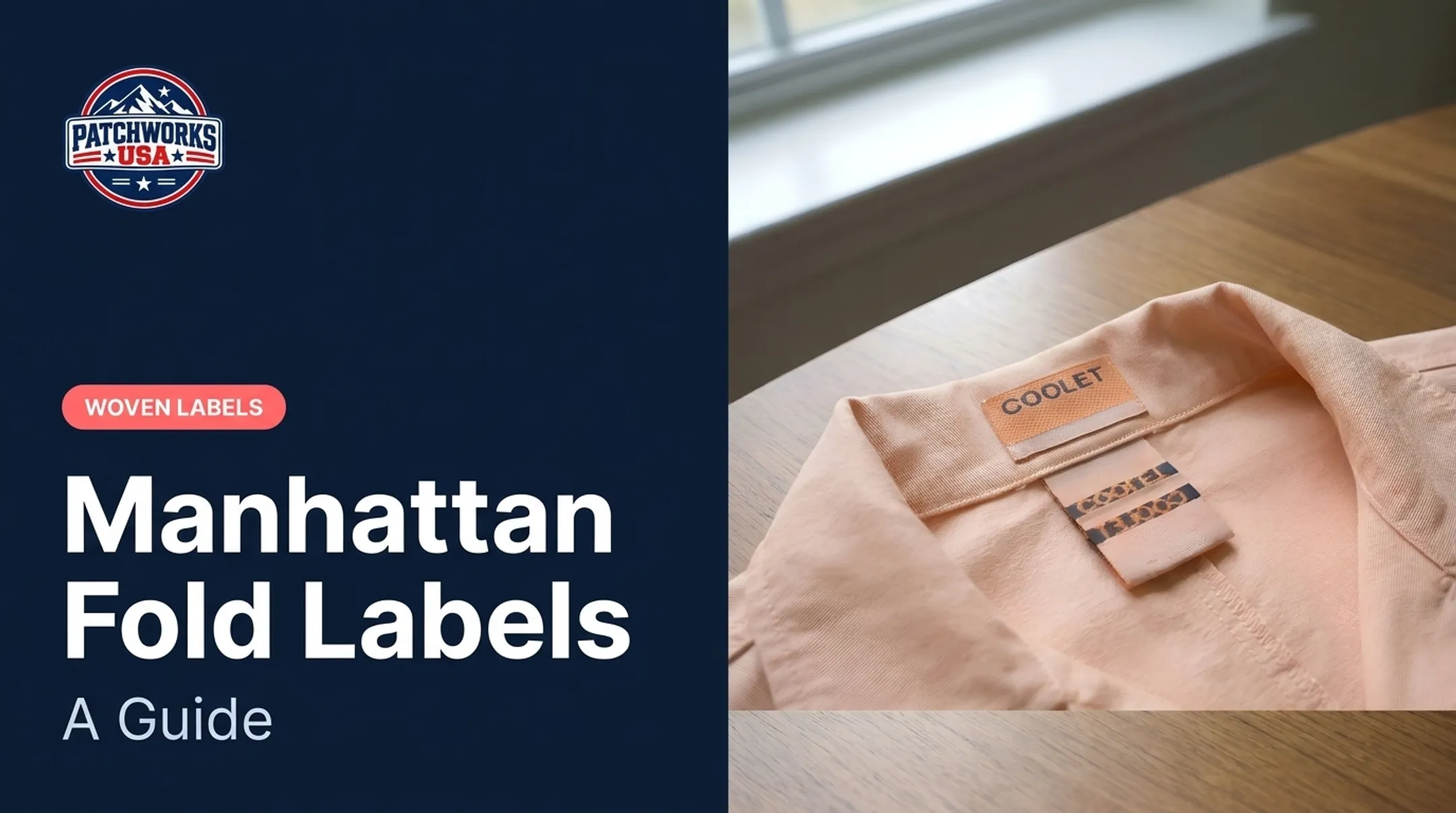
Patchworks USA offers four named cuts:
| Cut | Finish | Attachment |
|---|---|---|
| Straight | Sewn on all four sides, no folds | Sew-in or heat seal |
| End Fold | Ends turned behind the label | Sew-in or heat seal |
| Manhattan | Folded in the middle, ends sewn into the garment | Sew-in only |
| Mitre | Ends folded under and up, forming a tab sewn into the seam | Sew-in only |
Think about placement too. A label touching skin at the neck needs a softer, folded finish more than one on a bag exterior.
How to Design Artwork for a Textured Woven Label
- Start with location and finished size. Decide how much room you have for the logo, name, sizing, or slogan.
- Simplify. Thread can't reproduce hairlines, tiny ornaments, gradients, or detailed illustrations the way a screen can.
- Choose readable type. Use clear letterforms, generous spacing, and strong contrast with few colors.
- Send your best files. Vector artwork (AI, EPS, or PDF) is preferred. Patchworks USA also accepts a PNG or a clear photo of an existing label to start a quote.

Minimum specs vary. Wunderlabel lists 3 mm minimum text height and 6 colors. New York Custom Labels cites about 1.5 mm for sans-serif text and warns that strokes under roughly 0.3 mm may drop out. Always check your own supplier's rules.
Preview Before You Request a Quote
Patchworks USA's Patch Studio lets you mock up your logo free, with no account, as a 3D stitched preview. Its stitch check flags fine-detail concerns before you request a quote. Treat it as a planning aid. You still approve a final proof before production.
Ordering, Attachment, and Care Considerations
Quote Checklist
Have these ready:
- Artwork file
- Finished width, height, and shape
- Quantity and number of thread colors
- Preferred texture, cut, and attachment method
- Intended product and label placement
- In-hands date
Pricing
Prices aren't published because size, quantity, colors, cut, artwork complexity, and timeline all affect the cost. Patchworks USA quotes each job from factory pricing. Woven labels start from about 100 pieces, confirmed on the quote, and no setup or digitizing fees apply to start a run.
Attachment and Care
- Match sew-on or heat-applied labels to the receiving fabric. Dutch Label Shop advises checking the fabric's heat tolerance first.
- Peel-and-stick suits non-laundered or temporary uses, not repeated washing.
- Test unfamiliar label and fabric combinations before committing to a full run.
- Follow the supplier's care instructions.
For apparel, the FTC's Care Labeling Rule requires care labels to stay attached and legible for the product's useful life. A decorative brand label doesn't replace that. Fiber content, country of origin, and business identification also have separate requirements, so check the FTC's textile guidance.
Working With Patchworks USA
Owner Brad Aboff personally reviews submitted artwork and sends it to factories suited to the construction. He returns the pricing as one quote and oversees the order through proof approval and production. Production typically runs 3 to 4 weeks after proof approval, with rush service available. Quote requests receive a reply within one business day.

Frequently Asked Questions
What does a woven label look like?
It looks like fine fabric with the logo or text formed from thread. The surface can be smooth, matte, or textured. A finished sample or realistic preview shows the effect best.
What material are woven labels made of?
Polyester and cotton are the most common yarns, with recycled polyester, nylon, and specialty yarns also available. Exact fiber, backing, and finish depend on the product and supplier.
How are textured woven labels different from standard woven labels?
Textured versions use patterned or varied weaving to add visual and tactile dimension. Standard woven labels generally have a more uniform surface.
Are textured woven labels suitable for clothing and accessories?
Yes. They work on garments, bags, hats, handmade goods, home textiles, and merchandise. Choose a texture and edge finish that suits the product and placement.
How should I prepare artwork for custom woven textured labels?
Use clear, high-contrast artwork with readable text and simplified details at the correct finished size. Review the production proof carefully before approving.