
This guide covers what art medals represent, when to present them, how to design one, and how to order a custom run. It also separates custom medals from named honors like the National Medal of Arts, which carry a very different kind of authority.
Key Takeaways
- Art medals can recognize achievement, participation, service, patronage, or an event.
- Strong designs pair clear symbolism with readable text and realistic detail.
- Prepare artwork, quantity, size, finish, ribbon, and deadline before requesting a quote.
- Review the digital proof carefully before production starts.
What Art Medals and Awards Represent
A physical award makes creative work visible. A certificate gets filed; a medal gets worn, displayed, and photographed.
More Than First Place
A medal can honor many things:
- Artistic excellence in a juried category
- Improvement over a semester
- Participation in a community workshop
- Mentorship or instruction
- Volunteer service or long-term patronage
Named Honors vs. Custom Medals
Similar wording does not mean similar standing. The National Medal of Arts was established by Congress in 1984. The NEA fact sheet explains that the NEA solicits nominations, the National Council on the Arts makes recommendations, and the President selects recipients. It recognizes outstanding contributions to the excellence, growth, support, and availability of the arts in the United States.
A custom medal for a school showcase, club, or exhibition is different. The presenting organization sets the criteria and gives the award its meaning. Both are legitimate, but they are not the same thing.
Why a Tangible Award Matters
Recipients can hang a medal, wear it at a ceremony, or keep it in a frame. For the presenter, the design carries the organization's name, logo, and identity into every photo and home where the medal ends up.
Common Uses and Types of Art Medals
Competitions and Exhibitions
Galleries, juried shows, and festivals use medals for overall achievement, medium-specific awards, emerging talent, or audience choice. Confirm category names and judging criteria before finalizing the design, since those words end up on the medal.
Examples of how programs structure medal tiers:
- The Scholastic Art & Writing Awards separate regional recognition (Gold Key, Silver Key, Honorable Mention) from national Gold and Silver Medals.
- The Society of Illustrators presents Gold and Silver Medals in its annual competition for works judged best in each category.
School, College, and Youth Programs
Art classes, school showcases, college programs, and community workshops can recognize finished projects, growth, participation, and leadership. A bronze "Honor Roll" medal with an academic lamp and books, for instance, tells the story at a glance.
Organization, Professional, and Service Awards
Arts associations and cultural institutions can honor sponsors, volunteers, instructors, and patrons. Citation-style medals suit this well. A gold unit citation medal with an agency name and state emblem shows how text and a local symbol can anchor a service award.
Commemorative and Event Medals
Anniversaries, inaugural events, fundraisers, heritage celebrations, and performances all suit custom medals. Put the date, event name, and logo on the medal so it keeps its context for years.
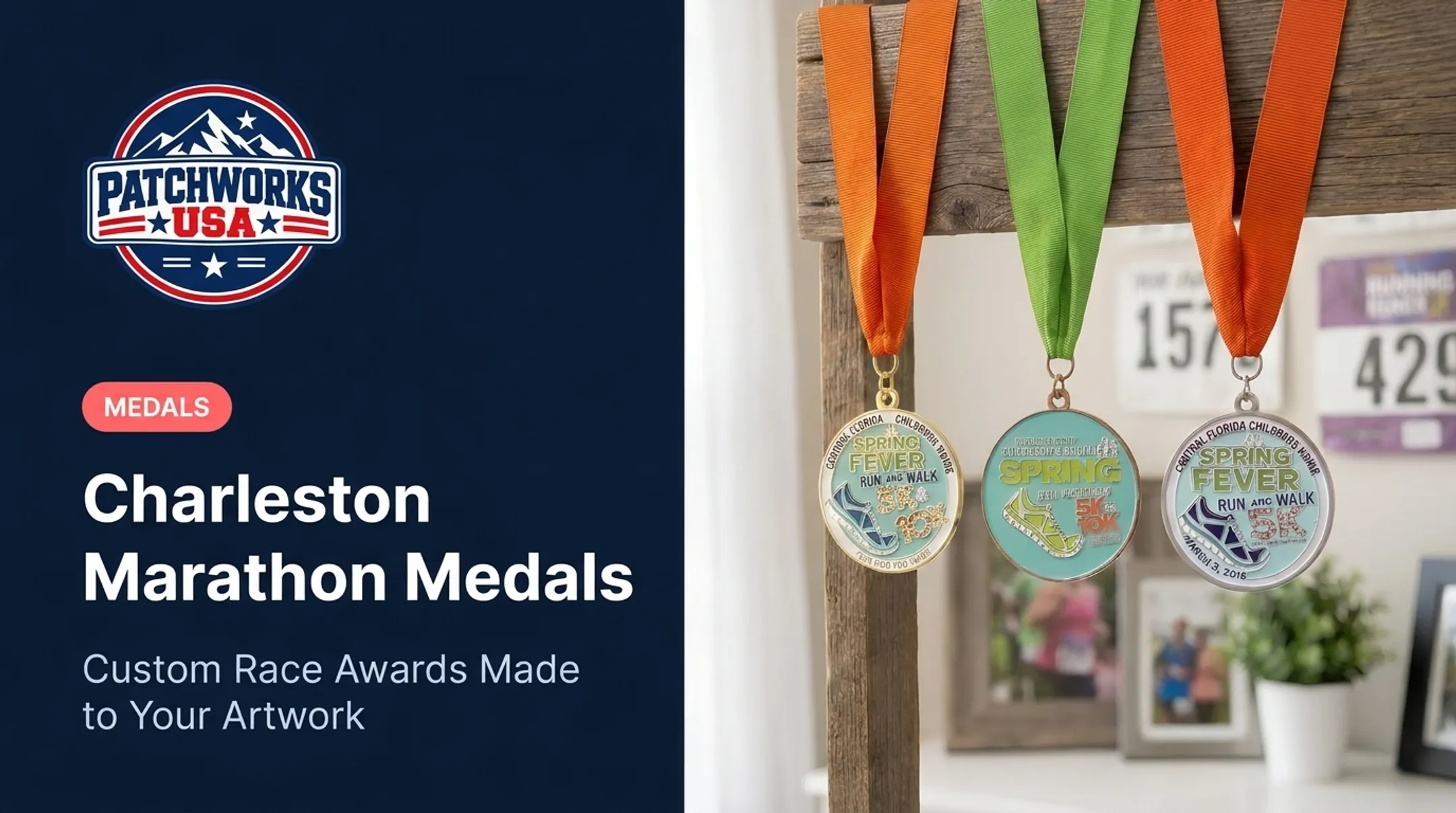
Finisher medals follow the same logic. One charity run and walk uses 5K and 10K designs on orange and green ribbons so participants can tell events apart.

How to Design an Art Medal
Start With Purpose and Audience
Decide who receives it, on what occasion, and from whom. A youth participation medal can be playful. A lifetime-service award calls for a more formal tone, restrained imagery, and careful wording.
Plan the Front and Back
Give the front one dominant emblem, title, or achievement. Use the reverse for the organization name, date, category, or motto. A starburst with a single insignia and a short title reads better than five competing elements.
Choose Imagery That Means Something
Brushes, palettes, instruments, abstract forms, local landmarks, or an organization's mark all work. Avoid crowding small elements together. Each one needs room to read at medal size.
Keep Lettering Readable
According to Ultimate Promotions' guide, very small text and overly thin lines can be lost during stamping or casting, and the proof shows how the design reads at actual size. Check:
- Font weight and spacing
- Contrast against the background
- Abbreviations
- Total word count
Select Shape, Finish, and Attachment
Options depend on the construction method. Die-struck medals are made by striking a metal blank with a steel die. Die-cast medals are formed by pouring molten metal into a mold.
Common choices include:
- Custom shapes and raised or recessed detail
- Polished, shiny, or antiqued finishes
- Enamel color fill, or a plain metal finish
- Neck ribbon, or a drape ribbon on a pin bar
The ribbon is half of what people see when a medal is worn, and it offers extra room for colors, width, and text. Confirm with your supplier which options exist for your construction.
Check the Proof
Review the manufacturer's proof for spelling, dates, logos, proportions, fine detail, and front-to-back orientation. Revisions are far easier before production.

How to Order Custom Art Medals
Gather Your Specifications
Have these ready before requesting a quote:
- Artwork (vector AI, EPS, or PDF preferred; a photo of an existing medal can also work)
- Quantity per design
- Diameter or shape
- Plating and enamel color count, or a plain finish
- Ribbon color, width, and text
- Shipping destination and in-hands date
Convert text to outlines or include font files, and supply color references where you have them.
What Affects Price
These factors shape your quote:
- Size and quantity
- Construction and number of colors
- Finish, ribbon, and packaging
- Delivery timing
Larger runs generally bring price breaks, but exact figures depend on the job.
Submit Clear Artwork
Send the cleanest files you have and note which elements matter most. Fine lines or tiny details may need simplifying for the chosen process, so expect a conversation about that.
Review the Proof and Production Plan
Check every word, date, logo, color, dimension, and attachment detail before approving. Then confirm the order details separately: quantity, shipping address, billing, and the event date.
Working With Patchworks USA
Patchworks USA, based in Holly Hill, Florida, makes custom die-struck and die-cast medals from customer artwork and ships nationwide. Every order is priced individually by quote, and prices are not published.
Owner Brad Aboff personally reviews submitted artwork, sends it to factories suited to the requested construction, returns one clear quote, and oversees the order through proof approval and production.
Customers include individuals, schools, leagues, departments, and event organizers. Minimums start at about 100 pieces, confirmed on the quote.
Plan Your Timing Early
Production typically runs about 3 to 4 weeks after proof approval, plus shipping. The schedule is built backward from your in-hands date, and that date usually cannot move. For a ceremony, exhibition opening, or school calendar, share the deadline up front and leave room for proof revisions.

Conclusion: Turn Creative Recognition Into a Lasting Award
A good art medal starts with a clear purpose, uses recognizable imagery, keeps text readable, and chooses construction that suits the event and recipient.
Before you reach out, gather your artwork and specifications, then read the proof closely.
When you are ready to make medals for an art program, competition, organization, or celebration, contact Patchworks USA at (800) 741-0643 or info@patchworksusa.com for an individually priced quote based on your artwork and order requirements.
Frequently Asked Questions
What are art medals used for?
They recognize achievement in competitions, exhibitions, school programs, and organizations. They also mark participation, service, and commemorative events.
How are art medals different from trophies?
Medals are compact and can be worn or displayed. Trophies are usually larger presentation pieces with different display and customization options.
What should be included on a custom art medal?
Include the award title, organization or event name, and a date or category when relevant. Add meaningful imagery, but only as much text as stays readable at final size.
What materials and finishes can be used for art medals?
Options depend on the construction and supplier. They may include gold, silver, antique bronze, antique brass, or nickel plating, plus enamel color fill and printed or woven ribbons.
How much do custom art medals cost?
Pricing is quote-based. Size, quantity, construction, colors, finish, artwork complexity, ribbon, and deadline all play a part.
How far in advance should art medals be ordered?
Allow time for artwork review, proof revisions, production, and shipping. Production typically takes about 3 to 4 weeks after proof approval, so confirm the schedule with your supplier early.