
Pick on price or looks alone and problems show up fast. Wearers complain about neck irritation, logos blur at small sizes, clips fail, and a missing safety release can create a real hazard around machinery or children.
This guide separates materials, construction and printing methods, attachments and safety features. Then it shows how to combine them for schools, workplaces, teams, clubs, events and brands.
Key Takeaways
- Material shapes comfort, durability, print quality, and how long a lanyard stays presentable.
- Treat material, construction, printing, attachment, and safety release as five separate decisions.
- Sublimation suits full-color art; woven suits simpler, long-wear designs.
- Breakaway and retractable describe features, not base materials.
- Match the choice to wear time, artwork, hardware, quantity, and deadline.
What Is a Lanyard and Why Do Materials Matter?
What Is a Lanyard?
Merriam-Webster defines a lanyard as a cord or strap that holds something and is usually worn around the neck. It can also loop around the wrist or shoulder to hold an ID badge, access card, keys, whistle or small device.
Common settings include:
- Offices, manufacturing facilities and corporate programs
- Schools, colleges and universities
- Hospitals and other healthcare settings
- Police, fire and EMS departments
- Conferences, trade shows and event crews
- Teams, clubs and promotional programs
Why Do Lanyard Materials and Types Matter?
Material and construction drive real outcomes: all-day comfort, resistance to stretching or fraying, logo visibility, attachment security and reusability.
Choosing on price alone invites trouble:
- A stiff strap that irritates the neck by mid-afternoon
- Artwork too fine to read once printed
- A clip that doesn't suit the badge holder
- Early fraying on a daily-wear lanyard
- No safety release where a snag is possible
Types of Lanyard Materials and Types
Lanyard Materials and Types
There is no single universal classification. Suppliers mix material labels (nylon), construction labels (tubular) and decoration labels (sublimated) in the same list. Think of each lanyard as a mix of material, construction or print method, hardware and optional safety features.
Main Material Families
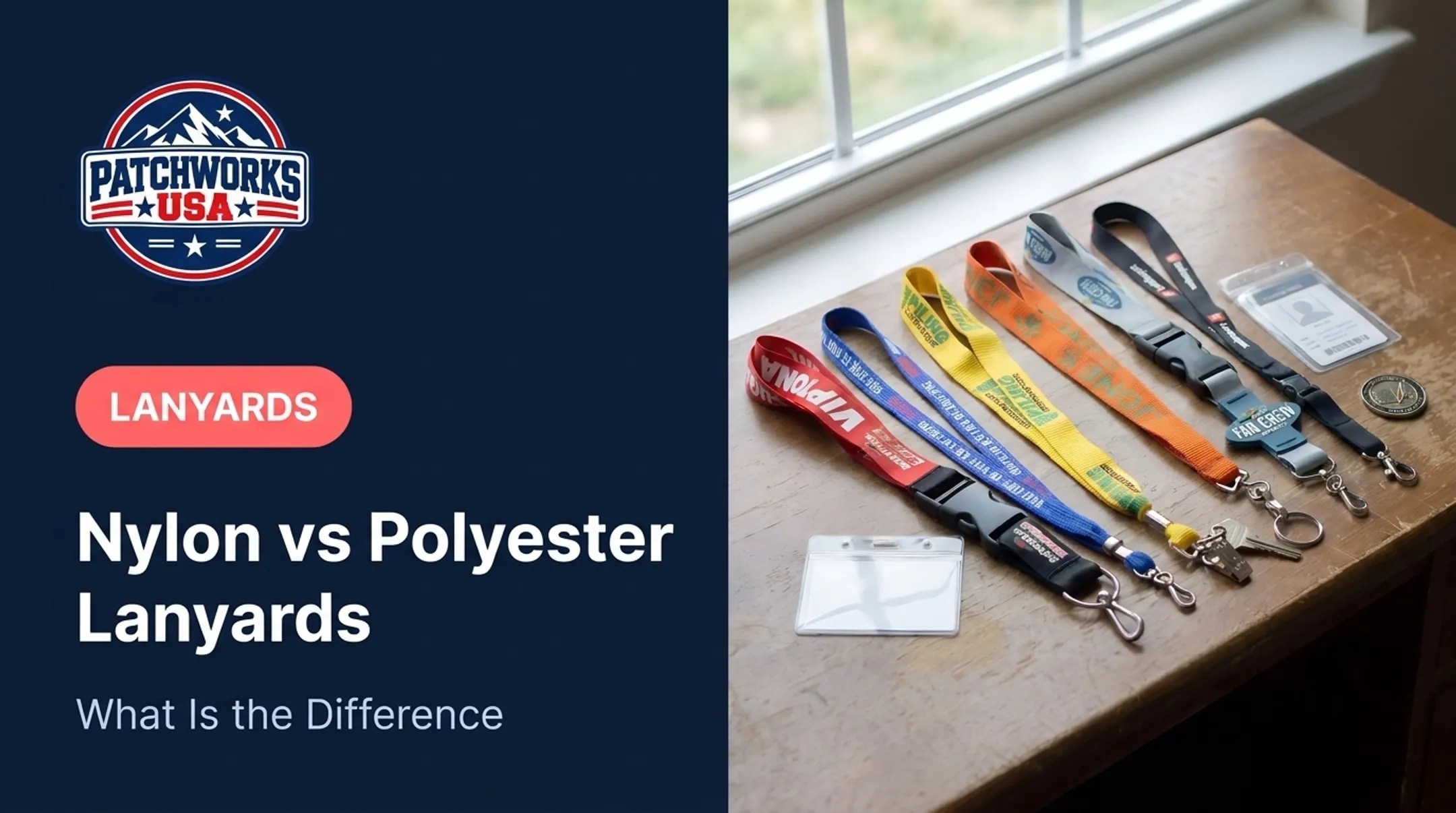
Polyester, nylon and polypropylene are the common synthetics.
- Polyester is soft, matte and affordable. It takes screen printing and sublimation, and the fiber absorbs little moisture.
- Nylon feels slightly firmer and shinier. Patchworks USA describes its nylon lanyards as a smoother woven strap with a sharp screen or dye print and a softer hand than polyester.
- Polypropylene is a lightweight, resilient fiber with extremely low moisture absorption. Custom decoration options vary, so confirm with the supplier.
Cotton, bamboo and recycled PET are the fiber-based, sustainability-oriented options. Cotton feels soft and absorbs moisture. Bamboo-labeled straps are marketed as very soft with a subtle sheen. Recycled PET (rPET) straps are typically sublimated in full color.
Verify environmental claims before repeating them. The FTC says only textiles made directly from bamboo fiber may be called bamboo; rayon from bamboo must be labeled "rayon (or viscose) made from bamboo."
Partial recycled content needs a qualifier such as a percentage, and broad "eco-friendly" or "biodegradable" claims need strong support.
Satin and woven fabric are appearance choices. Satin gives a smooth, glossy finish and takes dye sublimation. Note that satin describes a finish, and one common product is polyester satin. Woven fabric suits premium looks and tactile detail.
Specialty materials:
- Neoprene is soft, spongy and lightweight, typically with a one-color imprint.
- PVC is a molded, rubber-like plastic strap that wipes clean and holds up outdoors. Patchworks USA notes it is popular for marine, park and public-safety work.
Specifications vary by supplier. No controlled ranking of cost, strength or comfort across materials exists.

Main Types by Construction and Printing
| Type | How it works | Best for |
|---|---|---|
| Screen-printed | Ink pushed through a screen, one color at a time; extra colors may add charges | Simple logos and text |
| Dye-sublimated | Heat transfers dye into polyester; full-color and edge-to-edge, though metallic and neon colors are excluded | Gradients, photos, complex art |
| Woven (jacquard) | Threads form the design in the strap itself; not surface printing | Long daily wear, solid or geometric designs |
| Tubular, braided or flat | Describes the strap shape, such as a hollow round cord or flat webbing | Soft rope-like feel or standard badge use |
Construction isn't decoration. A strap can be both flat and tubular-styled, or tubular and dye-sublimated. One supplier recommends photo-style printing over weaving for small fonts and overlapping art.
Feature-Based Lanyard Types
Features answer a safety, access or carrying need. They are not base materials.
- Breakaway: A plastic joint at the back of the neck opens under pulling force. Use it where a snag could hurt someone: machinery, children, patient care or active movement.
- Buckle release: A buckle near the hook lets the wearer detach keys or a credential on purpose. It's a convenience, not a safety release.
- Retractable: A reel lets wearers swipe or present a credential without stretching the neck or removing the badge.
- Wrist and key lanyards: Short straps for keys or small items when a neck-worn credential isn't needed.
How to Choose the Right Lanyard Material and Type
The use case and desired outcome decide this, not the most popular material or the fanciest print method. Work through these factors.
Intended Purpose and Environment
Match the setting: a one-day trade show, daily employee ID, school, hospital, outdoor event or public-safety job. Then factor in the conditions it will face:
- Moisture and outdoor exposure
- Abrasion and frequent handling
- Machinery or snag hazards
- Use around children
- Reuse across multiple events
For example, PVC suits wet or outdoor work, while a polyester lanyard fits everyday staff badges and event credentials.
Wear Time and Comfort
Think about softness, weight, width, flexibility and texture. A strap that's fine for a four-hour event can wear on someone wearing it all shift.
- Compare fabric feel in hand before ordering
- Check available widths; common options run from 1/2 inch to 1 inch
- Consider edge finish and personal sensitivity
Comfort claims are mostly supplier descriptions, so sample when you can.
Artwork, Logo and Printing Requirements
Match the method to the design:
- Simple repeated text or one to three colors: screen print
- Gradients, photos or many colors: sublimation
- Durable, bold designs for long wear: woven
Review artwork at finished size. Fine text can fill in with ink, so confirm color, spacing, repeat pattern, width and legibility. Artwork specs vary by supplier. Some require vector files (EPS, AI, PDF), and Expo Pass asks for 300 PPI or higher raster images.
Attachments, Access and Safety
Choose hardware for what's being carried:
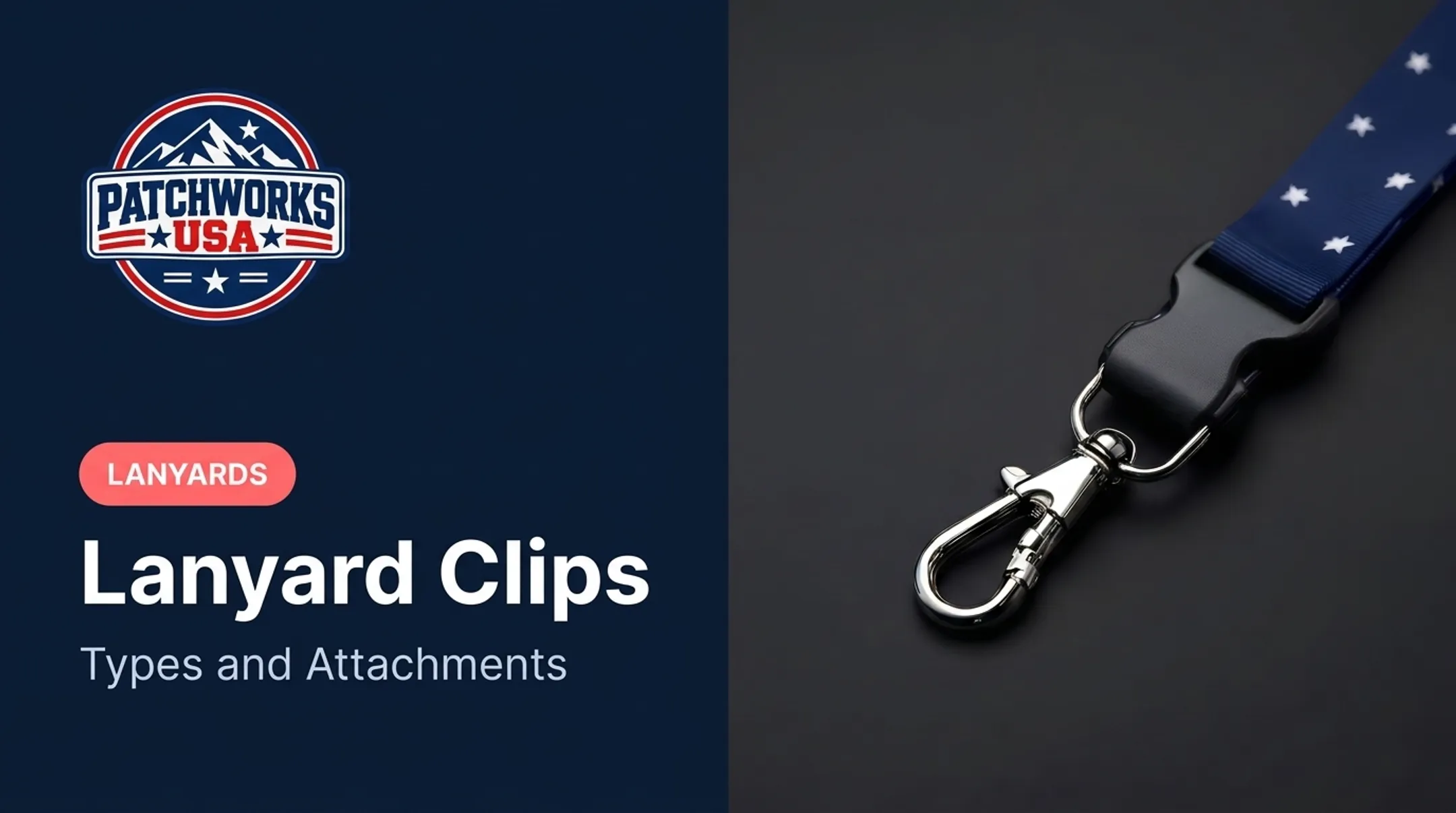
- Swivel hook or J-hook for badge holders
- Bulldog clip to grip credentials and keep them facing forward
- Split ring for keys
- Badge reel for frequent swiping
- Lobster claw for a secure snap closure
Add a breakaway where snagging or pulling is a risk, and make sure it doesn't interfere with the job.
Rules vary by setting. One hospital policy (UNC Health) allows only breakaway lanyards, while another system bars lanyards from restricted surgical areas altogether.

A release feature isn't permission to wear a neck strap, so check your facility's policy.
Budget, Quantity, Deadline and Custom-Order Support
Weigh price against wear life, reusability, art complexity, hardware, quantity and deadline. Higher quantity lowers unit cost, and extra colors can raise it on screen-printed orders.
For custom lanyards from your own artwork, Patchworks USA reviews the design, matches it to a factory suited to the construction, and returns one individualized quote. Its free Patch Studio preview and stitch check can flag fine-detail issues before you approve anything.
What to Check Before Finalizing a Lanyard
Skip the fanciest option when a simpler one fits the use. And don't assume the lowest sticker price is the lowest long-term cost.
Confirm the full specification:
- Material, width and length
- Construction and printing method
- Colors and artwork repeat
- Attachment and closure
- Breakaway requirement
- Quantity and deadline
Then review a proof or realistic preview at actual size. Check fine text, logo clarity, color contrast, clip orientation and wearer comfort. Ask the supplier to back up any sustainability or performance claims in writing.

Conclusion
Lanyards identify, grant access, carry items and promote a brand. Material choice affects comfort, durability, appearance and lifetime value.
Compare material, construction, printing, attachment and safety features together, and the result fits the people wearing it and the place they work.
Need a custom lanyard? Send your artwork to Patchworks USA to request a construction-specific quote. Replies come within one business day.
Frequently Asked Questions
What is the best material for a lanyard?
It depends on wear time, environment, artwork, comfort, budget and sustainability goals. Polyester is a soft, affordable all-rounder, nylon is smoother with a sharp print, and PVC suits outdoor or wet use.
What are the four main types of lanyards?
Classifications vary, but four practical categories are screen-printed, dye-sublimated, woven, and braided or tubular. Breakaway and retractable describe features, not base materials.
What are lanyards made of?
Common materials include polyester, nylon, polypropylene, cotton, bamboo or recycled fibers, satin, neoprene and PVC. Performance depends on the specific product's construction.
Which lanyard material is most comfortable for all-day wear?
Softness, width, weight, flexibility and edge finish all matter, along with personal sensitivity. Compare fabric feel and plan for your wear duration rather than trusting the material name.
Are breakaway lanyards safer?
A breakaway closure separates under pulling force, which can reduce risk around machinery, children, patients or active settings. Vendors don't guarantee injury prevention, so match the feature to your safety requirements.
How do I choose a lanyard for a custom logo?
Consider artwork detail, color count, text size, strap width, print or woven method, attachment, quantity and deadline. Review a proof, and get a construction-specific quote before production.