
Construction matters more than most buyers expect. It changes how much detail the design holds, how the patch feels against the body, how it handles washing, and how it attaches. A patch that looks great on a hat can fail on a nylon backpack.
This guide compares the main patch types, explains backing options separately, and shows how to choose based on artwork, garment, use, care, and budget.
Key Takeaways
- Patch types differ by construction: embroidered, woven, chenille, leather, PVC, printed, appliqué, bullion, reflective, and glow.
- Embroidery gives raised texture; woven and printed patches handle small text and gradients better.
- Sew-on, iron-on, and Velcro are attachment choices, separate from the patch material.
- Garment fabric, wear, care, quantity, and budget decide the best fit.
What Are Clothing Patches and Why Are They Useful?
A clothing patch is a piece of fabric, threadwork, leather, PVC, or another material carrying a design, logo, name, or symbol, attached to apparel or gear. Merriam-Webster defines it as cloth sewn onto a garment as ornament or insignia, or as material used to mend a hole.
People use patches for:
- Personal style and clothing repair
- Brand promotion and work uniforms
- Team, club, and membership identity
- Achievements, events, and recognition
Construction decides whether a patch works. The wrong material can blur small details, feel bulky on a sleeve, scorch heat-sensitive fabric, or peel off early and force a reorder.
Types of Patches for Clothes
Patch types differ by how the design is made and what material forms the surface. Backing, covered later, decides how the patch attaches.
Thread-Based Patches
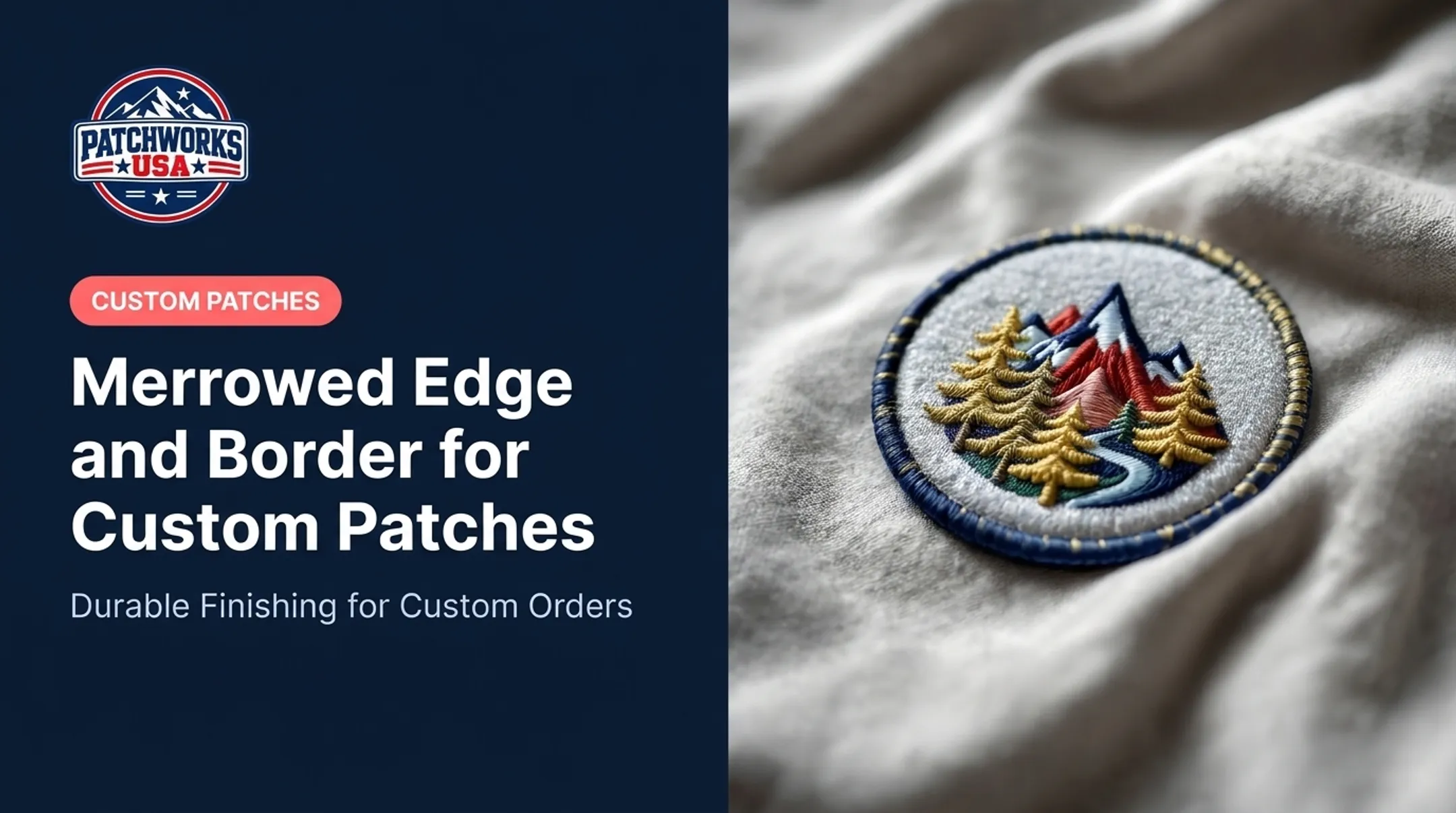
Embroidered patches stitch thread onto a twill base, creating a raised, textured, traditional look. They suit bold logos, uniforms, jackets, hats, sportswear, and clubs. Small text needs care: makers set their own minimums, such as at least 1/4 inch at Stadri and 3/16 inch at Penn Emblem.
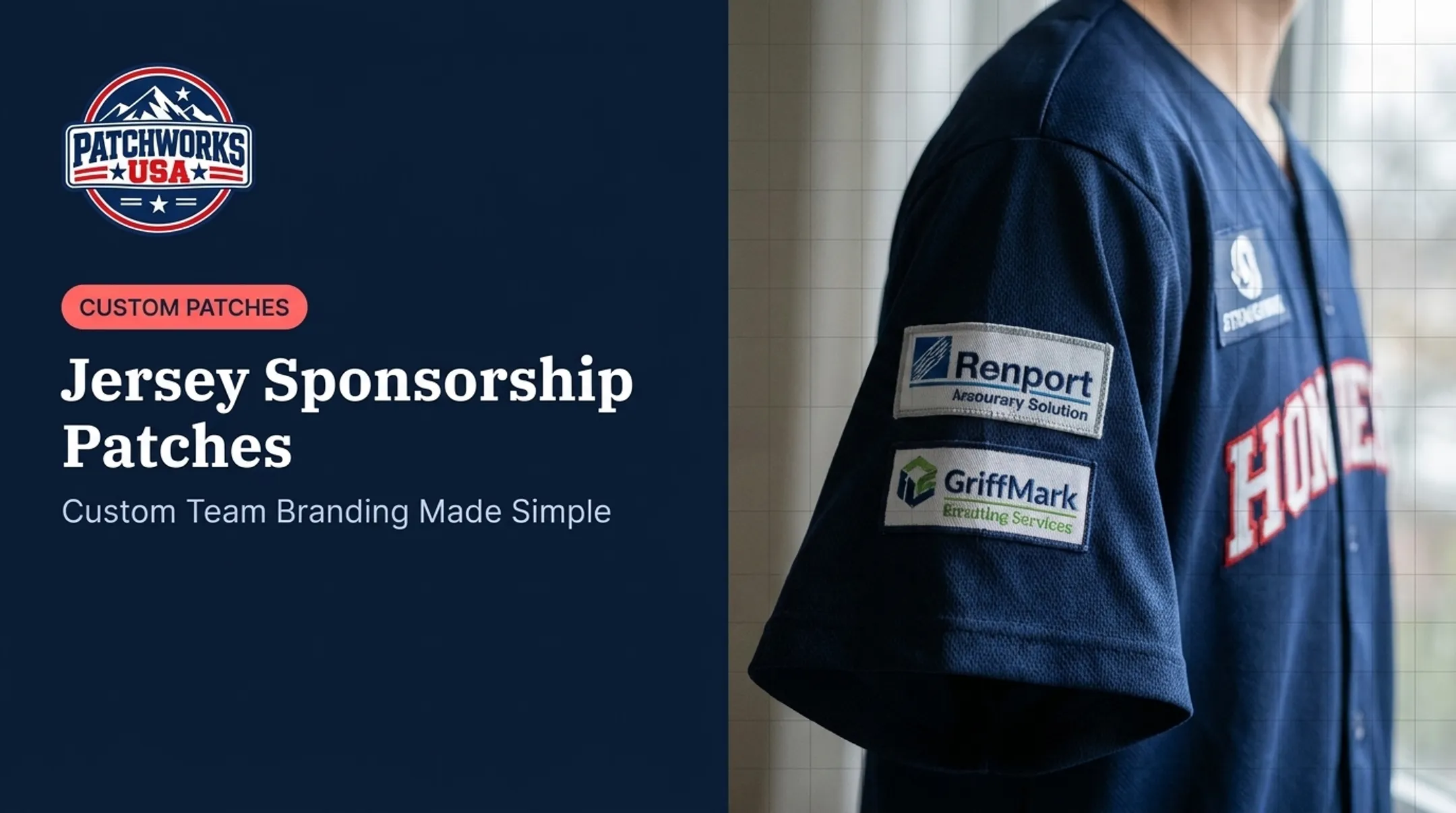
Woven patches interlace thinner threads into a flatter, smoother surface. They show fine lines and small lettering more clearly than heavy embroidery. One maker, World Emblem, specifies 2 mm minimum text height.
Chenille patches use fuzzy, looped yarn for bold letters, varsity jackets, and vintage styling. Skip them for intricate artwork.
Leather and PVC Patches
Leather and faux-leather patches look premium and can be embossed, debossed, etched, or printed. They fit denim, hats, jackets, bags, and workwear. Check care limits: some debossed leather patches are meant for items that are not washed often.
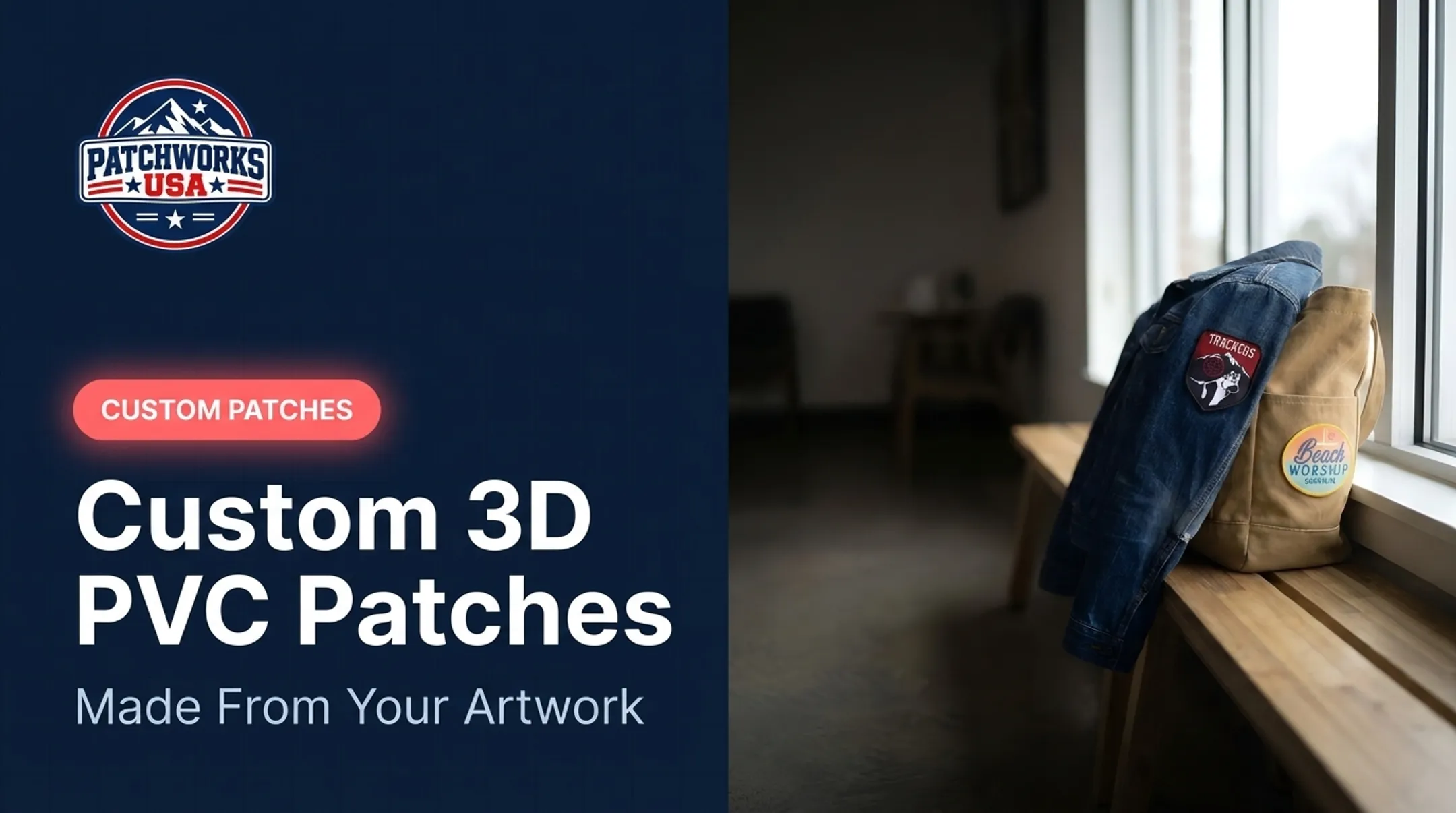
PVC patches are flexible, molded, and crisp-edged, in flat or raised designs. They suit outdoor gear, backpacks, tactical-style clothing, and moisture-prone items. They lack fabric texture. Some PVC specs are sew-on only and warn against heat, so confirm before choosing iron-on.
Printed and Appliqué Patches
Printed or sublimated patches are smooth fabric patches for full-color art, gradients, illustrations, and photos. A common build uses white polyester twill with sublimation inks. They offer visual precision, not raised texture.
Appliqué patches layer cut fabric pieces stitched onto a base. They work for large letters, bold shapes, and designs where contrasting fabrics carry the look, such as jersey and jacket backs.
Bullion, Reflective, and Glow Patches
Bullion patches use metallic wire or specialty threads, often hand-stitched, for formal uniforms, ceremonial clothing, and awards. Care is stricter. Home care is often a gentle hand wash at no more than 86°F, with no machine drying.
Reflective patches return light toward its source, so they need an external light to show up. Glow-in-the-dark patches store light and fade as the energy releases. Neither replaces certified safety gear. 3M states that no reflective product ensures visibility in all conditions.

Backing and Attachment Types
Backing is a separate decision from patch type. Most custom patches can be ordered with more than one backing option.
Sew-On
A plain-back patch is stitched to the garment. It is the most permanent option and the best choice for heavy fabrics, uniforms, jackets, and anything washed often. Sewing also suits fabrics that react poorly to heat.
Iron-On
Heat-activated adhesive makes application easy, but the garment must tolerate heat. Typical home-iron instructions call for a cotton setting, no steam, about 30 to 60 seconds with pressure, and 48 hours before washing.
Fabric notes:
- Polyester may work with care
- Nylon is risky
- Leather should never be ironed
Reinforce with stitching on larger patches or frequently washed items.
Velcro (Hook-and-Loop)
One half sews to the garment and the other to the patch, so insignia can be removed, swapped, and reused. It works well for tactical gear, uniforms, and bags. Fasten hook to loop before washing.
Adhesive and Magnetic
Peel-and-stick backing is temporary and will not survive a wash cycle. Magnetic options exist for specialized, removable uses. Neither fits everyday clothing that gets laundered.

How to Choose the Right Type of Patch
The best patch is the one that fits your intended result and garment, not the most popular one. Work through these factors in order.
Match the Construction to the Artwork
- Bold shapes and raised texture: embroidered or chenille
- Crisp small details: woven
- Gradients and full-color images: printed or sublimated
- Clean molded lines or dimension: PVC
Consider Garment, Environment, and Care
- Note the fabric: denim, cotton, polyester, nylon, canvas, leather, or heat-sensitive material.
- Check patch size, thickness, and edge shape against the available surface, and how it will feel when worn.
- Compare use: casual apparel is gentler than workwear, sportswear, bags, or outdoor gear facing moisture and friction.
- Follow care sheets. One maker's embroidered patch spec calls for cold, inside-out washing and hang drying.
Pick the Attachment, Then Set the Budget
- Sew-on: long-term security on most garments
- Iron-on: convenient application on heat-tolerant fabric
- Velcro (hook-and-loop): swappable patches for bags and uniforms
On nylon and polyester backpacks, sewing or hook-and-loop usually beats ironing.
Cost depends on size, colors, construction, backing, artwork complexity, quantity, and deadline. Stitch coverage and specialty thread also add to it. Because so many variables apply, ask for an individual quote rather than trusting generic price ranges.

What to Check Before Finalizing a Patch
Review the Artwork at Finished Size
Check text legibility, line thickness, contrast, shape, and border at the real size. Details that look fine on screen can be too fine for thread, molding, or layering.
Patchworks USA's Patch Studio is free, needs no account, and shows a 3D stitched preview of your logo. Its stitch check flags fine detail before you request a quote. The preview does not guarantee a patch can be made at the displayed size, so detail and size are reviewed during quoting.
Confirm the Specifications
Before approval, verify:
- Finished dimensions and shape
- Edge treatment, such as merrowed or heat-cut
- Construction and backing
- Garment compatibility and care needs
- Whether the patch is permanent or removable
Get a Proof and a Clear Quote
Ask for a proof and a quote that names the construction, quantity, turnaround, and any artwork requirements. Also ask about revisions and shipping. Vector files produce the cleanest stitch, so submit them with your artwork when you can. At Patchworks USA, nothing is made until the proof is approved in writing.
Conclusion
Patches vary by construction, material, texture, detail, specialty effect, and attachment, so no single type suits every garment. Embroidery, woven, chenille, leather, PVC, printed, appliqué, bullion, and visibility patches each solve different problems.
Compare your artwork, fabric, environment, care routine, attachment preference, and budget before ordering. Matching those factors to the right construction is what makes a patch look right and hold up through wear and washing. Patchworks USA, a Florida custom patch maker, quotes each job individually from your artwork, and Patch Studio lets you preview the design before you order.
Frequently Asked Questions
What are the different types of patches?
Common types are embroidered, woven, chenille, leather, PVC, printed or sublimated, appliqué, bullion, reflective, and glow-in-the-dark. Sew-on, iron-on, and Velcro describe how a patch attaches, not what it is made of.
Which type of patch is best for clothing?
It depends on the garment, artwork, and wear. Embroidered gives a classic look, woven handles small details, and PVC suits rugged use. Pick the attachment method to match the fabric.
What is the difference between embroidered and woven patches?
Embroidered patches use thicker stitched thread for a raised texture. Woven patches use finer threads in a tighter, flatter build that generally handles small text and fine lines more clearly.
Are PVC patches suitable for clothes?
Yes, particularly jackets, uniforms, backpacks, and outdoor gear that need a flexible, moisture-resistant surface. Check the garment and attachment first, since some PVC patches are sew-on only.
What is the best backing for a clothing patch?
Sew-on is best for long-term security. Iron-on is convenient on heat-tolerant fabrics. Velcro suits removable or interchangeable patches.
Can patches be washed with clothing?
Often, but it depends on the patch material, backing, garment, and application quality. Follow the maker's care instructions, and add stitching when a patch must survive frequent washing or heavy wear.